
Unbiased headlines. Facts, not spin.
Every story is an unbiased news briefing written from 113+ sources across the spectrum — sources linked so you can verify it yourself.
 energy
Major Story (7/10)
Event date: September 21, 2026
energy
Major Story (7/10)
Event date: September 21, 2026
Diesel Tops $6.53 in the US and Hits a UK Record as Truckers Start Refusing Loads
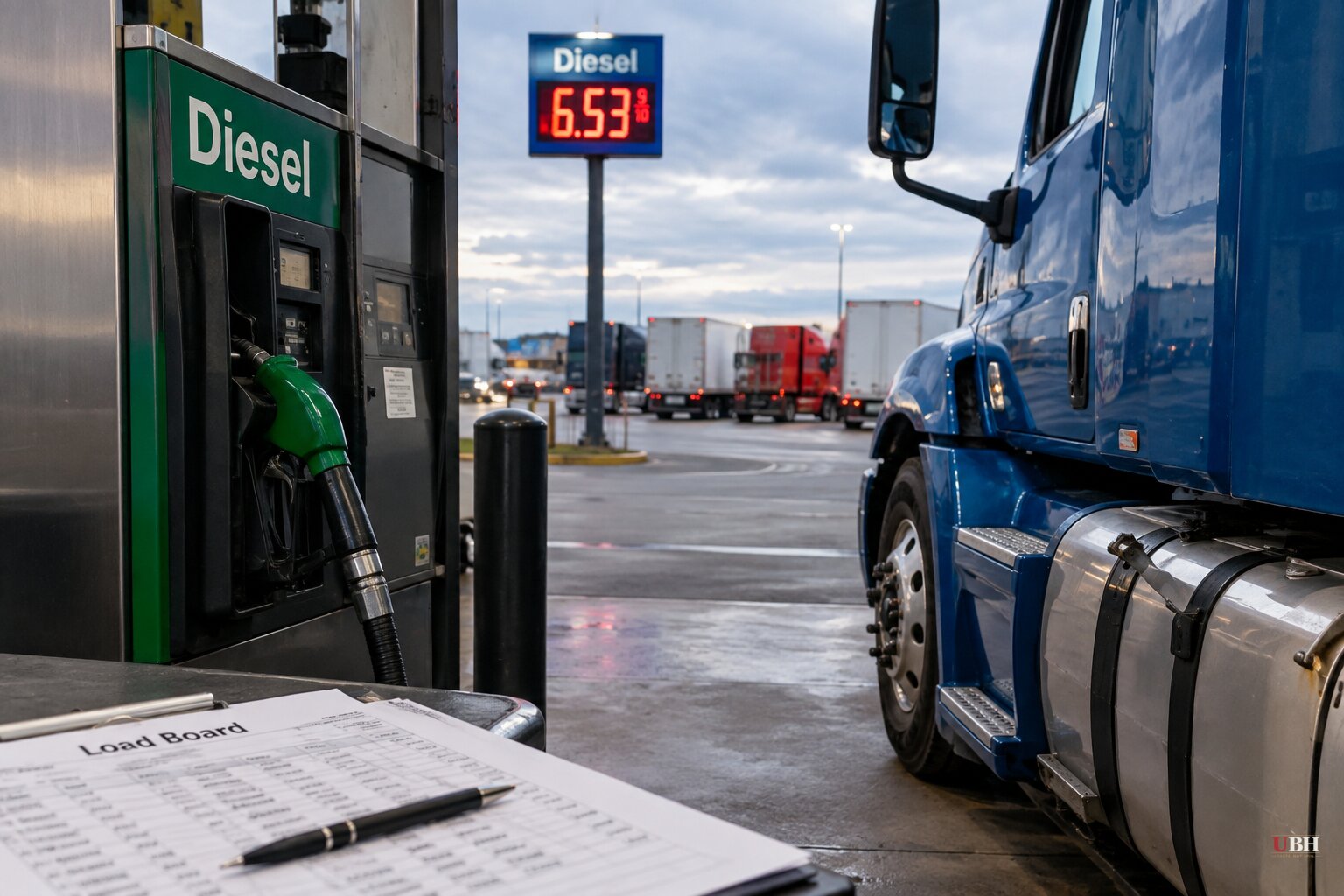
Since diesel first broke $6 a gallon on September 11, the national average has kept climbing, hitting $6.53 on September 22 according to the U.S. Energy Information Administration, with the West Coast reporting $7.46 a gallon, according to Fleet Owner. Truckers are now paying as much as $1,500 to fill a single tank, according to analysis from Galaxy's Alex Thorn and Beimnet Abebe reported by Crypto Briefing. Some are turning down loads rather than absorb the fuel cost.
The pain isn't confined to the U.S. In the UK, pump prices hit their own all-time high of 199.18p per litre on Monday, according to the RAC, as Brent crude jumped roughly 4% that morning. Kathleen Brooks, research director at XTB, said UK fuel costs have entered uncharted territory, adding pressure on the Bank of England right as Chancellor John Healey took to the stage at the Labour Party conference to deliver his keynote address.
UK bond markets flinched too. The two-year gilt yield, a gauge of short-term interest rate expectations, rose six basis points to 4.75% as Healey delivered his speech, and the 10-year climbed to 5.4%, a hair below the 19-year high of 5.41% hit earlier in the month. Angeline Ong, senior technical analyst at IG, said investors are "wondering where the fiscal credibility is going to come from" as the government resists welfare cuts while borrowing costs climb.
Why Diesel Won't Come Down
The root cause, according to Heavy Duty Trucking editor Deborah Lockridge, isn't just crude prices. It's a squeeze on tankers, refineries and shipping routes. Reuters estimates oil flows through the Strait of Hormuz remain about one-third below prewar levels even though the U.S. says it has cleared mines and established a protected corridor. The Wall Street Journal reported that tanker shipping costs have risen to roughly a quarter of the value of the crude itself, an unusual spike that normally represents a small fraction of a cargo's worth.
Attacks on Saudi Arabia's East-West pipeline and growing Houthi activity near the Bab al-Mandab Strait are threatening the routes that were supposed to bypass Hormuz, according to Lockridge's reporting.
Iran says it could reopen the Strait within seven days if the U.S. ends its blockade, according to Fleet Owner. Whether that offer represents real leverage or posturing remains unclear. President Trump has given contradictory signals, telling Fox News reporter Trey Yingst he is weighing options that range from "wiping Iran out" to "letting them rot economically" to negotiating a deal, while also telling reporters at Joint Base Andrews that oil prices will start "tumbling downward" after the midterms.
An Unproven but Serious Allegation
A U.N. panel has concluded the United States committed war crimes during its military campaign against Iran, a finding that could feed into future international court proceedings, according to Fleet Owner. The same panel accuses Iran of crimes against humanity. No charges have been filed against either government, and the finding is a panel judgment, not a criminal conviction. Both allegations remain contested and unresolved.
The Political Fight Over Who Pays
Democrats are making the price spike a midterm issue. California Gov. Gavin Newsom wrote that the average American family is spending an additional $4,200 a year because of Trump, citing a Joint Economic Committee estimate from congressional Democrats. Sen. Mark Kelly (D-AZ) said Trump "can't explain what this war is for" beyond higher gas and grocery prices.
Trump's defense, delivered at a North Carolina rally, is that the cost is worth stopping Iran from getting a nuclear weapon. "It's a very inexpensive price to pay for what we've done," he said, predicting fuel costs will fall "like rocket ships in reverse" once the war ends. Treasury Secretary Scott Bessent has gone further, predicting crude could fall as low as $40 a barrel once the conflict resolves, arguing markets will be oversupplied afterward.
Prediction markets tracked by Vera currently price a low probability that Trump announces a formal U.S. diesel export ban by the end of September, rising only slightly by the end of October. This suggests traders don't expect Washington to intervene directly on supply anytime soon.
For now, the numbers are clear: diesel at $6.53 nationally and $7.46 on the West Coast, UK pumps at a record 199.18p, and a trucking industry absorbing costs through surcharges and canceled loads. The next AAA and EIA weekly updates, along with any formal White House decision on exports, will determine whether this is the peak or another rung on the ladder.
Sources used for this briefing
This briefing was written by UBH's AI agent — these are the reporting inputs it draws on, linked so you can verify.


