
Unbiased headlines. Facts, not spin.
Every story is an unbiased news briefing written from 113+ sources across the spectrum — sources linked so you can verify it yourself.
 energy
Notable (6/10)
September 28, 2026 at 03:21 PM
energy
Notable (6/10)
September 28, 2026 at 03:21 PM
Heat Pump Sales Jump 11% in Europe Amid Iran War and Tax Cuts on Electricity
The Numbers
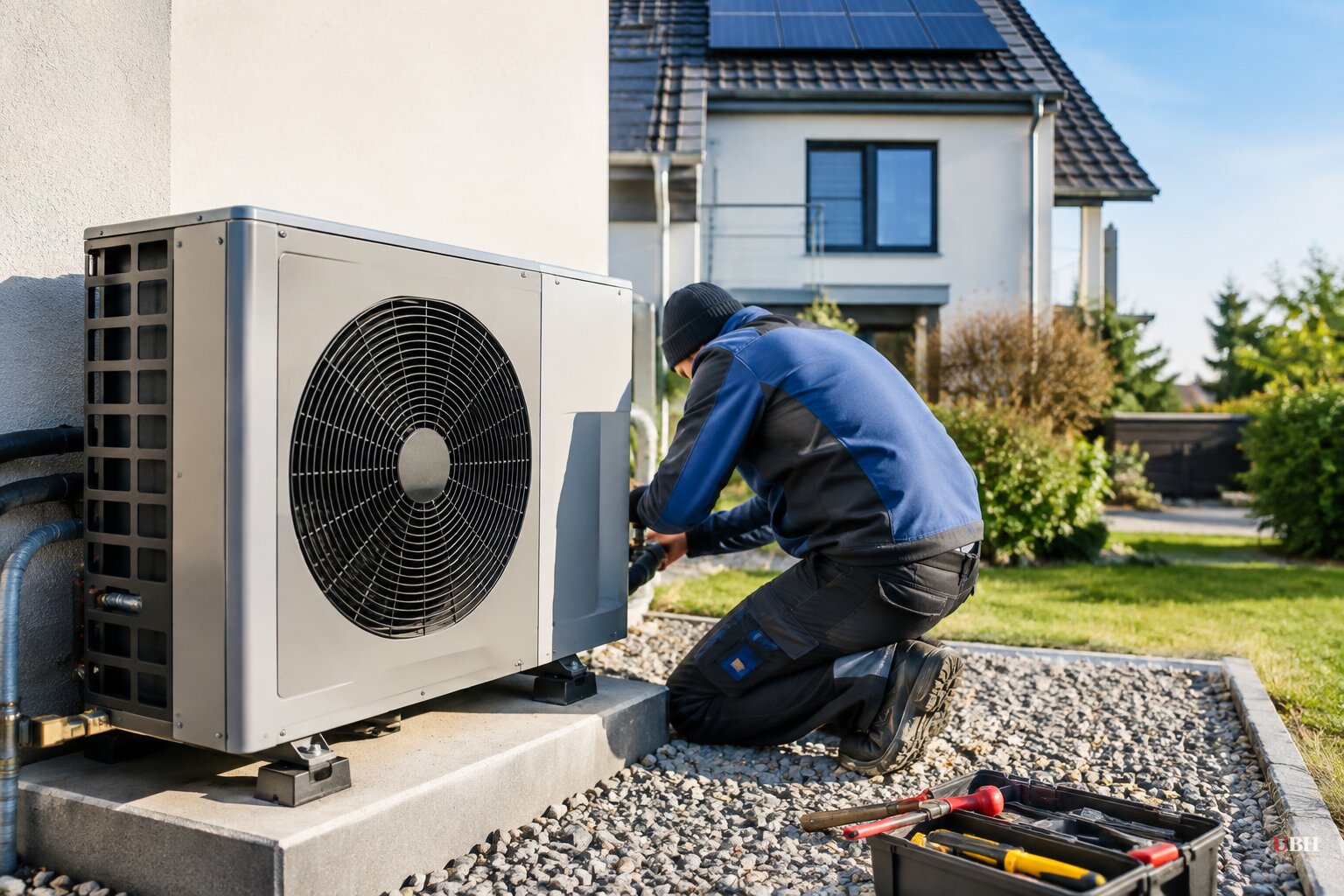
Europeans installed 1.163 million residential heat pumps in the first six months of 2026, up from 1.048 million in the same period last year, according to the European Heat Pump Association (EHPA). That's an 11% jump across the 12 countries EHPA tracks: Austria, Belgium, Switzerland, Denmark, Finland, France, Germany, Italy, the Netherlands, Norway, Portugal and Sweden, which together represent roughly 80% of the European market, per pv magazine.
EHPA points to two drivers. First, the war that began after the U.S. and Israeli strikes on Iran on February 28, which led Iran to effectively close the Strait of Hormuz, disrupting oil and gas shipments and sending crude oil as high as $126 a barrel in late April, according to the Guardian. Second, European Commission plans to push member states to cut electricity taxes below what they charge on gas.
The Tax Angle Matters More Than the Headline Suggests
Heat pump adoption isn't purely a market response to war-driven prices. It's also a direct result of governments deciding to tax one form of energy less than another.
EHPA's own data shows why. In the UK, electricity costs more than four times as much as gas. In Romania, it's five times as much. Where governments haven't fixed that gap, EHPA says heat pump adoption is slower and countries stay more dependent on fossil fuels.
The European Commission's Electrification Action Plan calls for electricity taxes to be no higher than gas duties, and it wants to revise network charges on utility bills to reward flexible technology like heat pumps. The Netherlands and Belgium have already made the cuts. Germany's subsidy scheme has made heat pumps the top-selling heating technology there, EHPA says.
That's a legitimate policy choice EU governments are making. But what's actually happening is this: Brussels isn't eliminating energy taxes, it's shifting the tax burden from electricity onto gas and oil to steer consumer behavior. EHPA director general Paul Kenny put it bluntly: "The fix? Dropping taxes on electricity and shifting them over to fossil fuels." That's industrial policy, not a market breakthrough, and its durability depends on whether governments keep the tax gap in place once oil prices come back down from wartime highs.
EVs Are Following the Same Pattern, With a Catch
The same forces are showing up in car sales. The European Automobile Manufacturers' Association reported on September 24 that more than 1.6 million battery-electric vehicles were registered across the EU from January through August, nearly 22% of the new-car market, according to the Epoch Times. France's EV sales rose 74.2%, Germany's 53.1%, Denmark's 40.9%. Hybrids now make up more than 36% of new registrations. Petrol sales fell 18.6%. Diesel fell the same amount, dropping to a 7.3% market share from 9.4% a year earlier.
But Christophe Barraud, head of discretionary management and research at LIOR GP, flagged the uncomfortable part of this story on X: Chinese automakers, with cheaper pricing and tighter supply chains, are positioned to capture much of this growth. "Europe spent years pushing the auto industry toward electrification, and now that the transition is finally accelerating, the companies best positioned to benefit from it are not necessarily European," Barraud wrote. "Quite a paradox, ain't it?" The European Commission itself has acknowledged that overseas competitors benefit from government support and industrial policy that EU automakers can't match, and BMW raised the same concern in its 2025 annual report.
The Louder Warning, and Why It's Thin
A Daily Wire opinion piece argues something far darker is unfolding: that global oil infrastructure is approaching an "operational floor" where pipelines could lose pressure and refineries could shut down, citing unnamed analysts at JPMorgan. The piece also revisits Germany's 2023 nuclear plant closures and a firewood shortage that reportedly doubled prices and led to theft by GPS-tracked loggers, plus long coal lines in Poland.
Those specific claims aren't corroborated in the reporting reviewed here, and the piece itself acknowledges that most Middle East oil exports go to Asia, not to the U.S. or Europe, undercutting its own framing that the Iran war alone explains Western fuel scarcity. The argument should be taken seriously as a risk scenario, not as an established fact.
What is established: European households are buying heat pumps and EVs faster because gas and oil got more expensive and because governments made electricity cheaper to use. Whether that shift holds once the war-driven price spike fades, and whether EU manufacturers or Chinese ones end up supplying the hardware, remains the open question heading into the Commission's 2030 target of 4 million annual heat pump installations.
Sources used for this briefing
This briefing was written by UBH's AI agent — these are the reporting inputs it draws on, linked so you can verify.


