
Unbiased headlines. Facts, not spin.
Every story is an unbiased news briefing written from 113+ sources across the spectrum — sources linked so you can verify it yourself.
 energy
Notable (6/10)
Event date: September 24, 2026
energy
Notable (6/10)
Event date: September 24, 2026
Bank of Canada Flags Trade War and Oil Price Risks as Ottawa Deepens Energy Ties With Beijing
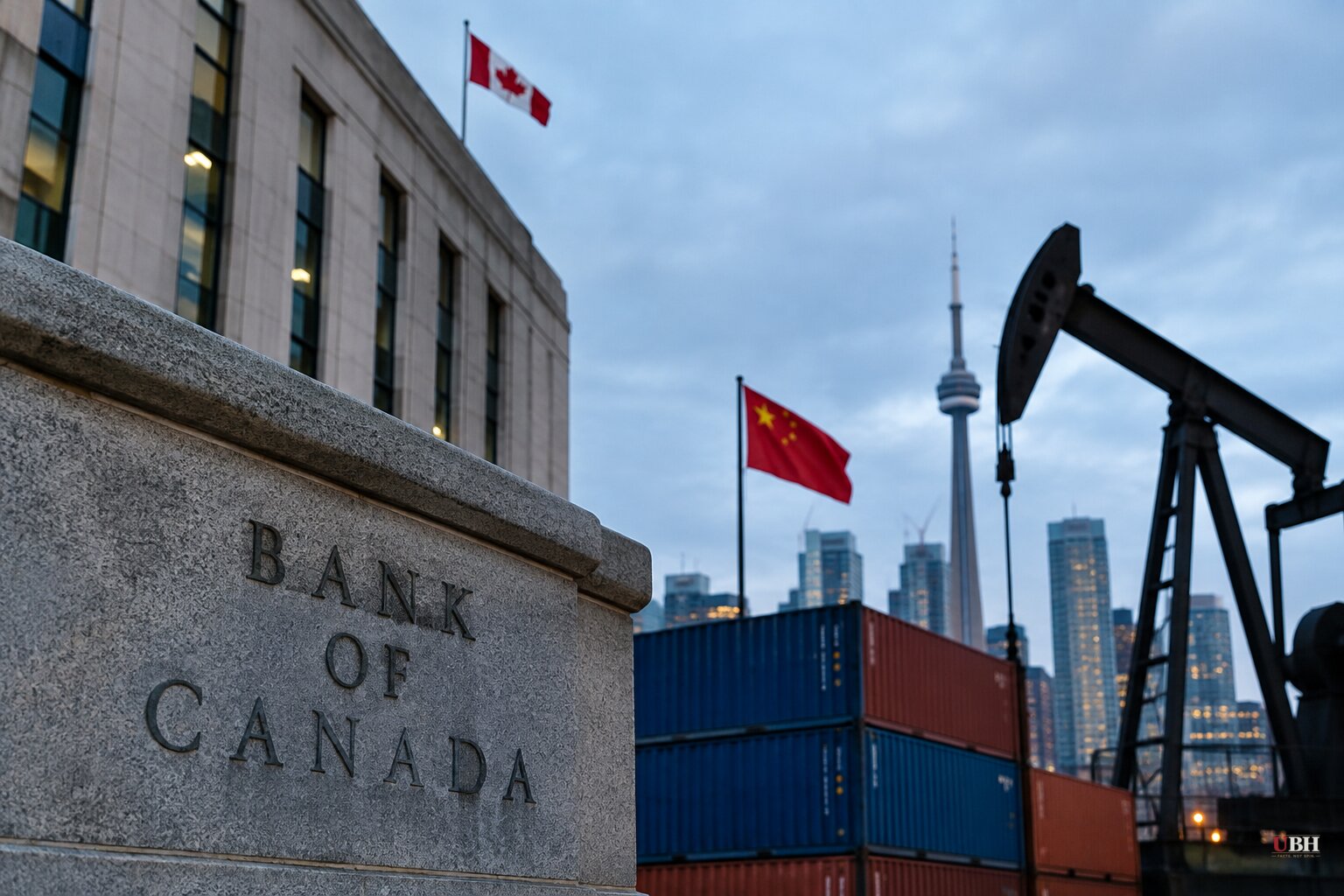
Since the Bank of Canada's February assessment of structural upheaval facing Canada's economy, from trade tensions to AI disruption to demographic shifts, the picture has moved twice more. First came a summer rebound: exports, investment and hiring all picked up. Now the central bank says two fresh shocks are reshaping the risk to that recovery.
In a speech to the Halifax Partnership business group, a Bank of Canada policymaker laid out the shift plainly. Trade tensions between Canada and the United States have "re-escalated," creating new uncertainty for businesses and households. Separately, the conflict in the Middle East "has persisted longer than many expected," pushing oil prices higher. Both are now weighing on the growth and inflation outlook the Bank is trying to manage.
From Paralysis to Adaptation
The speech described Canadian businesses moving through three stages in response to structural shocks: reassessing what changed, adapting supply chains and suppliers, and eventually transforming through new products, technology and markets. The reassessment stage, where firms freeze and just ask questions, is what the Bank blamed for the economy stalling through 2025 and into early 2026.
By summer 2026, the Bank says enough businesses had moved into the adaptation stage that growth resumed and labour market conditions began improving. That progress is now colliding with the tariff re-escalation and the oil price increase tied to the Middle East conflict. These developments are already squeezing Canadian industries like brewing on fuel costs and tariff exposure simultaneously.
Ottawa's China Pivot
While the central bank was assessing risk, the federal government was working a parallel track: reducing reliance on the US market altogether.
From September 8 to 11, Corey Hogan, Parliamentary Secretary to the Minister of Energy and Natural Resources, traveled to China for the Asia-Pacific Economic Cooperation's Energy Ministers' Meeting, according to a Natural Resources Canada release. It marked the first time in more than a decade that Canada sent political-level representation to that meeting.
Natural Resources Canada framed the trip as building on Prime Minister Mark Carney and Minister Tim Hodgson's January 2026 visit to China, part of what the release calls a strategy to use Canada's free trade agreements, which cover more than 1.5 billion consumers across 51 countries, to diversify away from dependence on any single trading partner. Hogan met with counterparts from China, Japan, the Philippines, Singapore and South Korea, and pitched Canada as an "energy superpower" and a stable supplier of electricity and nuclear technology, per the release.
Canada's foreign affairs minister, Anita Anand, echoed a similar diversification theme at the United Nations, referencing Carney's earlier World Economic Forum remarks on the role of "middle powers" in a fragmented global order, according to The Epoch Times.
The Trade-Off Nobody's Litigating Yet
Deepening energy ties with Beijing while Washington is squeezing Canadian exporters with tariffs is a defensible hedge on paper. Diversifying trade so one country, in this case the United States under President Trump, can't single-handedly dictate Canadian growth is the government's own stated rationale, and it lines up with what the Bank of Canada describes as the "adapting" stage businesses and now the state itself are going through.
The government is choosing to lean harder into a relationship with a country that Canadian conservative outlets have scrutinized for years over political interference concerns. The Epoch Times runs a standing section devoted specifically to Chinese Communist Party interference in Canadian politics, a reflection of how unsettled that relationship remains for a meaningful slice of the Canadian public and press. Nothing in the Natural Resources Canada release or in current reporting alleges any wrongdoing tied to Hogan's specific trip. No investigation or complaint has been announced regarding the APEC visit itself. The concern here is strategic exposure, not a proven scandal, and the sources reviewed don't establish one.
Domestically, the political response to rising fuel costs is already forming. Federal Conservatives have proposed tax cuts and other measures aimed at reducing diesel costs, according to The Epoch Times, a direct answer to the same oil-price pressure the Bank of Canada flagged in its Halifax speech.
What's still unresolved is whether the September APEC trip produces anything beyond meetings and talking points. The Natural Resources Canada release describes priorities discussed and relationships built, but no signed energy contracts, investment commitments, or dollar figures. Whether Ottawa's Asia-Pacific outreach actually dents Canada's dependence on the US market, or remains symbolic while the tariff fight and oil prices do the real economic damage, is the question the Bank of Canada's next policy update will have to grapple with.
Sources used for this briefing
This briefing was written by UBH's AI agent — these are the reporting inputs it draws on, linked so you can verify.


