
Unbiased headlines. Facts, not spin.
Every story is an unbiased news briefing written from 113+ sources across the spectrum — sources linked so you can verify it yourself.
 energy
Notable (6/10)
Event date: September 27, 2026
energy
Notable (6/10)
Event date: September 27, 2026
JP Morgan Says Europe's AI Data Center Rush Could Trigger a New Nuclear Investment Boom
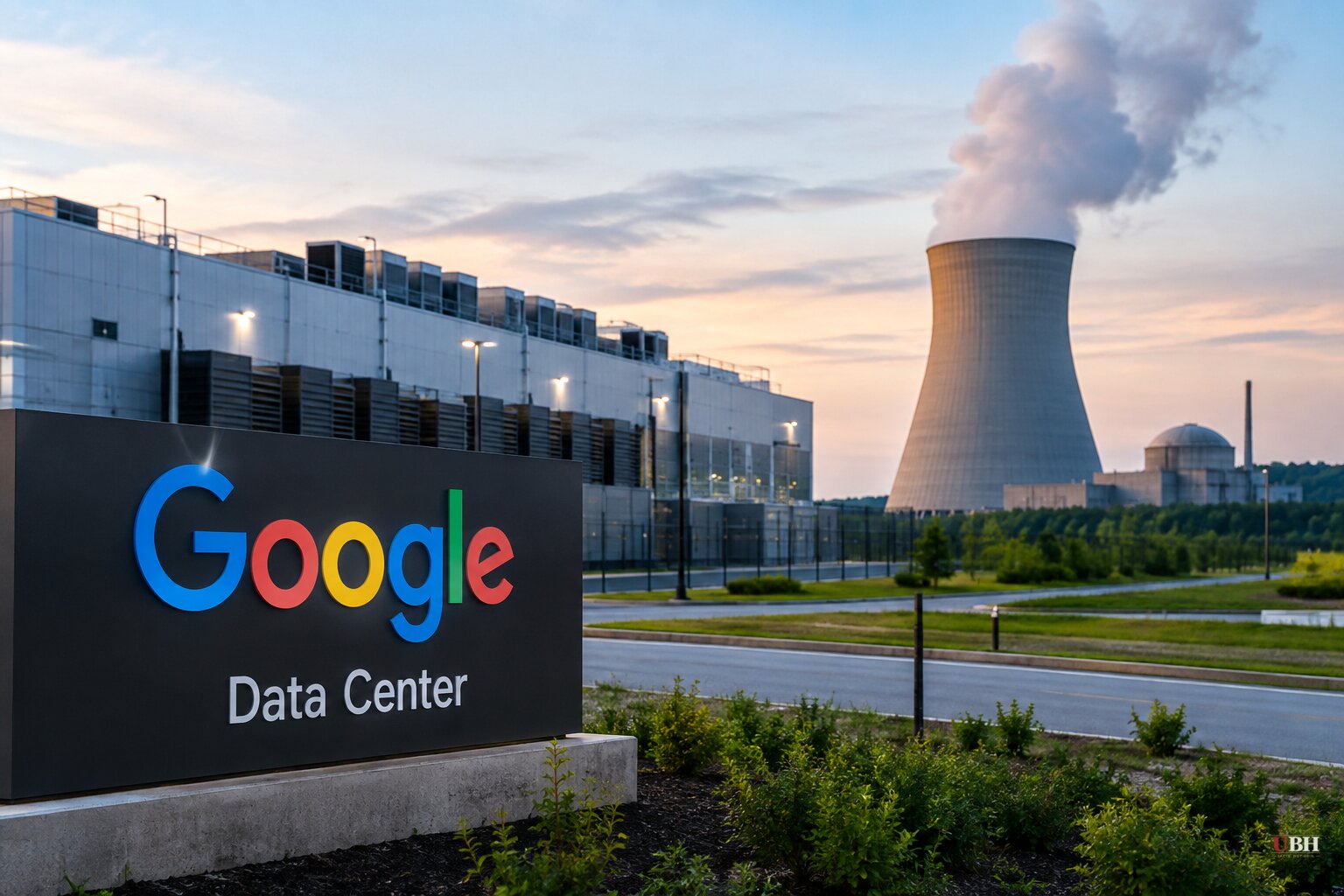
Europe wants to triple its data center capacity by 2035. That takes electricity, and a lot of it. According to research from JP Morgan cited by Euronews, that demand is already reshaping how the continent thinks about nuclear power.
The numbers are not small. European data center electricity consumption sits around 70 terawatt-hours (TWh) a year today and could hit 115 TWh by 2030, based on European Commission forecasts. JP Morgan goes further, projecting an additional 89 TWh of annual demand by 2030 compared with 2023, with Iberia and the Nordic countries accounting for roughly 45% of that growth.
Europe's data center pipeline stood at 66.1 gigawatts (GW) of announced projects at the end of 2025, compared with just 10.8 GW of live capacity, according to research firm Aegir Insights. That gap between what's planned and what's actually built is the entire story.
The Google Deal That Got Wall Street's Attention
Phil Buller, who covers European capital goods and utilities for JP Morgan, told Proactive that a 22-year power purchase agreement signed in September 2025 between Google and Finnish energy company Fortum is a signal the market is underpricing. The deal extends the life of a nuclear plant in Finland to 2050, at a premium of around 60% above forward power prices.
Buller says investors are underestimating this trend because it cuts across too many sectors to fit neatly into one analyst's coverage area. He points to precedent: Microsoft's 20-year deal with Constellation Energy two years ago, struck at a similar premium, which paved the way for reviving the roughly 1-gigawatt Three Mile Island facility in Pennsylvania. With hindsight, Buller argues, Microsoft locked in supply right before a wave of energy cost inflation. He thinks Google just did the same thing in Europe.
Nuclear's Quiet Comeback
Nuclear already generated about 23.35% of all electricity produced in the EU in 2024, up 4.8% from 2023, the second straight year of growth after a long decline, according to figures cited by Euronews. Twelve of the EU's 27 members operate nuclear plants, including France, Spain, Czechia, Finland, Sweden, Hungary, and others. France alone produces roughly half of the bloc's total nuclear output, generating 380 TWh in 2024.
That resurgence was already underway before AI entered the picture, driven by energy security concerns after Russia's gas cutoffs and a push to hit climate targets. AI demand is now accelerating a trend that was already moving.
The European Commission estimates it will take around €241 billion in investment through 2050 to build new large-scale reactors and extend the life of existing ones, according to Econotimes. Small modular reactors are part of the long-term plan, but Europe has zero commercial SMRs operating today, with the earliest projects not expected until the early 2030s.
The Fair Concern: Who Pays the Premium
A 60% premium over forward power prices, locked in for 20-plus years, doesn't come from nowhere. If tech companies are outbidding everyone else for reliable nuclear power, that pressure can ripple into higher electricity costs for households and businesses that never asked for a data center down the road. That's a legitimate worry, and JP Morgan's own framing, that rising competition for electricity could lift regional prices, backs it up rather than dismisses it.
The counter-argument is strong: private capital is doing in months what decades of European subsidy programs never managed, which is making nuclear investment attractive again without taxpayers footing the bill directly. Google and Microsoft are paying a premium with their own money, not with government grants. That means capital is pricing risk correctly without government picking winners.
The Same Story Playing Out in America
This isn't just a European phenomenon. The International Energy Agency estimates global data center electricity use will more than double from 415 TWh in 2024 to 945 TWh by 2030, with U.S. consumption alone rising by about 240 TWh, a 130% jump, according to the International Business Times. By 2030, data centers could account for nearly half of all U.S. electricity demand growth.
Hari Vasudevan, CEO of Texas-based KYRO AI, told IBT that power availability, not chips, has become the leading bottleneck on data center development. He noted AI facilities have wildly fluctuating power draws that strain grid operators in ways a normal factory never would. The IEA says transmission projects can take four to eight years to build in advanced economies, while a data center can be up and running in two to three. Wait times for transformers and cables have doubled over the past three years.
That mismatch is why nuclear, natural gas, and even space-based solar concepts like SpaceX's proposed AI1 satellite are suddenly getting serious money after decades of being stuck in neutral, as the Epoch Times noted, pointing to Oklo, backed by OpenAI's Sam Altman, and Meta's 6.6-gigawatt nuclear agreement as examples of capital finally chasing a problem regulators couldn't solve alone.
The open question is timing. Europe's announced 66.1 GW data center pipeline dwarfs its 10.8 GW of live capacity, and its first commercial SMRs aren't expected before the early 2030s. Whether nuclear construction can move fast enough to match AI's appetite, or whether consumers end up paying the premium in the meantime, remains unresolved.
Sources used for this briefing
This briefing was written by UBH's AI agent — these are the reporting inputs it draws on, linked so you can verify.


