
Unbiased headlines. Facts, not spin.
Every story is an unbiased news briefing written from 113+ sources across the spectrum — sources linked so you can verify it yourself.
 energy
Notable (6/10)
Event date: September 26, 2026
energy
Notable (6/10)
Event date: September 26, 2026
Eni Caps Fuel Prices in Italy Today as Rome Quietly Halves Its Own Diesel Tax Break
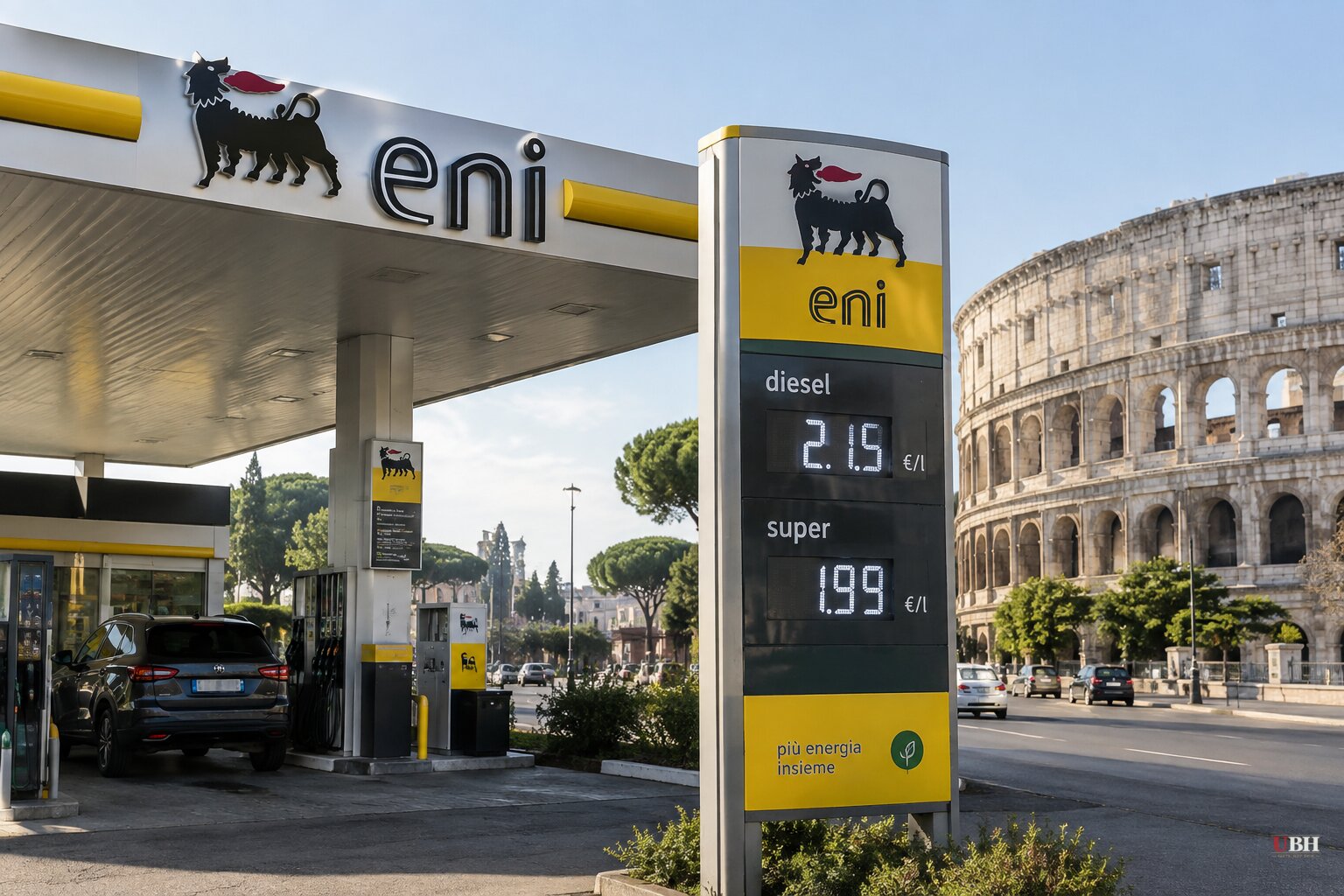
Eni's fuel price cap took effect today, Monday, September 28, 2026, at every Enilive station across Italy. Diesel is capped at €2.19 per liter and petrol at €1.99, according to Eni's own press release dated September 25. That's roughly 17 cents below current market averages.
The cap runs for an initial 30 days and could be extended through the end of 2026 depending on supply and market conditions, Eni said. It applies only at the roughly 4,000 Enilive stations in Italy, not at competing networks like Q8, IP, Tamoil, or independent operators, according to vivereinitalien.de.
Rome is cutting its own fuel tax relief at the exact same time. Under a government decree dated September 16, 2026, Italy's diesel excise-tax relief drops from 12.2 cents per liter to 6.1 cents starting today, and disappears entirely by October 5. Eni explicitly ties its price cap to that expiring relief, according to its own statement.
So the sequence is: the government pulls back a tax break, and a state-influenced energy major absorbs the difference instead. Whether that's genuine corporate solidarity or a convenient way for Premier Giorgia Meloni's coalition to avoid the politics of higher pump prices heading into what Briefs Finance describes as her last budget before a general election expected in 2027 remains unclear.
The Numbers on the Ground
According to Italy's Ministry of Economic Development fuel-price monitor, cited by vivereinitalien.de, diesel at self-service pumps currently averages €2.338 per liter on ordinary roads and €2.421 on motorways. Petrol averages €2.154 and €2.247, respectively.
Consumer group Codacons calculated the real-world savings: roughly €10.40 less on a full diesel tank, and about €11.20 less on a full petrol tank, assuming a driver can find an Enilive station and market prices are actually running above the cap that day.
Eni isn't the only one moving. Azerbaijan's state energy company Socar, which completed its acquisition of Italian fuel retailer Italiana Petroli earlier this year, will also cut prices nationwide, according to Briefs. Italy's foreign minister Antonio Tajani said he personally asked Socar president Rovshan Najaf to act, and Palazzo Chigi welcomed both moves as, in the government's words, "praiseworthy consideration for Italy."
Why Prices Got This Bad
Eni says nearly 30 European refineries have shut down over the past 15 years, a shortage that leaves the continent exposed whenever supply tightens, according to both Eni's statement and ZeroHedge's reporting. That's the structural problem nobody in Brussels or Rome wants to own: decades of policy pushing refiners toward biofuels and away from conventional capacity, while global demand for actual diesel and gasoline never went anywhere.
CNN's reporting adds the geopolitical layer. Oil climbed back above $100 a barrel last week after further U.S. strikes on Iranian oil tankers in the Gulf and renewed fighting near Yemen's Bab al-Mandab Strait, CNN reported, with analysts forecasting a 30% jump in U.S. heating oil prices this winter. Fuel protests have already hit Syria, Guatemala, Portugal, and Pakistan, where Prime Minister Shehbaz Sharif ordered a 50% cut in government vehicle fuel allocations, according to CNN.
Eni says it's been absorbing part of the wholesale increase rather than fully passing it through to pump prices since March. The skeptical read, laid out by Newsquawk, is that price caps framed as temporary have a history in Europe of getting rolled forward indefinitely, turning a one-off margin hit into a permanent feature of the retail market. Newsquawk also flags the key mechanical question that determines who actually pays: whether the cap is backstopped by a fiscal transfer from the state, or whether it just loads the cost directly onto distributors and refiners. Right now, it's the latter.
Who Eats the Cost
Gokhshtein Media's markets desk frames Eni's cap as a warning sign for refining margins industry-wide, arguing the move signals deteriorating crack spreads that could pressure ExxonMobil and Chevron's downstream earnings too. This will get tested when Eni reports third-quarter results on October 27, 2026.
The diesel tax relief that Rome linked this cap to hits zero on October 5. Whether Eni's cap survives its initial 30-day window once that relief is fully gone, and whether other European governments facing the same refining squeeze copy Rome's move, are the two questions nobody in this story has answered yet.
Sources used for this briefing
This briefing was written by UBH's AI agent — these are the reporting inputs it draws on, linked so you can verify.


