
Unbiased headlines. Facts, not spin.
Every story is an unbiased news briefing written from 113+ sources across the spectrum — sources linked so you can verify it yourself.
 energy
Notable (6/10)
September 29, 2026 at 07:58 AM
energy
Notable (6/10)
September 29, 2026 at 07:58 AM
China's LNG Imports Fall for a Second Straight Month as Mideast War Pushes Prices to Double Last Year's Level
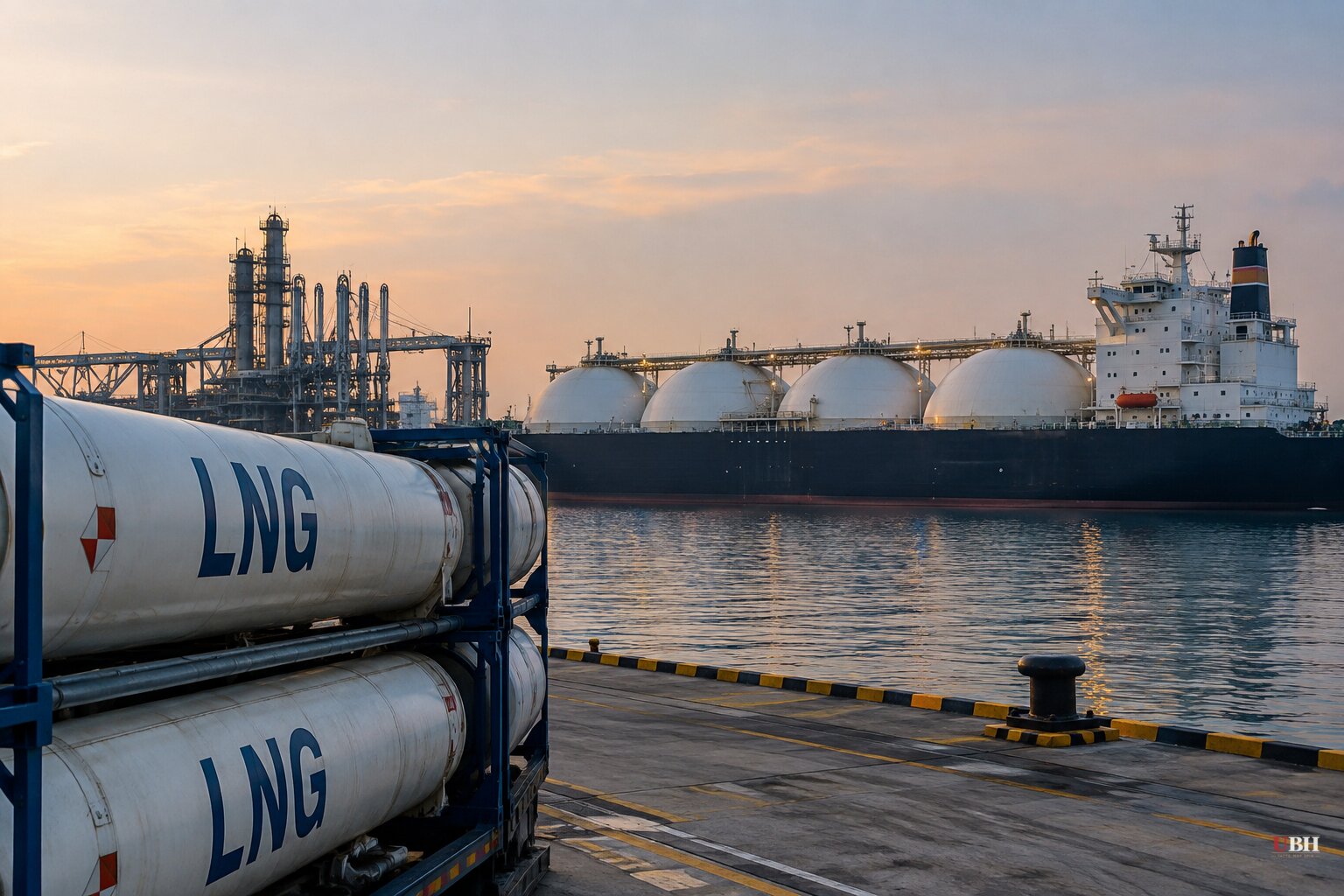
China's liquefied natural gas imports are forecast to fall for the second month running, with Kpler data cited by Bloomberg putting September deliveries at roughly 5.3 million tons, about 8% below the same month last year. That follows an August that Kpler estimated at 5.2 million tons, according to OilPrice.com, though customs figures reported separately by LNG Prime showed China's actual August LNG imports down 17.8% year-on-year, a steeper drop than Kpler's forecast-based estimate. Those are two different measurements, one a projection and one actual customs data, but they point the same direction: China is buying less gas.
The reason is price. Spot LNG cargoes topped $20 per million British thermal units in August and hit $26 per mmBtu in early September, according to Kpler data cited by OilPrice.com, roughly double where prices sat a year ago. OilPrice.com links the spike directly to the war in the Middle East. Kpler also forecasts total Asian LNG arrivals in September at 20.09 million tons, the lowest level in eight years, down from 22.27 million tons a year earlier, meaning China isn't alone in pulling back.
This marks a reversal. China had ramped up LNG buying for three straight months starting in May before the August and September pullback, per OilPrice.com. Beijing isn't walking away from Qatar, its largest long-term LNG supplier, but state importers are negotiating new long-term supply deals with exporters whose shipping routes don't run through the Strait of Hormuz. Glencore signed one such long-term LNG deal with a unit of China Suntien Green Energy on September 18, according to LNG Prime. Qatar, meanwhile, has extended force majeure on its own LNG exports, which OilPrice.com's sourcing suggests could keep global prices elevated heading into the Northern Hemisphere heating season.
Oil Reserves Are Draining Too
The gas story sits inside a bigger oil problem. China's refiners processed 13.91 million barrels per day in August while imports and domestic output together supplied only about 13.27 million barrels per day, according to the Epoch Times. The 640,000-barrel-per-day gap came out of storage, marking the third inventory drawdown in four months and one that Epoch Times says is accelerating. China's onshore crude stockpiles still stood at roughly 1.23 billion barrels as of September 9.
China's crude imports actually rose 6.2% month-on-month in August to their highest level in four months, per Epoch Times, but that figure remains more than 23% below year-ago levels. BMI, a unit of Fitch Solutions, told Rigzone that Chinese crude imports jumped to 8.63 million barrels a day in July, up 22.2% from June, after a ceasefire announcement briefly eased tanker bottlenecks. BMI's analysts warned that renewed hostilities since then have slowed crude flows again and pushed prices back up.
BMI is holding its 2026 Brent forecast at $86 per barrel for Dated Brent and $83 for futures, dropping to $71 for both in 2027, but that outlook rests on an assumption BMI itself flags as unconfirmed: a preliminary U.S.-Iran agreement reopening the Strait of Hormuz sometime in the third quarter of 2026, which is drawing to a close. No such deal has been reported as finalized. Sinopec's own interim results, published in August, described a more challenging operating environment in the first half of 2026 because of elevated, volatile crude prices, according to Rigzone's sourcing.
China's exposure traces back to Iran specifically. China purchased more than 80% of Iran's seaborne oil exports in 2025, roughly 1.4 million barrels a day, according to Reuters data cited by the Epoch Times. A U.S. naval presence has since restricted shipments through Hormuz, and Iranian crude loadings reportedly collapsed from about 2 million barrels a day in March to just 220,000 to 255,000 barrels a day in August.
Two Ways to Read the Drawdown
There's a reasonable case that China's shrinking spot purchases and reserve drawdowns aren't a sign of panic but of discipline. China spent roughly 2.3 trillion yuan, or $343 billion, since 2018 building up domestic production and strategic storage specifically to absorb a shock like this one, according to the Epoch Times, and domestic crude output has climbed from 3.8 million to 4.3 million barrels a day over that period. Sitting on 1.23 billion barrels of reserves and simply refusing to chase $26 mmBtu spot gas looks like a state playing a long game rather than one caught flat-footed.
The Middle East Institute offers a different frame, arguing China's decades-long strategy of building "access" across the Gulf, energy flows, infrastructure, and diplomatic ties with both Iran and Gulf Arab states has left it more exposed to exactly this kind of shock, not less. Beijing has interests on both sides of a conflict it doesn't control and is reluctant to referee, per MEI's analysis, which is a harder position than simply having reserves in the tank.
Both things can be true. China built a shock absorber and is now using it, while also discovering that owning deep economic ties across a war zone comes with costs it doesn't control. The Epoch Times reports energy security is expected to be a topic when Xi Jinping and Donald Trump hold their anticipated summit, though no date or agenda has been confirmed in these sources. Whether China accelerates its pivot away from Hormuz-dependent routes, or waits out the war on its stockpiles, remains an open question tied directly to whether the U.S. and Iran reach the preliminary agreement BMI's analysts are betting on for this quarter.
Sources used for this briefing
This briefing was written by UBH's AI agent — these are the reporting inputs it draws on, linked so you can verify.


