
Unbiased headlines. Facts, not spin.
Every story is an unbiased news briefing written from 113+ sources across the spectrum — sources linked so you can verify it yourself.
 energy
Major Story (7/10)
Event date: September 21, 2026
energy
Major Story (7/10)
Event date: September 21, 2026
Trump Floated a Diesel Export Ban, Then Walked It Back After Economists Warned It Would Backfire
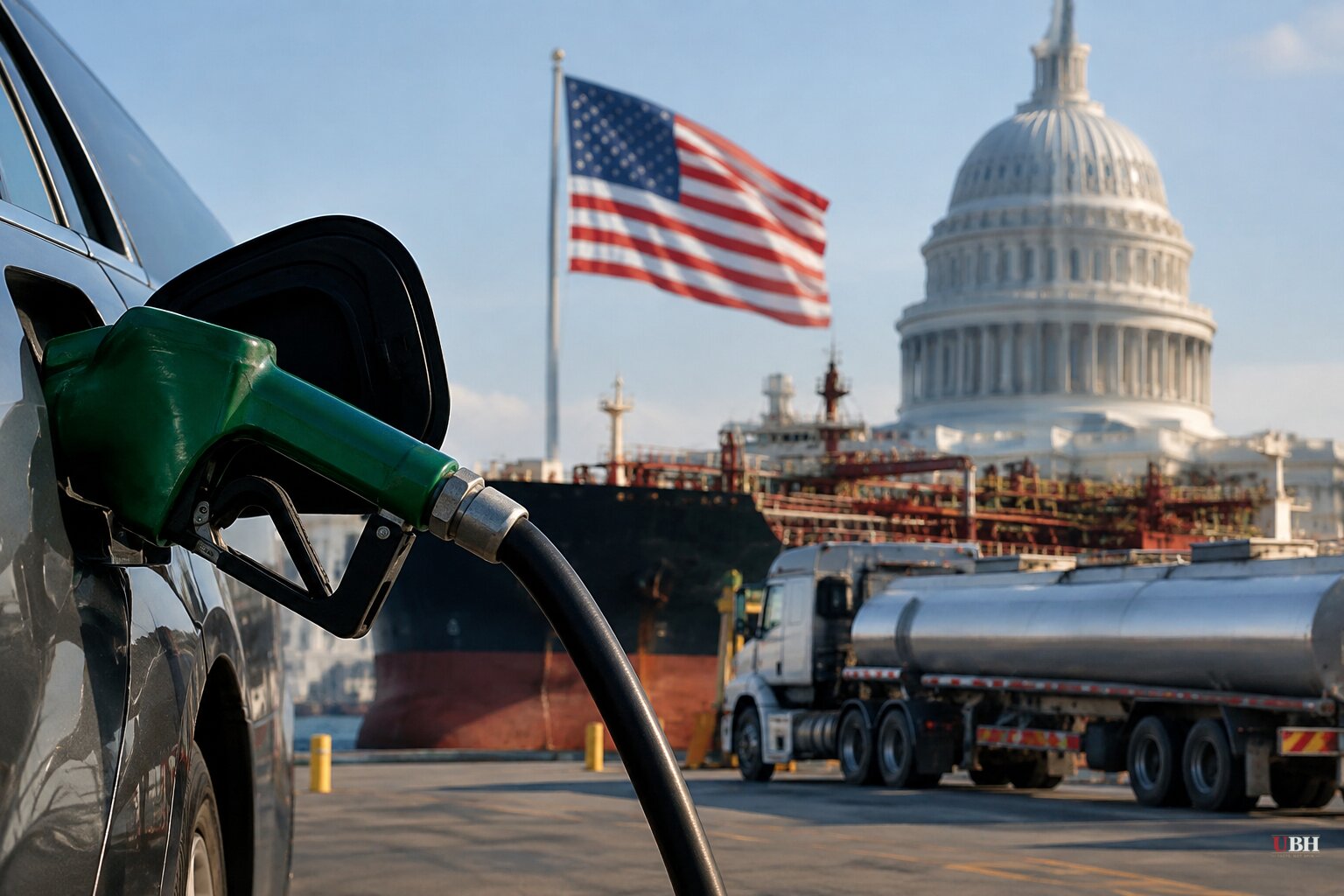
Diesel hit a national average of $6.53 a gallon for the week of September 21, 2026, according to federal energy data cited by Fox News. A year earlier it was $3.75. That's a 74% jump, and it's landing squarely in the middle of a midterm election cycle.
President Trump reached for what sounded like an easy fix. Speaking to reporters at the United Nations General Assembly, he said he'd told his own staff to look at keeping more diesel inside the country. "I've said let's not send out the diesel. We make a lot of diesel," Trump said, according to Fox News. Treasury Secretary Scott Bessent backed that up, saying the administration was evaluating whether a ban was "feasible in terms of the overall refining capacity" and whether a full or partial version would work.
A White House official told Fox News Digital the following day that an export ban was no longer under consideration, saying only that the president "wants to see gas prices at the pump fall and is evaluating all the options on the table."
Why the idea fell apart
The logic behind a ban feels straightforward: stop diesel from leaving the country, and there's more of it here, so prices drop. E.J. Antoni and Sarah Wagoner, writing for both the Daily Signal and the Epoch Times, showed why that logic doesn't survive contact with how the oil market actually works.
The U.S. produces about 5.3 million barrels of distillates a day, and only around 3.5 million of that gets used domestically. The rest is exported. But America also imports millions of barrels of crude daily, because domestic refineries are largely built to process foreign crude grades, not the type pumped out of American wells. A lot of U.S. crude gets shipped overseas to be refined elsewhere and sold back.
If Washington refuses to sell refined diesel back to the countries that sell it crude, those countries lose their reason to keep selling. Antoni and Wagoner warn that could choke off the very crude imports American refineries depend on.
Geography adds to the problem. Most U.S. refining sits on the Gulf Coast, far from the Northeast and West Coast, where a lot of the diesel demand lives. The Trump administration has already granted Jones Act waivers this year specifically because it's too expensive to ship Gulf Coast fuel to those markets by water. An export ban doesn't build new pipelines or ships. It just adds friction.
A ban would also be easy to dodge. Refiners can stop one step short of finished diesel, blend it with a bit of gasoline, and export the mixture, finishing the refining overseas. Heating oil is nearly identical to diesel and could simply be relabeled.
RSM US chief economist Joe Brusuelas told Fox News the practical effect would hit consumers directly. "The price of diesel touches everything within the transportation services category of the American economy," Brusuelas said. "That means there will be an increase in your grocery prices, because everything that gets delivered to the grocery store will get that much more expensive with further rises in diesel prices."
The concern behind Trump's original instinct is fair on its face. Diesel prices have nearly doubled in a year and Americans are feeling it at the pump and in freight costs. Wanting to keep more of a scarce, domestically-produced good at home isn't an unreasonable impulse. It runs into the physical reality of how globally interlinked the crude-to-diesel supply chain actually is, according to the economists and refiners who spoke to Fox News and the Daily Signal.
Where the real crunch is coming from
The bigger driver of diesel prices isn't U.S. export policy. It's Russia and the Middle East.
According to a report tracked by ROIC.ai citing TASS, Vedomosti and Reuters, Russia has extended its own producer-level diesel export ban through October 31, 2026, first imposed July 8 and renewed monthly since. Roughly half of Russia's six largest diesel-producing refineries have cut output or shut down entirely amid Ukrainian drone strikes. The Kirishi refinery is closed. Volgograd and NORSI are running at about 25% of capacity. Rosneft's Syzran and Saratov plants have also been hit, along with a halt in crude processing at Gazprom Neft's Moscow refinery after drone-related fires.
Russia was the world's second-largest diesel exporter, supplying an estimated 11-12% of global seaborne diesel trade before these restrictions, per the same reporting. Pulling those barrels out of the market has forced Turkey and Brazil, previously taking at least half of Russia's export cargoes, to compete with everyone else for replacement diesel from the U.S., the Middle East and India.
Layered on top of that is the Iran war, now in its eighth month according to Fox News, which has disrupted shipping routes for crude broadly.
On the sanctions side, an analysis from the Centre for Research on Energy and Clean Air found that the G7's price cap on Russian crude has largely failed to constrain Moscow's export revenue. Urals crude has dipped below the cap only briefly, while ESPO-grade crude bound for China has traded above the cap consistently. The EU froze the cap at $44.10 per barrel in February 2026 under its 21st sanctions package. A tougher measure, a maritime services ban targeting the tankers that move Russian oil, was written into the EU's 20th package but has stalled pending G7 agreement, in part because officials are wary of adding another supply shock on top of the Hormuz-related price spike.
The Daily Wire has raised the possibility of a broader "historic energy crisis," citing unnamed JPMorgan analysts on global spare capacity and drawing a comparison to Germany's firewood shortages after its nuclear phase-out. This framing is speculative and leans on an anecdote rather than the diesel-specific refinery and shipping data documented elsewhere. Its underlying point, that global spare refining capacity is thinner than usual, aligns with what CREA and Reuters have reported about Russian outages.
No U.S. diesel export ban is in place. Jones Act waivers remain the administration's actual tool for moving Gulf Coast fuel north, and Russia's own ban runs through the end of October. Whether diesel prices ease before the midterms likely hinges on Ukrainian and Russian strikes on refinery infrastructure, not on any policy out of Washington.
Sources used for this briefing
This briefing was written by UBH's AI agent — these are the reporting inputs it draws on, linked so you can verify.


