
Unbiased headlines. Facts, not spin.
Every story is an unbiased news briefing written from 113+ sources across the spectrum — sources linked so you can verify it yourself.
 energy
Major Story (8/10)
September 29, 2026 at 05:38 PM
energy
Major Story (8/10)
September 29, 2026 at 05:38 PM
EU Confirms $113.5 Billion in Extra Energy Costs Since Iran War Began, Zero Extra Barrels to Show for It
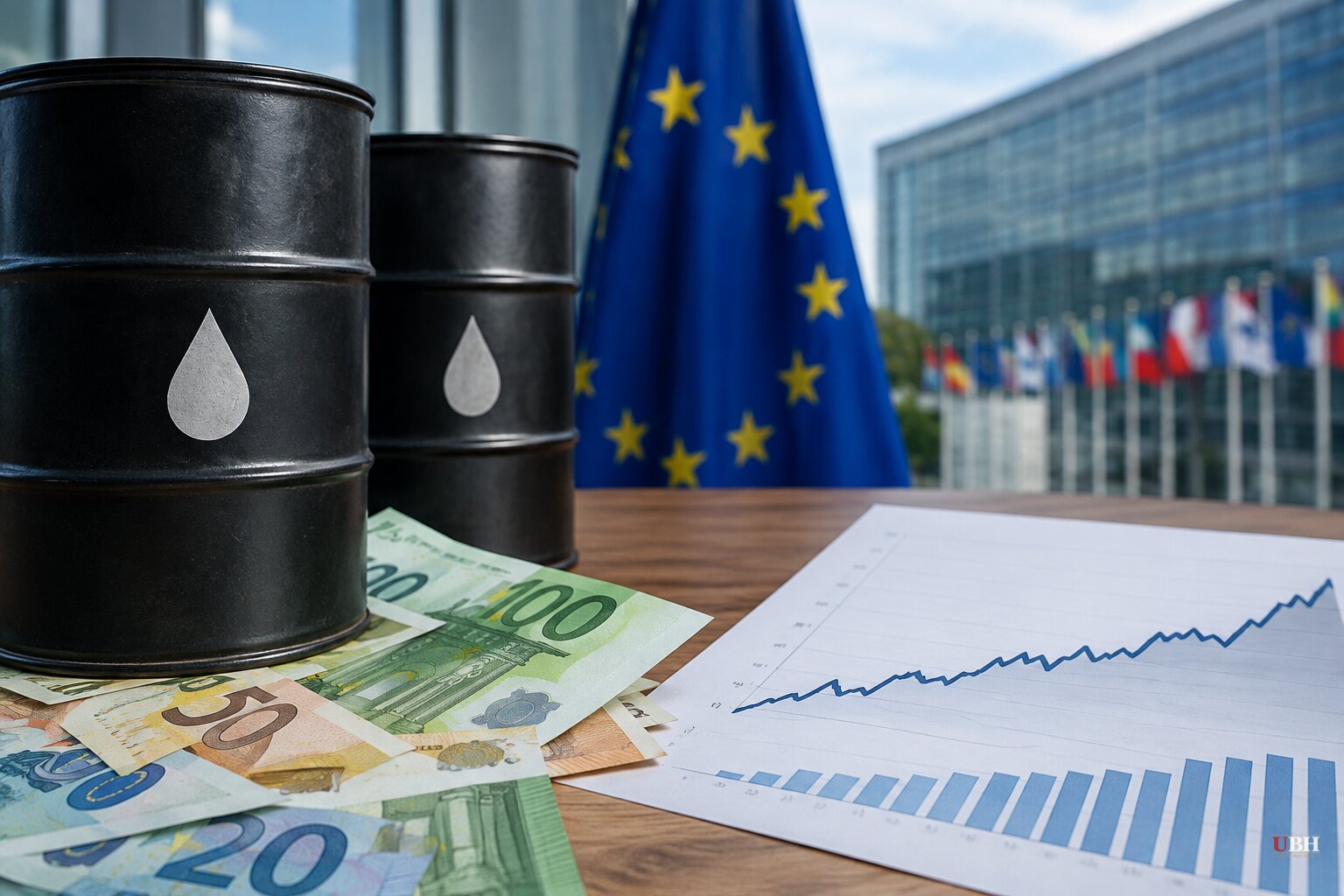
Since the Iran war entered its eighth month this week, European households have absorbed a bill nobody budgeted for: over €100 billion ($113.5 billion) in extra energy costs, according to EU Energy Commissioner Dan Jørgensen, who laid out the figure Tuesday at an informal meeting of energy ministers in Dublin.
Jørgensen's math is blunt. "We have now surpassed €100 billion that we've paid extra for our energy this year without receiving one extra molecule of gas or oil," he said, according to Anadolu Agency. Same supply, same contracts, just a much bigger invoice because the Strait of Hormuz has been closed since Iran and the U.S. went to war.
The pain is uneven but real. Consumers in some EU countries are now paying nearly 50% more at the pump, the equivalent of more than $11 a gallon, according to Fortune and multiple wire reports carrying the same Dublin briefing.
Diesel Is the Real Choke Point
International Energy Agency chief Fatih Birol told the Dublin gathering that Europe is uniquely exposed heading into winter because it leans so heavily on imported diesel, roughly half of it from the United States. "Europe is one of the most exposed regions, if not the most exposed one, when it comes to diesel," Birol said.
That dependency is now tangled up in U.S. politics. Republicans in several states have pushed for a ban on American diesel exports to shore up domestic supply ahead of the midterms, a move that would blow a hole in President Trump's 2025 pledge to sell $750 billion in energy to the EU.
The case for a ban isn't unreasonable on its face. Diesel has hit record U.S. prices, and lawmakers pushing to keep more of it at home are responding to voters who are furious about pump prices before an election. That's a real political pressure, not a fabricated one.
But Ireland's climate minister, Darragh O'Brien, called an export ban "unlikely" because it would hurt both economies, and Jørgensen said he's already sent Washington "a very clear signal" to drop the idea. Anadolu Agency reported that U.S. Energy Secretary Chris Wright has publicly said he doesn't support a ban either, though the source material does not indicate any formal U.S. policy decision has been made either way.
Jørgensen also said the EU is not currently in a security-of-supply crisis and doesn't expect one, even as he warned the bloc has to eliminate whatever uncertainty it can before winter hits.
Finland's Pitch: Just Build Your Own Grid
Finnish Environment Minister Sari Multala used the Dublin meeting to make the case for going around the whole import problem. She said nuclear reactors, turbines, peat bogs and hydropower supply 95% of Finland's electricity, which she says keeps prices "very reasonable" even as neighbors get squeezed. Jørgensen wants that model replicated across the bloc, pushing an electrification plan and a grid-expansion package the EU is negotiating with lawmakers now.
Iran's Side of the Ledger
While Europe counts its losses, Iran's own economy is cratering under the U.S. blockade Trump has dubbed Operation Economic Outcast. Iran's rial hit a record low of 2.5 million to the dollar on Tuesday, down from 2.2 million at the start of September and 2.02 million in August, according to Breitbart.
Government spokeswoman Fatemeh Mohajerani said Monday that strikes on Iran's energy sector knocked out 230 million cubic meters of gas capacity, of which Tehran has only restored about 100 million. Golestan's deputy governor, Seyed Medhi Mahiai, warned gas restrictions in northern provinces could run up to 90 days this winter, though Iran's National Gas Company disputed that as an unofficial estimate.
Iranian parliamentarian Jafar Ghaderi said the country is now short 15 to 20 million liters of gasoline a day, with 83% of its refined-fuel imports cut off by the blockade.
Trump, speaking Sunday at the Presidents Cup, claimed Iran's inflation is running near 300%, citing a figure of 318% he said he'd heard that morning. That number has not been independently verified by an outside source in this reporting and should be treated as Trump's own characterization of the war's economic toll, not a confirmed statistic. Trump also declined to rule out further U.S. military strikes before the midterms, saying only "it's possible."
So the trade-off sits in plain view: Europe is out $113.5 billion with nothing extra to show for it, and Iran's currency and fuel supply are collapsing under the blockade Washington built to force that outcome. Whether either side blinks first likely depends on what happens with the diesel export decision in Washington and whatever comes out of the still-unresolved U.S.-Iran talks track.
Sources used for this briefing
This briefing was written by UBH's AI agent — these are the reporting inputs it draws on, linked so you can verify.


