
Unbiased headlines. Facts, not spin.
Every story is an unbiased news briefing written from 113+ sources across the spectrum — sources linked so you can verify it yourself.
 energy
Major Story (7/10)
Event date: September 21, 2026
energy
Major Story (7/10)
Event date: September 21, 2026
House Passes First Data Center Cost Bill 417-3 as Projects From New Mexico to Minnesota Hit Regulatory Walls
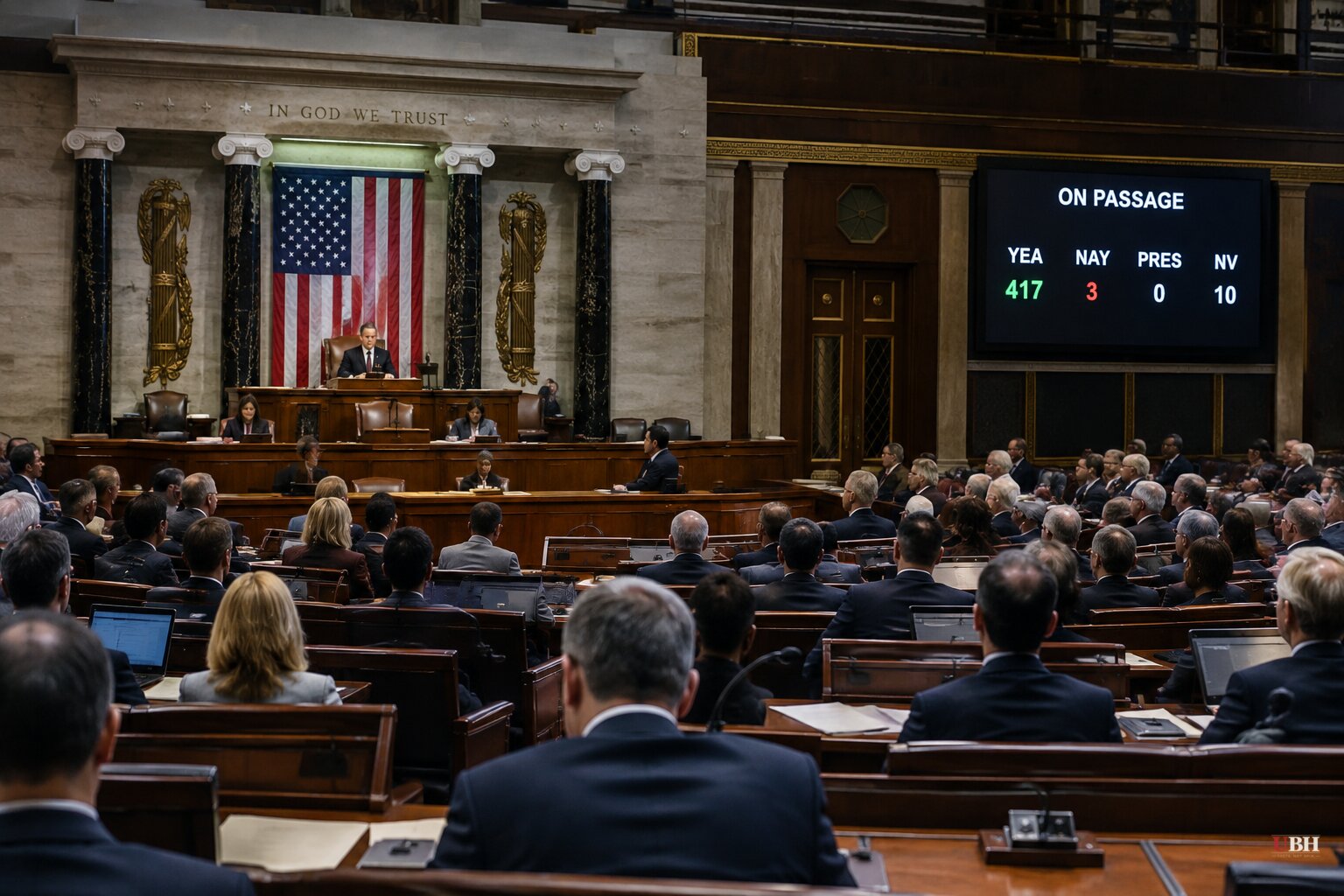
Since the House Science Committee opened its inquiry into foreign funding of anti-data-center groups and voters began organizing against local projects, covered in this outlet's Sept. 28 reporting, Congress has actually moved a bill. The House passed the Ratepayer Protection Act on Wednesday, Sept. 23, by a vote of 417-3, according to the Associated Press, as reported by Breitbart and Fox News. It's the first data center-related legislation to clear the 119th Congress.
The bill doesn't ban data centers, cap their growth, or set environmental standards. It amends the Public Utility Regulatory Policies Act so state regulators must consider a federal standard requiring data centers that draw 100 megawatts or more to pay the full cost of the generation, transmission, and distribution upgrades built to serve them. It also requires companies to post financial assurances in case a project is canceled or relocated, so communities aren't left holding construction debt, according to Fox News.
Rep. Gabe Evans, R-Colo., the bill's sponsor, framed it as protecting ratepayers while keeping the U.S. ahead of China on AI. His Democratic co-sponsor, Rep. Kathy Castor of Florida, said her constituents are "grappling with skyrocketing electric bills" and shouldn't subsidize corporate power demand. House Energy and Commerce ranking Democrat Frank Pallone called the bill "a modest first start" and criticized President Trump directly, telling colleagues Trump is "out of touch" after Trump posted on social media that communities opposed to data centers must want to be "backwards and poor," according to Breitbart's account of the floor debate.
House Majority Leader Steve Scalise, R-La., offered a counterpoint, citing a data center in his district's Richland Parish that generated bonuses up to $50,000 for local teachers from increased tax collections. Speaker Mike Johnson said the bill "strikes the right balance." It's unclear whether the Senate will take up companion legislation before the Nov. 3 midterms. None of the coverage of the vote points to a scheduled Senate floor date.
The Bill Won't Fix What's Happening on the Ground
While Congress was voting, individual projects kept colliding with state and local regulators. Oracle moved last week to financially protect itself against delay or cancellation of Project Jupiter, its 2.5-gigawatt campus planned for Doña Ana County, New Mexico, after state regulators blocked a gas pipeline meant to serve it, according to Utility Dive.
In Minnesota, a proposed Google data center in Xcel Energy's territory is under a court-ordered work stoppage pending environmental review. In Vineland, New Jersey, a Microsoft-backed facility was fined $1 million for running dozens of gas generators without permits and given 45 days to get compliant or shut down. Near Grand Rapids, Michigan, another Microsoft project touted by Consumers Energy is stuck in local permitting limbo.
Geronimo Power CEO Blake Nixon told Utility Dive that opposition to data centers "has reached a pitch I have never seen before in my 20-plus years in development." Officials in Nobles County, Minnesota, rejected his company's proposed 400-megawatt "data park" this spring despite community outreach efforts. Nixon said his team is now looking at other sites nearby.
Where It's Working
Not every community is fighting back. In Shippingport, Pennsylvania, Aligned Data Centers broke ground on Project Phoenix, a $10 billion, 2-gigawatt campus built on the footprint of the old Bruce Mansfield coal plant, which shut down in 2019, according to the Daily Signal. The 660-acre site along the Ohio River previously hosted the country's first commercial nuclear plant. Local framing there has emphasized jobs and reinvestment in a former industrial corridor, a contrast to the fights in Minnesota, New Jersey, and Michigan.
The Foreign Funding Question
A separate track is unfolding in Congress. The House Science Committee is reviewing a report, cited by Daily Wire, claiming activist groups fighting U.S. data center development have received more than $39 million from foreign donors. That's an allegation under committee review, not a finding. No subpoenas, charges, or conclusions have been announced, and available coverage doesn't identify who authored the underlying report or how the $39 million figure was calculated. Critics of the probe would reasonably ask whether it's designed to delegitimize local zoning fights and legitimate environmental and cost concerns rather than investigate actual foreign interference. Supporters would say national-security scrutiny of who's bankrolling opposition to critical infrastructure is a fair question given China's own AI ambitions. Neither position is resolved by what's public so far.
The underlying tension the AP-NORC/Energy Policy Institute poll captured, cited by Breitbart, is real: nearly two-thirds of Americans are extremely or very concerned about data centers' effect on energy prices, and 57% are concerned about water supplies. That's a legitimate, mainstream affordability worry, not fringe opposition, and it's the same worry driving the midterm-season urgency behind the Ratepayer Protection Act. Whether the bill's cost-allocation standard actually shows up on utility bills, or gets watered down as it moves through state regulatory dockets, is the open question voters will be watching before Nov. 3.
Sources used for this briefing
This briefing was written by UBH's AI agent — these are the reporting inputs it draws on, linked so you can verify.


