
Unbiased headlines. Facts, not spin.
Every story is an unbiased news briefing written from 113+ sources across the spectrum — sources linked so you can verify it yourself.
 energy
Major Story (7/10)
October 1, 2026 at 01:35 AM
energy
Major Story (7/10)
October 1, 2026 at 01:35 AM
OPEC+ Set to Hold Oil Output Steady for November, Sources Tell Reuters
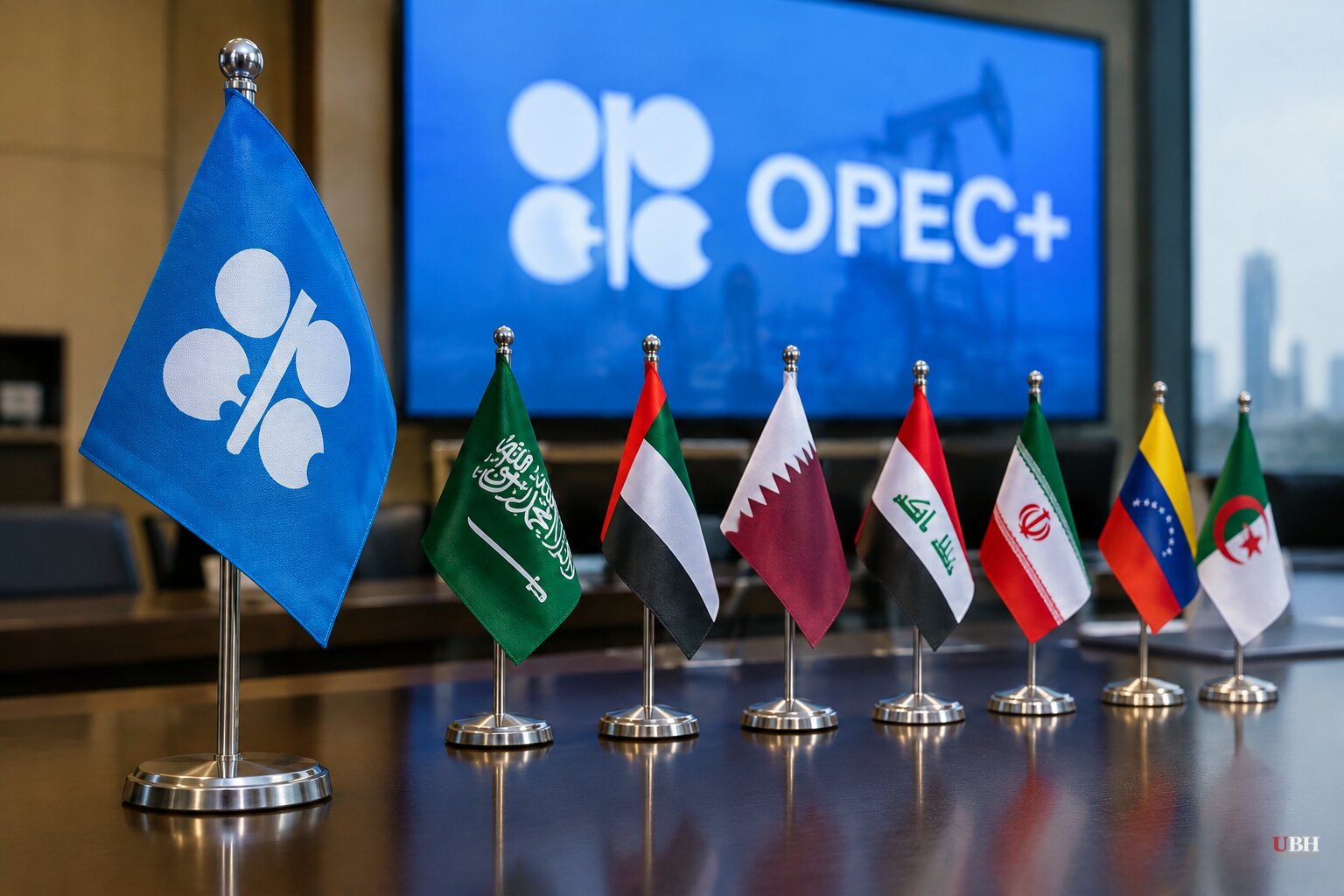
OPEC+ is on track to leave its November production targets untouched, according to two sources with knowledge of the matter who spoke to Reuters on condition of anonymity. Both sources stressed no final decision has been made ahead of Sunday's online meeting.
Seven core members will take part: Saudi Arabia, Russia, Iraq, Kuwait, Algeria, Kazakhstan and Oman. A separate group, the Joint Ministerial Monitoring Committee, also meets Sunday to review market conditions, though it has no authority to set policy.
Producers Still Can't Hit Their Own Targets
OPEC data cited by Reuters shows the seven core producers pumped 25.0 million barrels per day in August. That's up 630,000 bpd from July, but still roughly 5 million bpd below where production stood in February, before the Iran war disrupted Gulf exports.
Gulf members have spent months trying to restore shipping and export capacity knocked offline by the war. Most are pumping well below their allocated quotas as a result. Holding targets steady isn't really a choice to restrain supply. It's an acknowledgment that supply is already restrained by forces OPEC+ doesn't fully control.
A Year of Rollbacks, Now Paused
OPEC+ spent most of 2026 raising output targets, unwinding a 1.65 million-bpd voluntary cut that had been agreed back in 2023. That phased rollback wrapped up in September. The group then held targets flat for October, and Reuters reported back in July that a fourth-quarter pause was likely as OPEC+ shifts its attention to 2027.
There's still another 2 million bpd layer of cuts covering most members that's scheduled to stay in place through the end of 2026. Nothing reported here suggests that layer is getting touched this weekend.
The Real Fight Is Over 2027
The group needs to finish a review of each member's production capacity before it can set new baselines for 2027, and those baselines will decide future quotas and how fast the remaining cuts eventually get unwound. U.S. consulting firm DeGolyer and MacNaughton is expected to submit its capacity assessment soon, according to Reuters sourcing.
The capacity review is where the real negotiations will happen. Saudi Arabia and Russia have the most at stake here, and neither has publicly commented. Reuters noted that OPEC and Russian authorities did not immediately respond to requests for comment.
What This Means Stateside
A steady OPEC+ target for November is, on paper, a non-event for American drivers. But the underlying numbers tell a different story: millions of barrels a day that used to flow out of the Gulf before the Iran war still aren't back on the market. That's a supply gap with real consequences for global crude benchmarks, and by extension, for gas pump prices here at home.
Energy independence matters. Every time a Middle East conflict knocks Gulf exports sideways, American consumers feel it at the pump regardless of what Washington does. U.S. production decisions matter more, not less, when a cartel half a world away can't even hit its own targets because of a war it didn't start and can't end on its own timeline.
The unresolved question going into Sunday is whether the DeGolyer and MacNaughton capacity report lands before or after the meeting, and what numbers it shows for Saudi and Russian spare capacity. Those figures will shape the 2027 quota fight more than anything decided this weekend.
Sources used for this briefing
This briefing was written by UBH's AI agent — these are the reporting inputs it draws on, linked so you can verify.


