
Unbiased headlines. Facts, not spin.
Every story is an unbiased news briefing written from 113+ sources across the spectrum — sources linked so you can verify it yourself.
 energy
Major Story (8/10)
October 1, 2026 at 06:15 PM
energy
Major Story (8/10)
October 1, 2026 at 06:15 PM
Canada Designates $35-44 Billion Pacific Link Pipeline Its First 'National Interest' Project
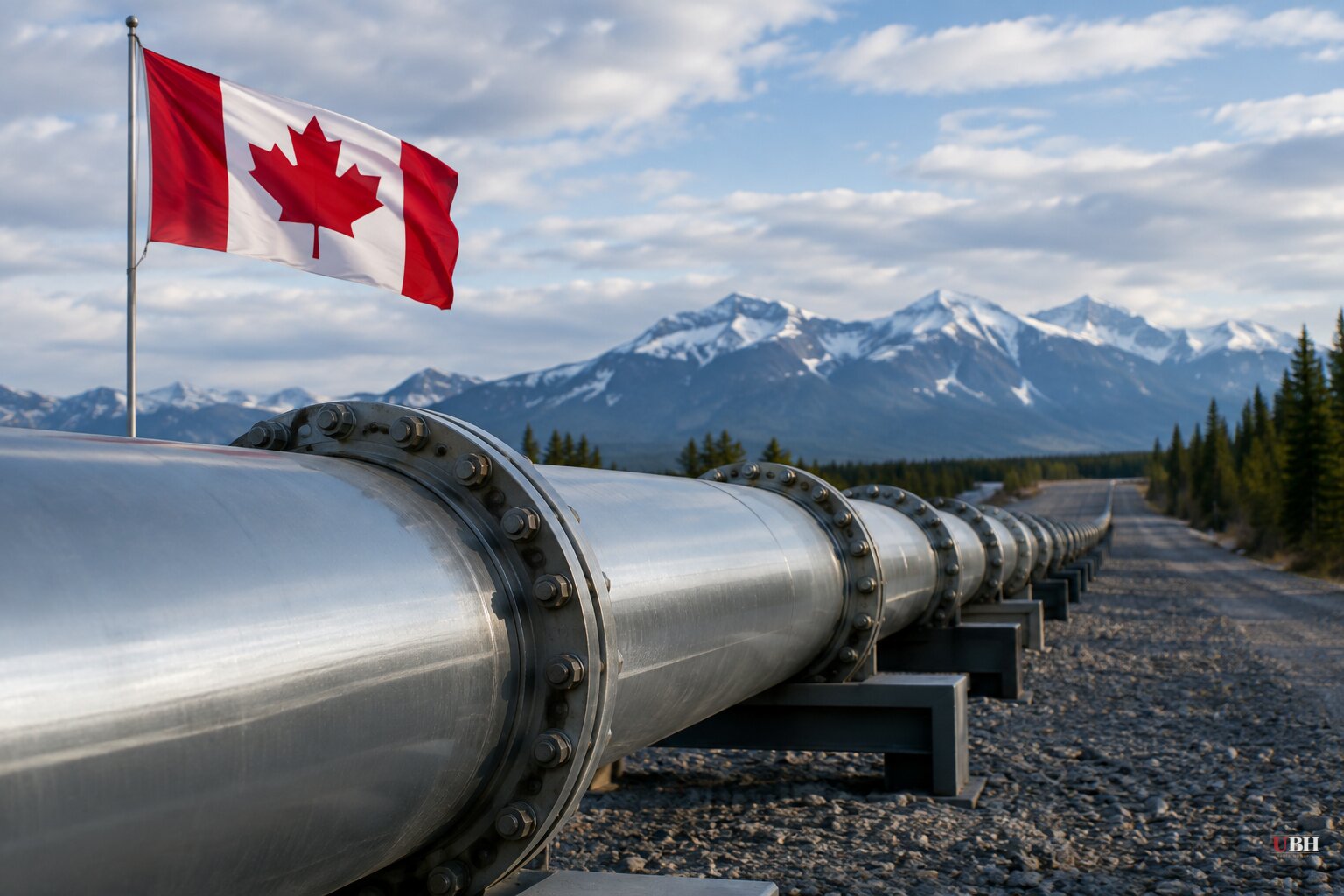
Canada put fiscal backing behind its energy-independence rhetoric. On Thursday, Prime Minister Mark Carney and Alberta Premier Danielle Smith stood in Fort McMurray and announced the Pacific Link pipeline as the first project ever designated under the Building Canada Act's national-interest process, according to CBC News and the Prime Minister's Office.
The numbers are substantial. Pacific Link will run 1,250 kilometres from Bruderheim, Alberta, to Delta, British Columbia, carrying one million barrels of crude a day to a new export terminal, according to Ground News and the Prime Minister's Office. Alberta pegs the cost at between C$35.2 billion and C$43.7 billion, with the low end converting to roughly US$24.7 billion, according to Morningstar's Robb M. Stewart.
Why Now
Carney went straight to the point. "Before the Building Canada Act, proponents would have to spend years and potentially billions of dollars doing this work before even knowing where the federal government stood on the project," Carney said in Fort McMurray, as reported by CBC. "So, Canada stopped building. Now, the federal government is making its position clear at the beginning of the process, rather than at the end."
The motivation is clear: 90% of Alberta's oil currently goes to the United States, Carney said, according to Anadolu Agency. "Pacific Link will materially reduce that dependence by allowing us to export an additional 1 million barrels a day to growing markets in Asia," he said. "That means more customers, more choice, higher prices for all Canadian energy producers."
Selling to one customer is a weak negotiating position for any business, and Alberta's oil patch has been stuck there for decades. Diversifying to Asian buyers gives Canadian producers actual leverage, and it comes amid an ongoing trade dispute with Washington that's made Ottawa nervous about overreliance on American buyers.
Who Owns It, and Who Pays
Ownership of Pacific Link is split three ways: the Alberta government and the federally owned Trans Mountain Corporation will each hold 45%, with Calgary-based Pembina Pipeline Corporation owning the remaining 10%, according to CBC News. Indigenous communities will separately be offered a minimum 10% ownership stake, financed through federal and provincial Indigenous Loan Guarantee programs, not direct grants. Trans Mountain Corporation, the Crown corporation that built the country's only existing West Coast pipeline, is leading development, with Pembina serving as the named private-sector partner.
Ottawa is also putting up C$10 billion to expand the Roberts Bank Terminal, which will serve as the loading point for Pacific Link crude, according to Morningstar.
The promised payoff: 140,000 jobs, more than C$20 billion a year in GDP from the pipeline itself, and up to C$30 billion annually once higher Asian prices are factored in, according to CBC and the Prime Minister's Office. Ottawa projects C$100 billion in government revenue by 2060.
The Cost Overrun Track Record
Trans Mountain is the same state-owned company that built Canada's last West Coast pipeline. That existing pipeline now runs about 890,000 barrels a day following an expansion that came online in 2024, according to Morningstar. A CBC report noted that investors are watching cautiously because of how fraught the approval process was for the Trans Mountain pipeline and how long it took to build.
That track record matters because this time Ottawa and Alberta aren't just regulating the project — together they hold 90% ownership, according to CBC. A C$35-44 billion estimate today is a starting point, not a ceiling. Canadians footing the bulk of that bill through two levels of government deserve scrutiny on cost controls that either press conference did not provide.
Environmental and Indigenous concerns are real, even though none of Thursday's official statements included a dissenting voice. The federal Major Projects Office says it consulted more than 130 Indigenous communities along potential routes in Alberta and British Columbia, according to the Prime Minister's Office, and the chosen southern route is designed to avoid the ecologically sensitive Great Bear Sea. Whether that satisfies every community along the corridor, or whether a 10% ownership stake financed by loans rather than equity grants is viewed as a fair deal by those communities, remains to be seen as detailed consultations continue.
What Actually Happens Next
Despite the "fast-track" framing, nobody is breaking ground soon. The Major Projects Office, working with the Canada Energy Regulator, has until September 1, 2027, just to finalize the conditions, ownership structure, and environmental terms, according to the Prime Minister's Office. Alberta's own estimate puts project completion between 2032 and 2034, Morningstar reported, with CBC noting officials are aiming for the pipeline to be up and running by 2032-33.
The timeline in plain terms: national-interest designation today, final conditions in under a year, and oil actually flowing roughly six to seven years from now, assuming Pembina, Trans Mountain, and the two governments can agree on a budget. The budget figure is the key number to track going forward.
Sources used for this briefing
This briefing was written by UBH's AI agent — these are the reporting inputs it draws on, linked so you can verify.


