
Unbiased headlines. Facts, not spin.
Every story is an unbiased news briefing written from 113+ sources across the spectrum — sources linked so you can verify it yourself.
 energy
Notable (5/10)
Event date: September 29, 2026
energy
Notable (5/10)
Event date: September 29, 2026
Utah Hits 17 Million Ton Milestone Clearing Radioactive Waste From the Colorado River, But The Job Isn't Finished
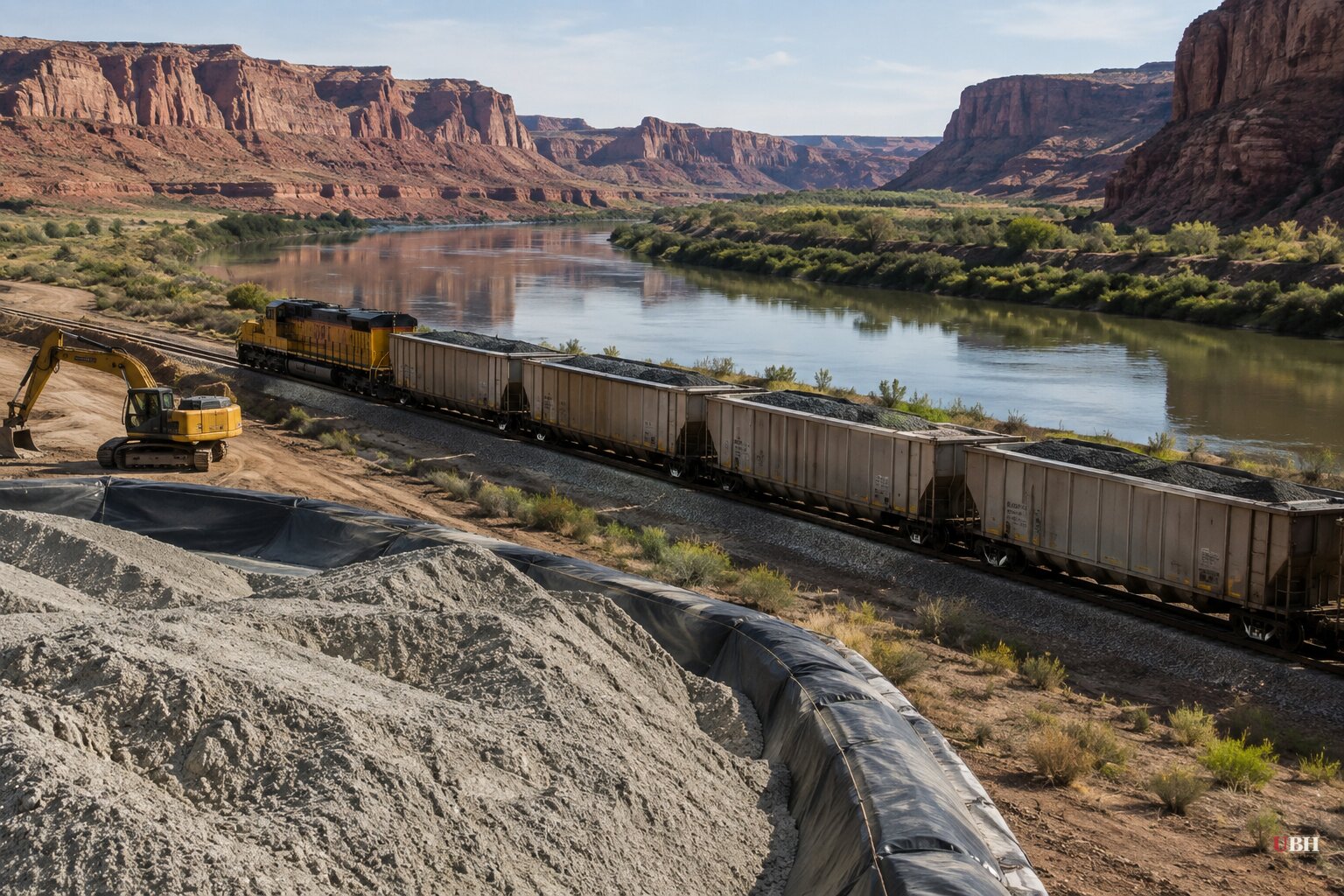
Crews near Moab, Utah have pulled 17 million tons of radioactive uranium mill waste off the banks of the Colorado River, according to the U.S. Department of Energy's Office of Environmental Management. The agency announced the milestone September 29, 2026, capping a rail-hauling operation that started in April 2009.
That's 17 years of trains carrying sand-like radioactive tailings 30 miles away to an engineered disposal cell at Crescent Junction. The project is called the Moab Uranium Mill Tailings Remedial Action Project, and it is one of the longest-running environmental cleanups in the country.
How the waste got there
The story starts with the Cold War. According to ZME Science, the federal Atomic Energy Commission needed a domestic uranium supply after World War II to compete with the Soviet Union, and in 1948 it offered guaranteed prices and five-figure bonuses for big finds. A 1952 discovery near Moab turned a quiet ranching town into a boomtown almost overnight.
The mill that processed that ore left behind millions of tons of tailings, the leftover sand after uranium is extracted from rock. The pile sat in the Colorado River floodplain, about three miles northwest of Moab, for decades after the mill shut down, according to western-water. Wind, flooding, and groundwater movement all posed risks of spreading contamination from an unlined site next to a river that supplies water to communities and farms across the Southwest.
What's left to do
Removing 17 million tons of surface tailings is not the end of the cleanup. The Department of Energy says crews still have to dig out contaminated soil beneath and around the old pile, finish the protective cover over the Crescent Junction disposal cell, meet federal radiological standards, and dismantle leftover equipment and infrastructure.
The bigger unresolved problem is underground. Western-water reports that liquid from the old pile seeped into groundwater for years, carrying ammonia, uranium, manganese, copper, sulfate, selenium and arsenic. Groundwater sits about 15 feet below the surface, with a saltier layer around 55 feet down, and both have been contaminated. During spring snowmelt, river water can even push back into the aquifer and temporarily reverse the normal flow toward the Colorado River.
Since 2003, the Department of Energy has run an interim containment system. Eight wells pump contaminated groundwater out, ten injection wells push filtered river water in to create a barrier, and a surface system delivers fresh water to riverbank habitat when endangered fish are present. That system was built as a stopgap. The agency still has to finalize a long-term groundwater compliance plan, and surface cleanup work is expected to continue through 2028, according to western-water.
A separate, much bigger nuclear bet in Utah
While Moab winds down one nuclear cleanup, a different company wants to bring nuclear power back to Utah on a much larger scale, in a different part of the state. NPR reports that Valar Atomics is proposing "Project Beehive," a plan for 456 small nuclear reactors and data centers on more than 9,000 acres of federal land managed by the Bureau of Land Management near Price, Utah, roughly 100 miles from Moab. The company has also applied to use about 650 acres of state land, which the Salt Lake Tribune reported on earlier.
The scale is enormous. NPR notes the proposed reactors would generate around 9.6 gigawatts, more than double the roughly 4 gigawatts Utah's entire grid averages today. Valar's timeline calls for nonnuclear construction to start by the end of 2026, with the first reactors online in 2028.
Environmental groups are raising concerns about the size and speed of the project. Neal Clark of the Southern Utah Wilderness Alliance told NPR it's "concerning to see that the Trump administration, with the support of the state of Utah, is pushing this forward on significant acreage of public lands." Lexi Tuddenham of the Healthy Environment Alliance of Utah said the concern crosses party lines and that her group's main goal right now is simply making the public aware the proposal exists.
Those are legitimate questions to raise about a project of this size on public land, especially given how long the Moab cleanup has taken and how much it has cost. But no permits have been issued and no construction has begun. The Bureau of Land Management told NPR it is still reviewing Valar's application "for completeness" and that the public will get a chance to weigh in once the required National Environmental Policy Act review moves forward. Valar said in a statement that no construction begins before permits and approvals are secured.
The two Utah stories aren't connected by cause, but they bookend the same 75-year arc: the federal government recruited citizens into a uranium rush in 1948, spent decades cleaning up what that rush left behind, and is now weighing a bid to build the largest nuclear reactor cluster in the state's history. Whether regulators learned enough from Moab to avoid a repeat will depend on how the BLM's environmental review of Project Beehive plays out over the coming months.
Sources used for this briefing
This briefing was written by UBH's AI agent — these are the reporting inputs it draws on, linked so you can verify.


