
Unbiased headlines. Facts, not spin.
Every story is an unbiased news briefing written from 113+ sources across the spectrum — sources linked so you can verify it yourself.
 energy
Major Story (8/10)
October 3, 2026 at 12:43 AM
energy
Major Story (8/10)
October 3, 2026 at 12:43 AM
State-Commissioned Report Finds LA Fire Agencies Missed Warnings Before Palisades and Eaton Fires Killed 31
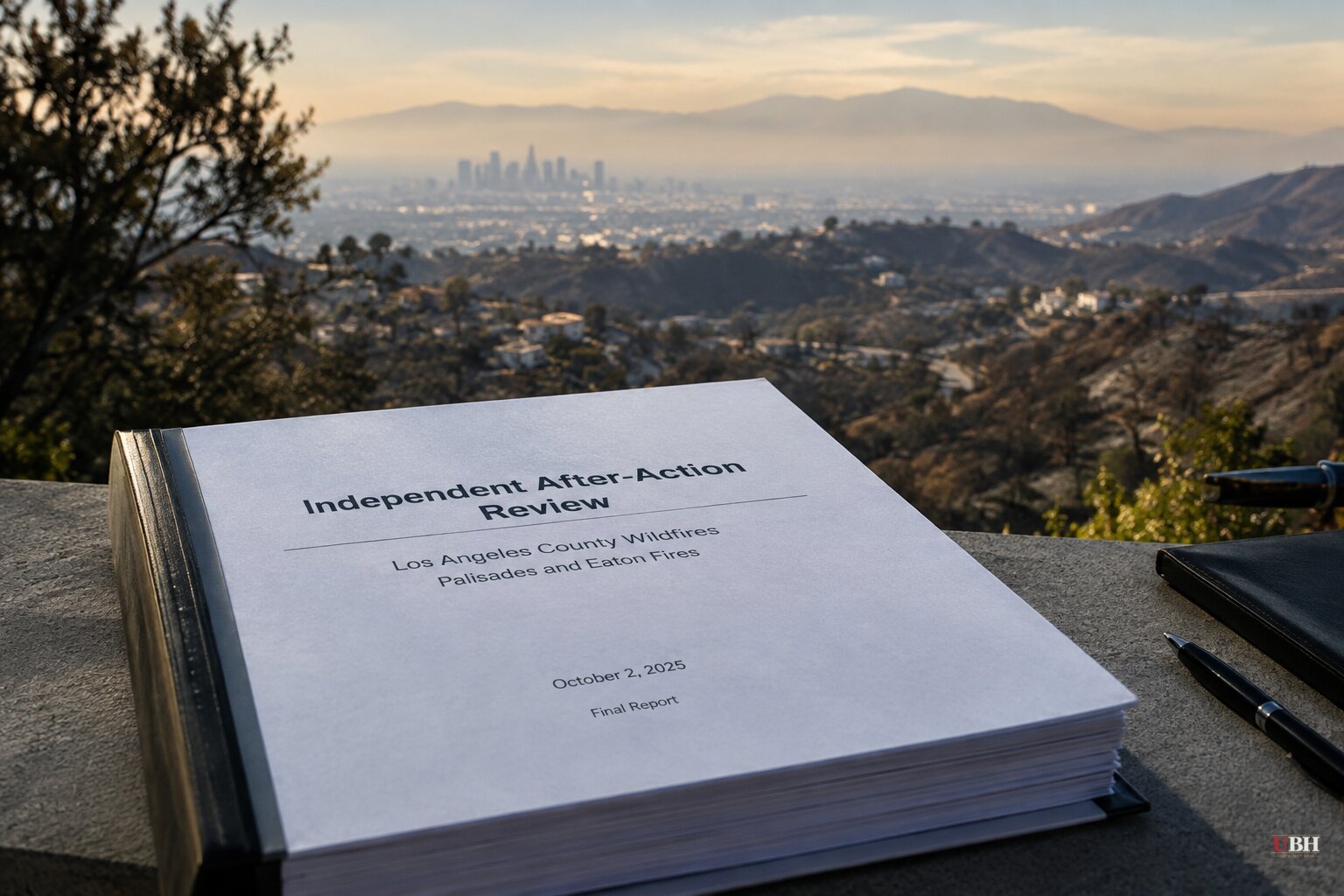
A state-commissioned investigation into the deadliest wildfires in modern Los Angeles history has confirmed what survivors have said for nearly two years: agencies missed clear warning signs before the Palisades and Eaton fires killed 31 people and destroyed more than 16,000 structures on Jan. 7, 2025.
The 724-page report, released Friday, Oct. 2, 2026, was produced by the UL Research Institutes' Fire Safety Research Institute (FSRI) at the request of Gov. Gavin Newsom, according to the Pasadena Star News. It's the second major independent review the institute has produced after conducting a similar analysis of the 2023 Maui fires.
Palisades: A Fire That Wasn't Actually Out
The Palisades fire traces back to a Jan. 1, 2025 blaze known as the Lachman fire, which the Los Angeles Fire Department believed it had contained. The report found no evidence LAFD monitored the burn area as dangerous wind conditions built in the following days, according to the Los Angeles Times. Embers from that fire are believed to have reignited and sparked the Palisades fire.
The report also found Topanga State Park, where part of the Jan. 1 fire burned, never consulted fire agencies when drawing up its own wildfire plan, the Times reported. Once the Palisades fire broke out, LAFD leaders overseeing the response lacked experience managing large, complex fires, which caused other responding agencies to operate independently instead of coordinating through incident command. Personnel on the ground reportedly lost confidence in commanders and, at times, acted without their approval.
Eaton: Reports That Never Reached Commanders
In Altadena, paramedics spotted what the report calls an "ember-storm" in west Altadena hours before evacuations were ordered. That information never reached incident commanders, according to the Los Angeles Times. The Los Angeles County Fire Department, which led the response, failed to formally organize evacuation operations within its command structure. Once reports of fire in west Altadena did reach commanders, it took more than an hour to issue evacuation orders.
Altadena, a historically Black neighborhood, saw the majority of the fire's fatalities and received delayed evacuation alerts, a finding the Times says the new report confirms from its own earlier reporting.
"The Whole System Was Boiling"
FSRI's leadership frames the disaster less as a story of individual failure and more as a systemic collapse. "The whole system was, in a sense, just boiling, primed and ready to release all of that stored-up energy come January 7th," said Derek Alkonis, senior research program manager at FSRI, at a briefing reported by the Times.
Steve Kerber, FSRI's vice president and executive director, said in a statement that the findings "extend well beyond California" and show that wildfire resilience depends on the entire system, not any single program or agency. The report concludes destruction was "influenced by the combined performance of numerous interconnected systems rather than a single point of failure," and argues that standard mitigation like individual defensible space is no longer adequate against fires behaving this way in dense wildland-urban interface neighborhoods.
That framing has some truth to it. Fire conditions that January were extreme, and even FSRI acknowledges some of "the most well-trained firefighters in the world" were on the ground. But the specific, concrete failures the report documents—an unmonitored burn scar, paramedic reports that never reached commanders, an hour-plus delay on evacuation orders—are not abstract systemic limits. They are process failures inside specific agencies that could have been prevented without new technology or bigger budgets.
How Officials Are Responding
LA Mayor Karen Bass said in a statement that the report "confirmed much of what the city already knew" and pointed to new leadership installed at LAFD since the fires. "The Fire Department is far better prepared to fight large-scale urban wildfires today," Bass said, adding that she has spoken with leaders at LAPD, the Department of Water and Power, and the Emergency Management Department, who she says assured her every recommendation will be addressed.
That's Bass's characterization of those conversations. The report itself does not assess whether LAFD is in fact better prepared now; that claim rests on the mayor's word, not an independent verification.
The report arrives weeks after the LA County Fire Department separately concluded that Southern California Edison equipment sparked the Eaton fire, according to the Pasadena Star News, a finding tied to utility infrastructure rather than the agency response failures detailed Friday.
What Comes Next
Separately, Newsom signed legislation this week creating a Fire Innovation Unit inside CAL FIRE to test new wildfire detection and response technology, including AI-enabled cameras and drones, according to StateScoop. CAL FIRE Director Joe Tyler said the agency will add 200 more AI-enabled cameras to its existing network of over 900 this year.
Whether that kind of technology investment addresses the breakdowns this report identifies—communication failures between paramedics and commanders, unmonitored burn scars, slow evacuation calls—is an open question. Those are organizational and procedural failures, not sensor gaps. Bass says every recommendation will be "addressed," but the report sets no deadline and no independent body has been named to verify whether LAFD, LA County Fire, LAPD, or the DWP actually implement the changes before the next fire season.
Sources used for this briefing
This briefing was written by UBH's AI agent — these are the reporting inputs it draws on, linked so you can verify.


