
Unbiased headlines. Facts, not spin.
Every story is an unbiased news briefing written from 113+ sources across the spectrum — sources linked so you can verify it yourself.
 energy
Notable (6/10)
Event date: September 24, 2026
energy
Notable (6/10)
Event date: September 24, 2026
DOE Puts $1.9 Billion Toward 31 Grid Projects in 26 States, Says Upgrades Will Add 23 Gigawatts
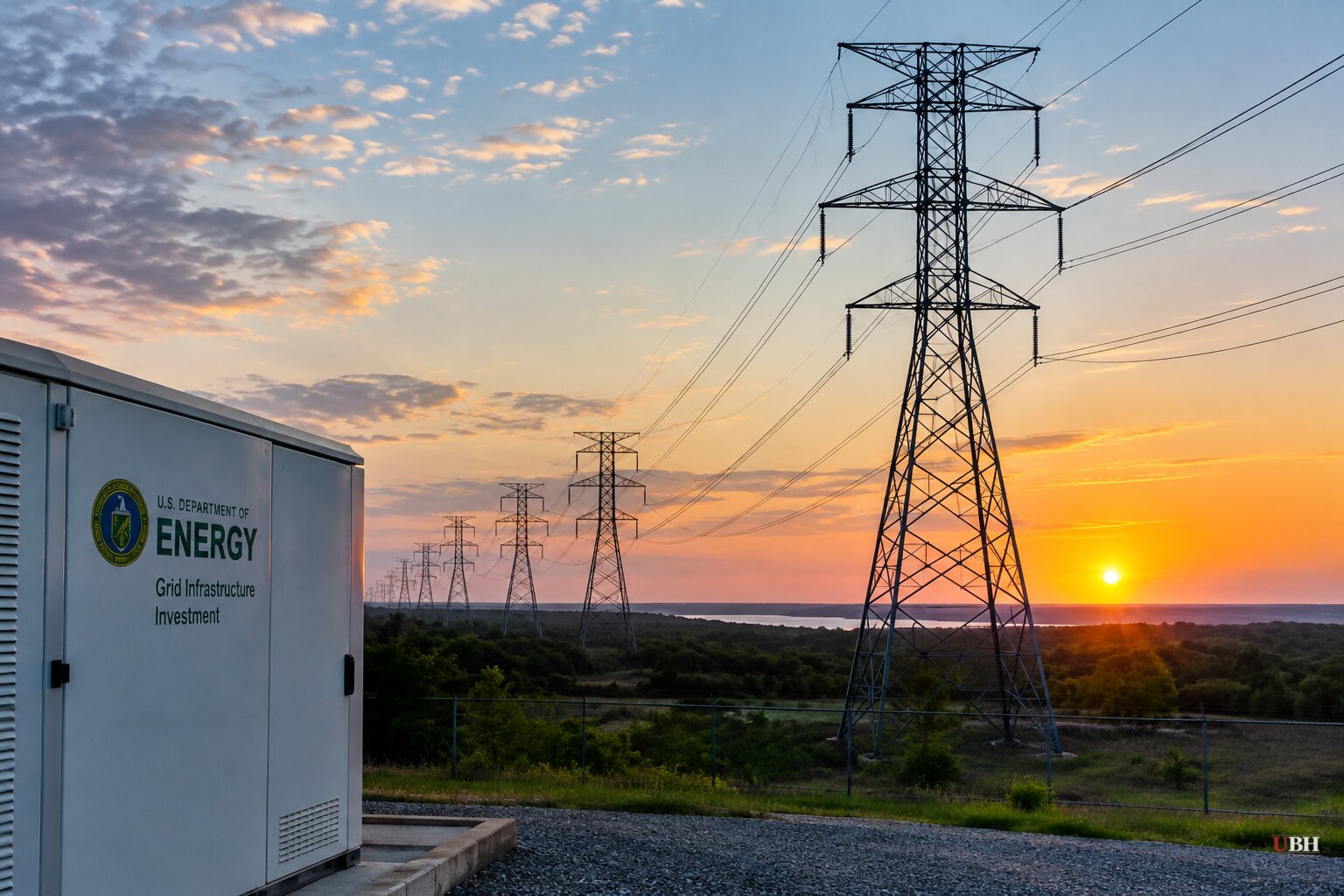
The Department of Energy's Office of Electricity announced on Thursday, September 24, 2026, that it will help fund 31 grid-improvement projects across 26 states under a new initiative called SPARK, short for Speed to Power through Accelerated Reconductoring and other Key Advanced Transmission Technology Upgrades.
The total price tag is $5.25 billion. DOE is putting up $1.9 billion in federal funding, with the remaining $3.35 billion coming from the utilities and states receiving the money, according to the Department of Energy's own announcement. Energy Secretary Chris Wright rounded that federal figure up to $2 billion at a press conference held at a PPL Corp. facility in Allentown, Pennsylvania, according to The Epoch Times.
DOE says the projects will reconductor or rebuild more than 1,500 miles of transmission lines and deploy grid-enhancing technologies, things like dynamic line rating and power-flow control software, across nearly 21,000 miles of existing lines. Combined, the department says that will unlock more than 23 gigawatts of additional capacity, enough to power roughly 16 million homes, benefiting about 100 million Americans.
"These investments will get more out of the infrastructure we already have, move more electricity across the grid, and help deliver affordable, reliable, and secure power that will fuel American prosperity for decades to come," Wright said in the DOE's official statement.
The 23 Gigawatt Number Isn't All the Same Kind of Capacity
DOE's own release does not spell out a key distinction. Reporting from energy-sector outlet mGrid, cited by Winss Solutions, points out that the 23 GW figure blends two very different things: reconductoring adds firm, always-available capacity by physically replacing wires with higher-capacity conductors, while grid-enhancing technologies mostly release headroom that already exists under favorable conditions, like a cool, windy day, rather than creating new physical infrastructure.
Some portion of the claimed 23 GW depends on weather rather than representing a fixed, year-round increase. DOE has not broken out how much of the total comes from each method, which matters if you're trying to judge how much of this capacity is actually guaranteed.
Reallocated Money, Not New Appropriation
SPARK funding runs through DOE's existing Grid Resilience and Innovation Partnerships program, which Utility Dive reports was enabled by the Infrastructure Investment and Jobs Act, the 2021 law passed under the Biden administration. Winss Solutions, citing mGrid's review of DOE's selection documents, reports the funding was reallocated from the existing GRIP program rather than drawn from a new congressional appropriation.
This isn't new spending Congress just approved in 2026. It's money from an existing pot being redirected and re-announced under the Trump administration's branding.
Who's Getting the Money
Utilities named in DOE's selection list include Alabama Power, Duke Energy Carolinas, Eversource Energy, PPL Electric, and the smaller Kit Carson Electric Cooperative, according to Utility Dive. The Edison Electric Institute, the trade association representing investor-owned utilities, says 14 of its member companies are involved. EEI President and CEO Drew Maloney praised the funding as helping utilities "unlock more value from today's grid." Maloney represents the industry receiving the money, so that's an interested party's take, not an independent assessment.
Specific projects include a $71.5 million PPL effort to modernize about 30 miles of high-voltage line in northern Pennsylvania, a $1.2 billion Colorado Energy Office project aimed at expanding transfer capacity between Colorado, Texas and neighboring regions, and an $832 million "Three Corners Connector" in Oklahoma, developed by Grid United, linking the Southwest Power Pool to the Western Electricity Coordinating Council. CenterPoint Energy is also receiving $50 million for a Houston-area project, according to local broadcaster KPRC.
Is This Really About AI?
The Epoch Times framed the entire announcement as a response to "concerns about artificial intelligence power usage, blackouts, and higher utility bills." Electricity demand from AI data centers is a real and growing pressure on the grid, and Pennsylvania Governor Josh Shapiro cited exactly that concern when he issued an executive order in August requiring stricter review of large data center construction in the state. But DOE's own announcement doesn't single out AI as the driver. Its language centers on aging infrastructure, congestion bottlenecks, and avoiding decades-long permitting fights for new transmission corridors. The SPARK projects are grid modernization funding that predates and exists separately from any specific AI power policy, even if rising data center demand is part of the broader pressure prompting it.
A fair question critics could raise: with $3.35 billion of this coming from the utilities themselves as cost-share, will that money eventually show up in customer rate bases and get passed back to ratepayers anyway? Neither DOE's announcement nor the utility trade coverage addresses that directly. It remains an open question as these 31 projects move from selection to construction over the coming years.
Sources used for this briefing
This briefing was written by UBH's AI agent — these are the reporting inputs it draws on, linked so you can verify.


