
Unbiased headlines. Facts, not spin.
Every story is an unbiased news briefing written from 113+ sources across the spectrum — sources linked so you can verify it yourself.
 energy
Major Story (8/10)
Event date: October 1, 2026
energy
Major Story (8/10)
Event date: October 1, 2026
Iran's Rial Hits Record 2.5 Million Per Dollar as Tehran Warns of Winter Gas Shortages and Hormuz Traffic Nears Prewar Levels
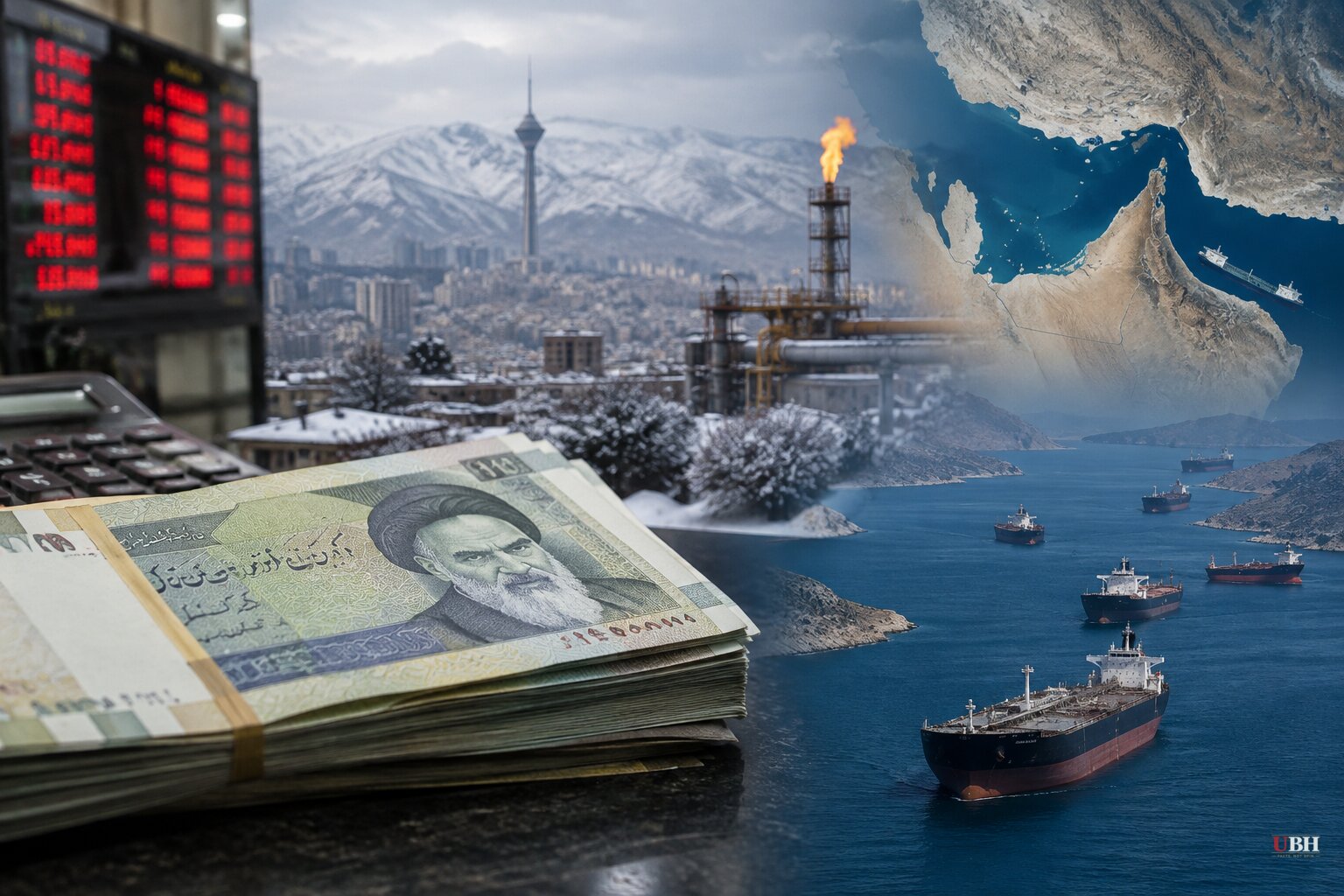
Since the Iranian rial first cracked 2 million to the dollar in August, it has set three more records in barely two months, hitting 2.5 million rials per dollar on Tuesday, according to the Associated Press, as reported by Fox News. The currency was trading at 2.2 million just 27 days earlier.
The collapse is colliding with a domestic fuel crisis. Government spokeswoman Fatemeh Mohajerani told reporters Monday that wartime strikes destroyed 230 million cubic meters of gas capacity and that Tehran is only managing to restore 100 million cubic meters of it, according to Breitbart. Golestan Deputy Governor Seyed Mehdi Mahiai warned northern provinces could face gas restrictions or full outages lasting up to 90 days this winter, though the Iranian National Gas Company quickly disputed that estimate as unofficial.
State media have already reported gasoline station shutdowns and long lines in Tehran. Iranian parliamentarian Jafar Ghaderi said the country is now short 15 to 20 million liters of gasoline daily after roughly 83 percent of its refined fuel imports were cut off. Taxi drivers in eastern Iran struck in early September over fuel ration cuts, and the government has since trimmed mandatory office hours and pushed state employees onto public transit at least one day a week.
Hormuz Traffic Recovers, But Through a Different System
While Iran's economy buckles, the Strait of Hormuz itself looks less like a weapon Tehran controls. Kpler data released September 30 shows at least 16.5 million barrels per day left the Gulf region in September, excluding Iran, matching the prewar average. Goldman Sachs put total Gulf exports even higher, at 23.3 million barrels per day, close to 2025 norms.
Saudi exports climbed to roughly 5.2 million barrels per day in September, up from 2.9 million in August, according to the Epoch Times. Iraq's exports reached 2.5 million barrels per day, up from near zero in April and May. JPMorgan estimates total Middle East crude flows, through Hormuz and around it, are back to 98 percent of prewar levels.
The shift is structural, not just a reopening. About 40 percent of regional crude now bypasses the strait entirely, up from 17 percent before the war, moving instead through Saudi and Emirati pipelines, according to Kpler cited by both OilPrice.com and The Guardian. Saudi Arabia restarted its east-west pipeline to the Red Sea port of Yanbu in late September after drone damage, and is expanding capacity toward 7 million barrels per day. The UAE finished a second pipeline to Fujairah on the Gulf of Oman. Combined regional pipeline capacity could reach 14 million barrels per day by the end of 2028, per the Epoch Times.
For the oil that still crosses Hormuz, more than 70 percent changed tankers offshore in the Gulf of Oman in August, according to Kpler, often on vessels running with transponders off before transferring cargo to larger ships waiting outside the Gulf. Matt Smith, Kpler's director of commodity research, told CNN that "given such a strong volume passing through the strait, it is clear Iran is losing its influence over it." Burggraben Holding founder Alexander Stahel went further on X, saying Iran's regime "has lost control" and "is unable to stop the Hormuz Shuttle."
President Trump, at an Oval Office event, claimed total credit: "Tremendous oil is coming out of the Hormuz Strait now. We're running it. We have total control."
Not every analyst agrees the shift is permanent or costless. Ellen Wald, an energy markets analyst who spoke with RFE/RL, said Iran's "ability and/or will to attack ships in the Gulf is declining" under US naval escort, but cautioned that current shipping arrangements involve shuttle tankers operating without insurance and at high cost. "This is not a return to normal," she said. Mohammad Ghaedi, a George Washington University lecturer, told RFE/RL's Radio Farda that even today's traffic levels remain "unacceptable" to Tehran, meaning Iran still has reason to try to disrupt the waterway again.
Diesel Still a Problem
Crude flows recovering hasn't fixed refined fuel. Kpler recorded a seven-day average of just 677,000 barrels per day of refined products moving through Hormuz as of Monday, versus 3.6 million before the war, less than 20 percent of normal. EU figures published October 1 showed diesel pump prices at record levels, and UK diesel hit an all-time high of 199.18 pence a litre, according to The Guardian. US diesel prices have also surged.
JPMorgan's Natasha Kaneva told clients that global oil inventories have fallen roughly 2 billion barrels since the war began in February, and that the firm has no reliable model for what happens next. "For the first time since the start of the Iran conflict, we don't have a baseline view," she said, as reported by CNN.
Sanctions, Diplomacy, and an IRGC Pitch to US Voters
The Trump administration imposed new sanctions Tuesday on 13 individuals and entities accused of procuring weapons for Iran's military, according to Fox News. Secretary of State Marco Rubio said Monday that Iran is heading toward economic "cataclysm." Separately, Saudi Foreign Minister Prince Faisal bin Farhan met with US senators at the Capitol Tuesday, including Sen. Jeanne Shaheen (D-N.H.), to discuss restoring freedom of navigation through Hormuz, according to a Senate Foreign Relations Committee Democrats post cited by Fox News.
Iran's Islamic Revolutionary Guard Corps released a 25-page letter addressed directly to American voters ahead of the November 3 midterms, according to the New York Post as reported by Fox News. IRGC spokesperson Hossein Mohebbi's letter blames Trump and US support for Israel for the war and accuses the president of misleading Americans about the economy. These are the IRGC's claims, unverified by any independent source, and the Trump administration has not responded to the letter directly in the sourced reporting.
What remains unresolved is whether Tehran's fading grip on Hormuz is durable or whether, as Ghaedi and Wald suggest, a regime facing a collapsing currency and a winter fuel crisis has more incentive to test the strait again.
Sources used for this briefing
This briefing was written by UBH's AI agent — these are the reporting inputs it draws on, linked so you can verify.


