
Unbiased headlines. Facts, not spin.
Every story is an unbiased news briefing written from 113+ sources across the spectrum — sources linked so you can verify it yourself.
 energy
Notable (5/10)
Event date: October 2, 2026
energy
Notable (5/10)
Event date: October 2, 2026
Latin America's Wind Boom Hits a Wall: Big Growth Forecasts, Bigger Grid Problems
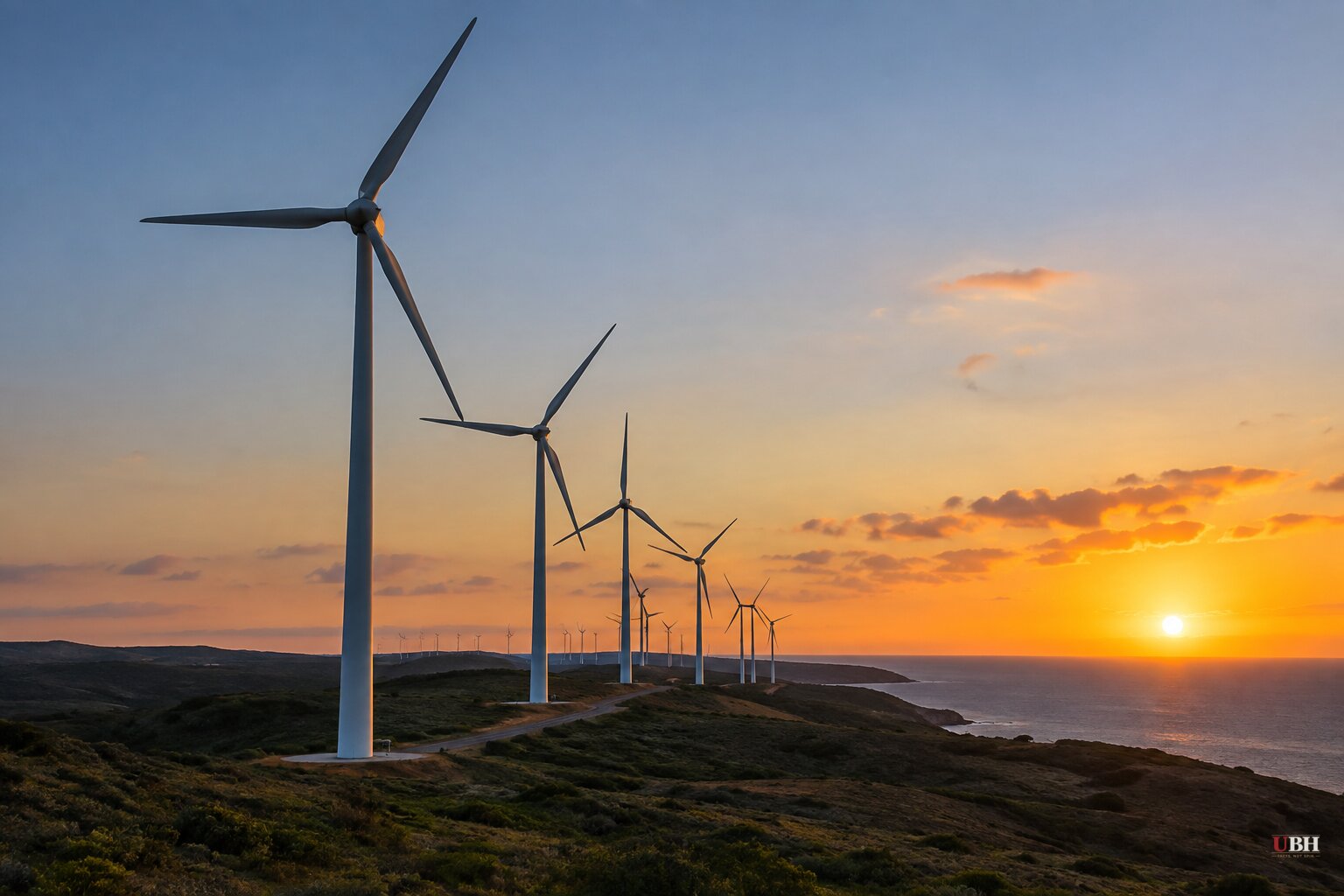
Brazil and Mexico are betting big on wind power, and the numbers look impressive on paper. The question is whether the region's electric grids can handle what's coming.
Latin America's installed wind capacity topped 44.7 GW in 2022. A Wood Mackenzie report from July 2025 projects South America's wind capacity will hit 83 GW by 2034, growing 6.5% a year. The Global Wind Energy Council (GWEC) goes further, forecasting the region could more than double its onshore wind capacity by 2035, crossing 120 GW and adding its first offshore wind projects, according to OilPrice.com.
GWEC CEO Ben Backwell called it "an energy transition success story," noting 92.5% of all new global power capacity added in 2024 came from renewable sources.
Brazil's Northeast Carries the Load
Brazil has roughly 35 GW of commercial onshore wind capacity running today, making it the fifth-largest wind market in the world, according to the Brazilian Association of Wind Energy and New Technologies (ABEEólica) and GWEC. About 90% of those turbines sit in the northeastern region, where wind blows strong and steady year-round.
Statkraft's Ventos de Santa Eugênia Wind Complex in Bahia state is the company's largest project outside Europe: 14 wind farms, 91 turbines, each generating 5.7 MW. Statkraft is bolting on 162 MW of solar to the same site, one of Brazil's first hybrid renewable projects.
GlobalData, cited by renewableenergymagazine, forecasts Brazil's renewable capacity share climbing from 48% to nearly 62%, with renewable generation approaching half the country's total electricity matrix. GlobalData power analyst Attaurrahman Ojindaram Saibasan said Brazil "has the resource base and investor interest to broaden its renewable power mix substantially," while cautioning that offshore wind's pace depends on "clear rules for auctions, seabed leasing, environmental licensing, and grid access."
Brazil's power sector is projected to pull in close to $93 billion in new capital between 2026 and 2030, with solar PV grabbing 58% of that spending and onshore wind and natural gas splitting the rest, per GlobalData. Brazil's 2025 Power Sector Reform Law is supposed to open the free electricity market to all consumers and set up rules for grid-scale storage.
Mexico's Slower, Steadier Build
Mexico currently runs 76 wind farms across 16 states, with more than 8.1 GW installed and over 3,000 turbines turning. Investment is expected to reach $4 to $5 billion by 2030, adding roughly 2.2 GW of new capacity, according to estimates from Mexico's National Energy Control Centre, National Energy Commission, and the Mexican Wind Energy Association.
The Grid Problem
The OilPrice.com piece, also carried by Press Bee, headlines doubled capacity by 2035. But buried in the same article is Wood Mackenzie senior research analyst Kárys Prado warning that "power oversupply is complicating sustained development in Brazil and Chile, following the recent renewables boom." Prado says "headwinds from grid restrictions and fierce solar competition contribute to a slowdown in the coming years."
Brazil and Chile built out renewable generation faster than they built the transmission lines to move that power to where people actually need it. Oversupply sitting on a congested grid doesn't help consumers, and it doesn't help investors waiting on returns. Prado does add that other Latin American markets could draw more investor attention "as permitting bottlenecks ease," but she's explicit that growth "will remain constrained by limited demand and insufficient infrastructure" in the near term.
GWEC's Backwell is touting a transition success story built on real capacity additions. Wood Mackenzie's own analysts, in the same body of reporting, are flagging that the grid can't absorb what's already been built, let alone double it by 2035.
The Bigger Global Picture
This isn't just a Latin America story. The global wind energy market was valued around $109.9 billion in 2025 and is projected to reach $287.9 billion by 2035, a 10.11% compound annual growth rate, according to a ResearchAndMarkets report distributed by Globe Newswire. Vestas Wind Systems posted €5.2 billion in third-quarter 2024 revenue with a record €63.4 billion order backlog. GE Vernova booked $13.2 billion in orders in the fourth quarter of 2024. Investors are clearly putting real money behind turbines, not just press releases.
The unresolved question for Brazil and Chile specifically: whether grid investment and permitting reform move fast enough to absorb the capacity already coming online, before developers start pulling back on new projects. Wood Mackenzie's own numbers suggest that's already happening in parts of the region. Whether Brazil's 2025 Power Sector Reform Law fixes that in time for the 2035 targets is something regulators, not forecasters, will have to answer.
Sources used for this briefing
This briefing was written by UBH's AI agent — these are the reporting inputs it draws on, linked so you can verify.


