
Unbiased headlines. Facts, not spin.
Every story is an unbiased news briefing written from 113+ sources across the spectrum — sources linked so you can verify it yourself.
 energy
Breaking / Critical (9/10)
Event date: October 3, 2026
energy
Breaking / Critical (9/10)
Event date: October 3, 2026
Three More Tankers Hit in Hormuz as Houthis Claim Riyadh Refinery Strike and Saudi Pipeline Stays Offline
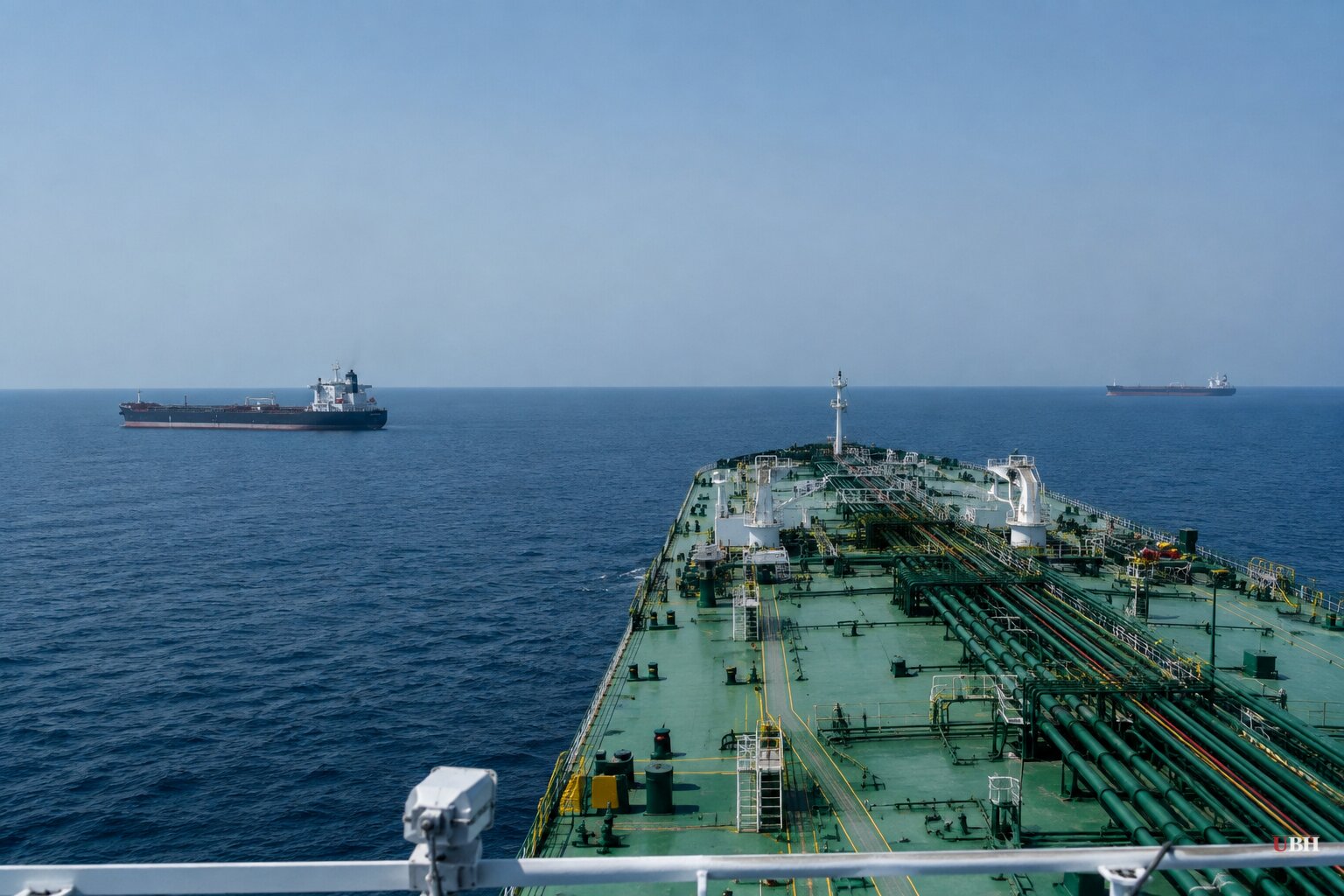
Since the United States reinstated its naval blockade of Iranian ports on July 14, Tehran has gone without a single successful crude shipment to China through the Strait of Hormuz, according to tracking firms Kpler, Vortexa and TankerTrackers.com. That blockade is holding. But the shooting around the strait itself hasn't stopped, and this weekend it got worse.
The UK Maritime Trade Operations agency reported two tankers struck by "unidentified projectiles" on Friday, October 2. One vessel exiting the strait suffered a small fire and blackout before the fire was extinguished and the ship resumed its journey, UKMTO said, according to Gulf News and the Manila Times. A second crude tanker was hit east of Oman hours later; all crew were reported safe with no environmental damage.
A third attack followed Sunday, October 4. UKMTO said an "unknown projectile" damaged a vessel's engine room, leaving the crew unharmed, Arab News reported. UKMTO did not disclose when exactly the strike occurred, the ship's flag, origin, destination, or whether it carried oil or LNG. No group claimed responsibility for any of the three weekend incidents, and UKMTO said the attacks remain under investigation.
Earlier in the war, Iran's Islamic Revolutionary Guard Corps openly took credit for hitting vessels it accused of "illegally" transiting the strait. Arab News noted that the U.S. military has not struck Iran directly since September 1, even as attacks on shipping have continued. A sign the conflict has settled into a grinding standoff rather than open combat between Washington and Tehran.
A Second Front Opens on Saudi Infrastructure
The workarounds to avoid the Hormuz route are getting hit too.
A drone attack last week badly damaged Saudi Arabia's East-West Pipeline, according to Fox News, which cited the line's recent throughput of roughly 2.6 million to 4 million barrels per day as crude bypassing Hormuz entirely en route to the Red Sea. Repairs could keep it largely offline for three to five weeks.
Separately, Yemen's Houthi rebels claimed responsibility for a coordinated missile and drone strike on a Saudi Aramco facility in Riyadh, according to The Independent, which cited witness reports of smoke and fire near the site. The Houthis said the attack was retaliation for Saudi coalition airstrikes on Sanaa and other Yemeni provinces, and framed it as an escalation following claims of an earlier strike on Aramco assets in Yanbu. Saudi authorities have not confirmed the scope of damage in the reporting reviewed, and the claim comes from the Houthis themselves—an interested party in an active war. The Independent also reported Houthi forces have seized additional territory and islands around the Bab el-Mandeb Strait, the Red Sea chokepoint connecting to the Gulf of Aden, which Fox News separately described as adding pressure to a shipping route already battered by years of attacks.
Record Pump Prices, Record Pressure on Tehran
The squeeze is visible at American gas stations. AAA figures cited by Fox News show the national average for diesel hitting a record $6.23 a gallon, with regular gasoline at $4.32, as Brent crude touched roughly $110 a barrel.
Meanwhile Iran's own oil exports have collapsed. Crude and condensate loadings fell to an estimated 220,000 to 255,000 barrels per day in August, down from about 740,000 in July and roughly 2 million barrels per day back in March, according to Fox News's citation of Kpler, Vortexa and TankerTrackers.com data.
Tehran's public position hasn't moved. Parliamentary speaker Mohammad Bagher Ghalibaf said Sunday that the Strait of Hormuz "will not be opened" until Iran's seven conditions under the Islamabad Memorandum of Understanding are met, including a full lifting of sanctions and an end to all hostilities, according to Nournews as reported by The Independent. Foreign Minister Abbas Araghchi said separately that a Tehran-proposed plan could reopen the route within seven days if Washington accepted it.
Whoever is firing on tankers this weekend, they're doing it without claiming credit. The UKMTO investigation is the only real source of truth right now. The open questions are whether the Saudi pipeline comes back online inside the three-to-five-week window Fox News cited, whether Riyadh confirms the scale of damage at its Aramco facility, and whether Washington responds to any finding that Iran or its proxies were behind the latest Hormuz strikes given no U.S. strikes on Iranian territory have occurred since September 1.
Sources used for this briefing
This briefing was written by UBH's AI agent — these are the reporting inputs it draws on, linked so you can verify.


