
Unbiased headlines. Facts, not spin.
Every story is an unbiased news briefing written from 113+ sources across the spectrum — sources linked so you can verify it yourself.
 energy
Major Story (8/10)
Event date: September 28, 2026
energy
Major Story (8/10)
Event date: September 28, 2026
Record Fuel Prices Push Global EV Sales Past Gas Cars as Trump Loosens Mileage Rules
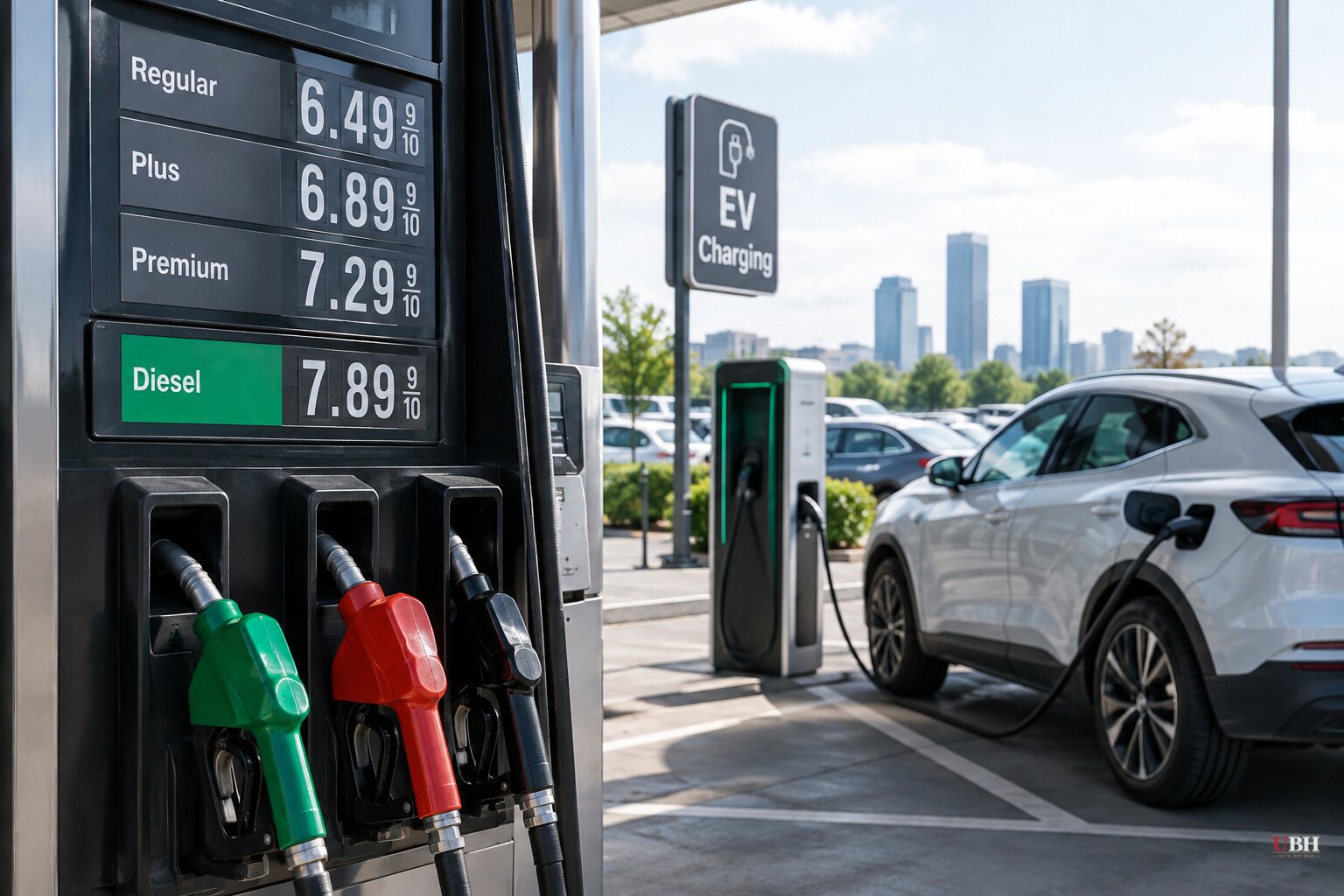
Gasoline-only vehicles made up less than half of global new car sales for the first time on record between January and June, according to data from automotive analytics firm Mobility Global cited by Nikkei Asia. Sales of pure gas cars fell 10% year-over-year to 20.25 million units, dropping their market share to 49%. The cause wasn't ideology. It was price.
Why Fuel Got This Expensive
Oil traded around $65 a barrel before the war in Iran began in February 2026, according to Joshua Busby and Greg Pollock writing for The Conversation via The Washington Post. By mid-September it topped $100 a barrel, with traffic through the Strait of Hormuz, the main route for Middle East oil exports, running below 15% of prewar levels.
Diesel got hit hardest. The U.S. national average diesel price set a new record of $6.52 a gallon on September 22, according to AAA's fuel index cited by the Epoch Times. NPR reported the national gasoline average sitting close to $4.50 a gallon, with diesel hovering near $6.50, just short of that record.
Philip Rossetti, vice president at the Lighthouse Energy Institute, told the Epoch Times the diesel crunch has two drivers: continued disruption through Hormuz and Ukrainian strikes on Russian oil refineries, which cut into global diesel supply so severely that Russia imposed its own export controls in July. Brown University's Iran War Energy Cost Tracker estimates Americans have paid more than $51 billion in excess diesel costs since the U.S. joined hostilities alongside Israel against Iran at the end of February, according to the Epoch Times.
Trump's Response: Ban Diesel Exports
President Trump publicly backed a temporary U.S. diesel export ban on September 22, telling reporters at the United Nations, "I've called for that, too. I've said let's not send out the diesel." He had previewed the move on Truth Social the day before, blaming Russia's diesel troubles on Ukrainian strikes on its refineries and calling for an end to the war.
Rep. Tim Burchett (R-Tenn.) introduced two bills the week prior. H.R. 10423 would ban diesel exports outright until January 2027. H.R. 10422 offers a narrower export-control mechanism. Burchett's office says any ban would lift once prices fall to $4.50 a gallon or below for 30 straight days, a threshold Rossetti said could take time to reach given the Hormuz and Russia supply problems are unresolved.
Meanwhile, Washington Loosened Mileage Rules
In the middle of this price spike, the Trump administration finalized rules scaling back Corporate Average Fuel Economy standards, cutting the required annual fuel-efficiency improvement from 2% to 1% and lowering the 2031 fleet target from 50.4 mpg to 34.9 mpg, according to NPR. Transportation Secretary Sean Duffy said the change delivers "relief to families and reviv[es] the beating heart of American manufacturing." Trump posted that the new standards would mean "LOWER PRICES, saving families thousands on a new, beautiful, and safe car," and administration officials estimate the rollback will shave about $1,300 off new car sticker prices.
Fuel-efficiency tech costs money upfront, and forcing automakers to hit aggressive mileage targets does raise vehicle prices, which matters when households are already squeezed at the pump. Dan Becker of the Center for Biological Diversity's Safe Climate Transport Campaign told NPR the rollback will increase gasoline usage, "costing consumers at the pump and at the doctor's office," and called it a move that "tank[s] sensible mileage standards at the worst possible time for consumers." Whether cheaper sticker prices outweigh higher fuel bills over a vehicle's life is a math problem NPR's sources didn't resolve and the administration hasn't published.
The EV Numbers
Consumers are shifting toward electric vehicles as fuel prices climb. Battery electric vehicle sales across Europe, including the UK, Switzerland and Norway, jumped 52.2% in August year-over-year, according to the European Automobile Manufacturers' Association. Germany, Europe's largest car market, saw BEV sales soar 75% in August as gasoline there hit €2.31 a liter, about $10 a gallon. One in three German cars sold in August was a pure battery electric, per the German Institute for Economic Research.
In Australia, battery electric vehicles outsold pure gas cars for the first time, according to Chau Le, General Manager of E-mobility at Origin Energy and chair of the Electric Vehicle Council. "EVs are no longer a lifestyle choice or an environmental choice, they are a cost-saving decision now for a lot of Australians," Le said. She said buyers who'd planned to keep gas cars another year or two are trading in early because fill-up costs changed the math.
Not every country has that option. In South Africa, 95 octane petrol is set to cross R30 a liter for the first time when new prices take effect Wednesday, October 7, according to the Central Energy Fund's monthly update cited by citizen.co.za. Analysts there point to the same Brent crude climb, from $94 to $100 a barrel in September, plus a weaker rand. South Africa's EV charging infrastructure and vehicle pricing lag far behind Europe or Australia, leaving households with fewer ways to dodge the pump pain.
What's Still Unresolved
A Daily Wire opinion piece has argued the crisis is more severe than "conventional wisdom" admits, citing unnamed JPMorgan analysts warning of an operational floor where pipelines and refineries could be forced to shut down, and an unnamed White House official's theory on the cause. Those claims appeared on an opinion page and have not been independently verified in other reporting. What is verified: oil above $100 a barrel, diesel at record highs, and a global auto market shifting toward electric vehicles faster than any policy mandate produced on its own. Whether Burchett's export ban threshold of $4.50-a-gallon diesel is reached anytime soon, and whether the loosened CAFE standards actually lower sticker prices as promised, remain open questions.
Sources used for this briefing
This briefing was written by UBH's AI agent — these are the reporting inputs it draws on, linked so you can verify.


