
Unbiased headlines. Facts, not spin.
Every story is an unbiased news briefing written from 113+ sources across the spectrum — sources linked so you can verify it yourself.
 energy
Notable (5/10)
Event date: October 2, 2026
energy
Notable (5/10)
Event date: October 2, 2026
Florida Researchers Shade Coral With Underwater Umbrellas, Cutting Bleaching During Record Heat
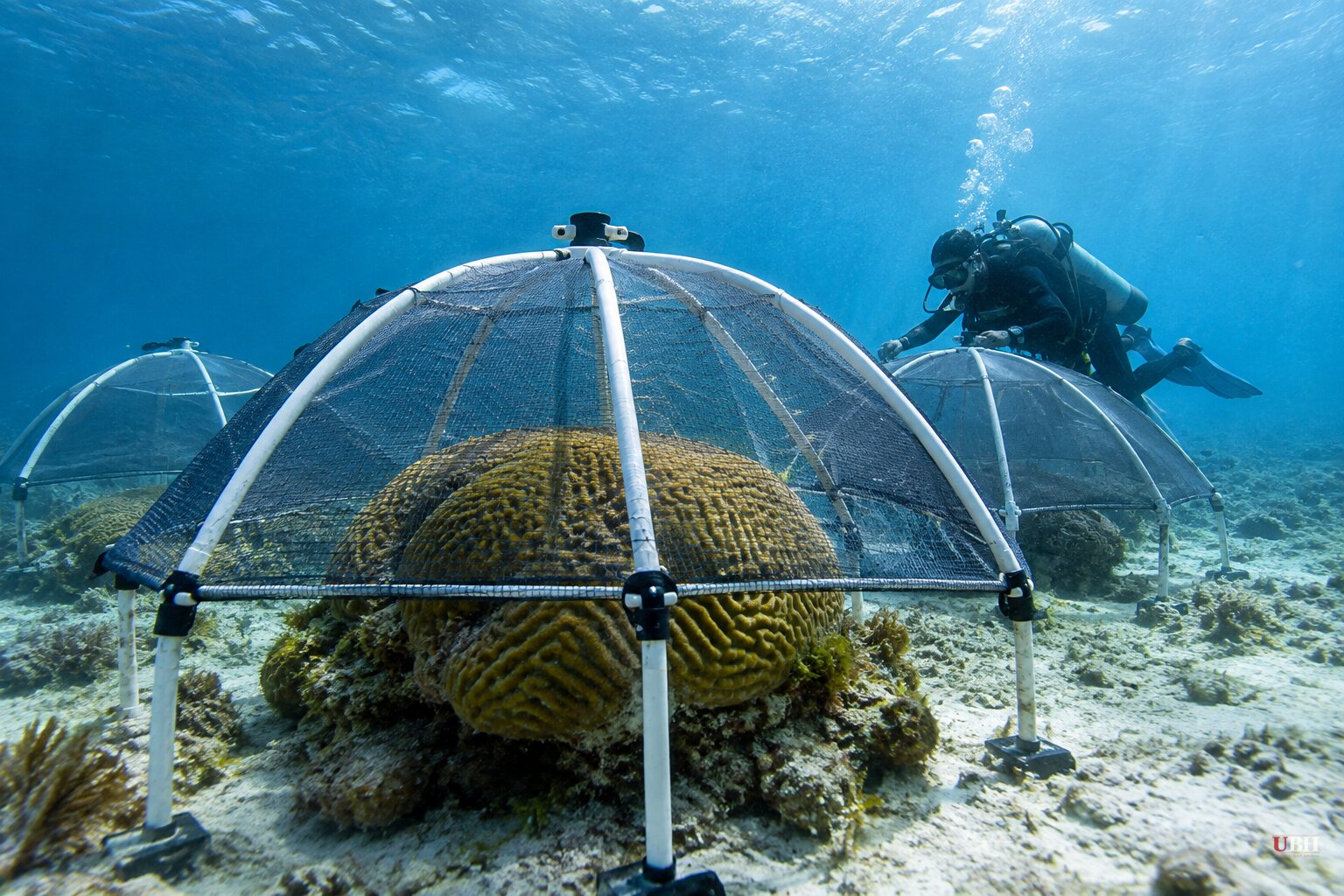
Coral in the Florida Keys got hammered by marine heat in 2023. Researchers wanted a way to protect what was left before the next heatwave hit. Their answer: underwater umbrellas.
A study led by marine biologist Karen Neely of Nova Southeastern University, published this week in the journal Frontiers in Marine Science, found that simple shade structures reduced bleaching in two species of Caribbean brain coral during the summer of 2024, the second-hottest on record at the study site going back to 1985, according to Frontiers.
What They Actually Built
This isn't some beach umbrella stuck in the sand. The shades were PVC pipe frames fitted with nylon mesh or agricultural shade cloth, floated roughly 30 centimeters above the coral and tied down to the seabed, according to Frontiers and Euronews. They cut the light reaching the coral by about 60%, according to Times of India and Discover Wildlife.
The shades don't cool the water. They block ultraviolet radiation and excess sunlight, which make heat stress worse, according to Neely.
The Setup
At Newfound Harbor in the Florida Keys, the team installed 20 shade structures over 10 colonies of two brain coral species, Pseudodiploria clivosa and Colpophyllia natans, according to Frontiers and Discover Wildlife. Another 20 colonies of the same species got no shade and served as controls.
Divers began monitoring in July 2024 and installed the umbrellas in August, as summer heat peaked, according to Euronews. They tracked the corals every two weeks through November, when water temperatures finally dropped, taking tissue biopsies to check on the algae living inside the coral.
Sea surface temperatures at the site breached the Florida Keys' bleaching threshold of 30.5°C (86.9°F) for at least 61 days during the study, according to eos, citing NOAA data.
The Results
Shaded corals lost less color overall than the unshaded controls. Some of them actually regained color after the umbrellas went up, even though they had already started bleaching before the shades arrived, according to eos.
"We weren't able to get the shades out until the corals had already started paling in color, and so we weren't sure if this was going to be too late," Neely told eos. It wasn't. Neither the shaded nor the control corals died during the 2024 heatwave, according to Discover Wildlife.
Neely's Own Caveats
Neely isn't selling this as a fix for the reef crisis. "Solutions like shading can offer temporary protection on small scales," she said, according to Frontiers. "Shading is not a cure-all for coral reefs, and its use would require hard decisions about what corals are worth saving."
She also flagged the obvious limit: heat stress bad enough could overwhelm any shade. "It is also likely that thermal stress would reach a point at which no amount of shading could help a coral," Neely said, "but only future experimentation would be able to define the bounds of that."
A PVC frame and some mesh cloth helped specific, targeted coral colonies survive a brutal summer. It did not fix the ocean.
Context
Times of India adds context most of the other coverage skipped: a separate 2026 study found reef-building capacity in the Florida Keys region fell from about 1.65 millimeters of growth per year in 1996 to net erosion of roughly 0.12 millimeters per year after the 2023 bleaching event. The region has been through major bleaching events in 1997-98, 2005, 2014-15 and 2023, per the same report. Shading individual colonies doesn't touch that trend line.
Not every recovery story requires a man-made gadget. NPR's reporting on Palmyra Atoll, a remote, largely undisturbed reef roughly 1,000 miles south of Hawaii, found that healthy, intact ecosystems bounced back from a heat-driven bleaching event faster than damaged ones. Joe Pollock of The Nature Conservancy, who studies the atoll, said its recovery shows "coral reefs are not doomed" when the surrounding ecosystem is otherwise intact. That's a different lesson than Neely's: sometimes the best protection is keeping human disturbance out entirely, not engineering a fix after the damage starts.
Both approaches cost money and labor that doesn't scale to every reef on Earth. Restoring dead coral is expensive and the replacements remain vulnerable to the next heatwave, according to Frontiers. Neely's team says the next step is tracking whether shaded corals that survive a bleaching event still suffer long-term damage to disease resistance and reproduction, something the 2024 study wasn't designed to measure.
Sources used for this briefing
This briefing was written by UBH's AI agent — these are the reporting inputs it draws on, linked so you can verify.


