
Unbiased headlines. Facts, not spin.
Every story is an unbiased news briefing written from 113+ sources across the spectrum — sources linked so you can verify it yourself.
 energy
Major Story (8/10)
Event date: September 28, 2026
energy
Major Story (8/10)
Event date: September 28, 2026
Iran's Oil Minister Resigns as Rial Hits Record Low and September Crude Exports Hit Zero
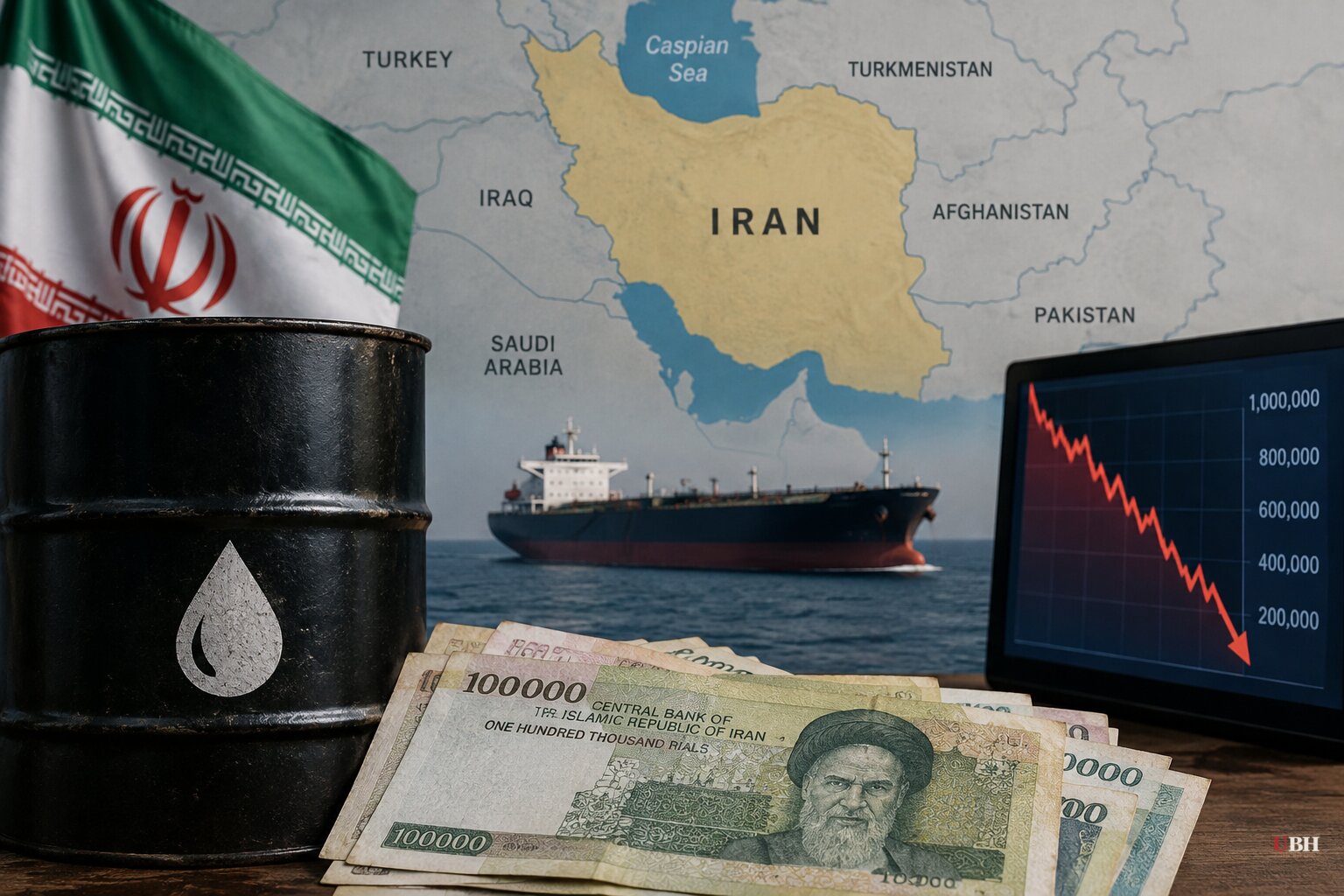
Since Kpler's Homayoun Falakshahi reported last week that Iran loaded no crude at all in September, the country's oil ministry has lost its top man. Mohsen Paknejad resigned Sunday night, October 4, and President Masoud Pezeshkian accepted it within hours, according to Mehr News Agency and Shafaq News.
Pezeshkian invoked Article 135 of Iran's constitution to install Hamid Bovard, managing director of the National Iranian Oil Company, as caretaker oil minister, Mehr News reported. Tabatabaei, the president's deputy for communications, announced the move on X. No official reason was given, Shafaq News and Mehr both noted.
Iranian state television offered a softer story, claiming Paknejad had tried to resign before over personal matters and that Pezeshkian had refused him once already, according to International Business Times. The presidential office praised his "efforts and sincere service," per state media cited by IBT. The economic backdrop makes this explanation questionable. Falakshahi's September figure, zero barrels loaded, is the first total stoppage of Iranian oil exports since the 1979 revolution, IBT reported, down from roughly 250,000 barrels a day in August. Treasury Secretary Scott Bessent told Axios in an interview that aired Saturday that Iran would have "no oil on the water" for the first time in its history as an oil producer, a claim IBT noted lines up with Kpler's own tracking of Iran's oil-at-sea inventory.
The rial is in freefall
The currency collapse has accelerated alongside the export halt. IBT reported the rial hit a record 2.688 million to the dollar on Saturday, October 3, having lost more than half its value in 2026. Breitbart reported an earlier record of 2.5 million on a prior Tuesday, up from 2.2 million in early September and 2.02 million in August, a pace of decline that shows no sign of slowing.
Inflation estimates vary by source but point the same direction. The Guardian put year-on-year inflation at 85%, while IBT cited a 90% figure. The Guardian reported Iran's economy contracted 10% in the first three months of the year; IBT reported analysts expect a 5.4% contraction for all of 2026. Those aren't necessarily contradictory—a sharper early-year drop followed by a less severe full-year average—but no source reconciles the two numbers directly.
Corruption allegations swirl around the resignation
The Guardian reported that a Farhikhtegan newspaper investigation alleged a trust set up under Paknejad to recoup overseas oil revenue owed the National Iranian Oil Company nearly $2 billion, with three individual trustees allegedly owing hundreds of millions of dollars each. Reza Sepahvand, a spokesman for parliament's energy commission, has announced an inquiry, according to the Guardian.
The Guardian also reported that concerns about the oil sector were serious enough to reach President Pezeshkian and, before last year's U.S. attack on Iran, the Supreme Leader himself, with Pezeshkian reportedly pressing Paknejad directly without a satisfactory response. The Guardian cautioned that some of the leaks driving this story may reflect an internal power struggle inside the oil industry rather than a clean corruption case, and no charges or formal findings have been announced.
Fuel shortages hit home
While export revenue dries up, domestic fuel is running short too. Government spokeswoman Fatemeh Mohajerani said at a Monday press conference that wartime strikes destroyed 230 million cubic meters of natural gas capacity, of which only 100 million is being restored, Breitbart reported. Golestan Deputy Governor Seyed Mehdi Mahiai warned of gas restrictions lasting up to 90 days this winter, a claim the Iranian National Gas Company quickly called an unofficial estimate.
Parliamentarian Jafar Ghaderi said Iran is short 15 to 20 million liters of gasoline daily, with 83% of refined fuel imports cut off, according to Breitbart. Tehran has responded by cutting mandatory office hours, requiring government workers to use public transit at least one day a week, and waiving some transit fares.
Fox News reported Iranian Foreign Minister Abbas Araghchi pushed back Sunday on reports that Secretary of State Marco Rubio ordered Tehran's U.N. delegation out of the country after September's General Assembly, insisting diplomats left "as scheduled." That dispute remains unresolved on the record, with Rubio's office not quoted directly disputing Araghchi's account in the available reporting.
IBT reported Iran's remaining oil-at-sea revenue, from cargo already sold before the blockade tightened, is expected to run out by the end of the year, with final payments arriving as late as December. What replaces that cash, and whether parliament's inquiry into the missing $2 billion produces any public findings, remains to be seen.
Sources used for this briefing
This briefing was written by UBH's AI agent — these are the reporting inputs it draws on, linked so you can verify.


