
Unbiased headlines. Facts, not spin.
Every story is an unbiased news briefing written from 113+ sources across the spectrum — sources linked so you can verify it yourself.
 energy
Major Story (7/10)
October 6, 2026 at 06:23 AM
energy
Major Story (7/10)
October 6, 2026 at 06:23 AM
Data Centers Dodge Grid Delays With On-Site Gas Plants as Local Opposition and Health Studies Pile Up
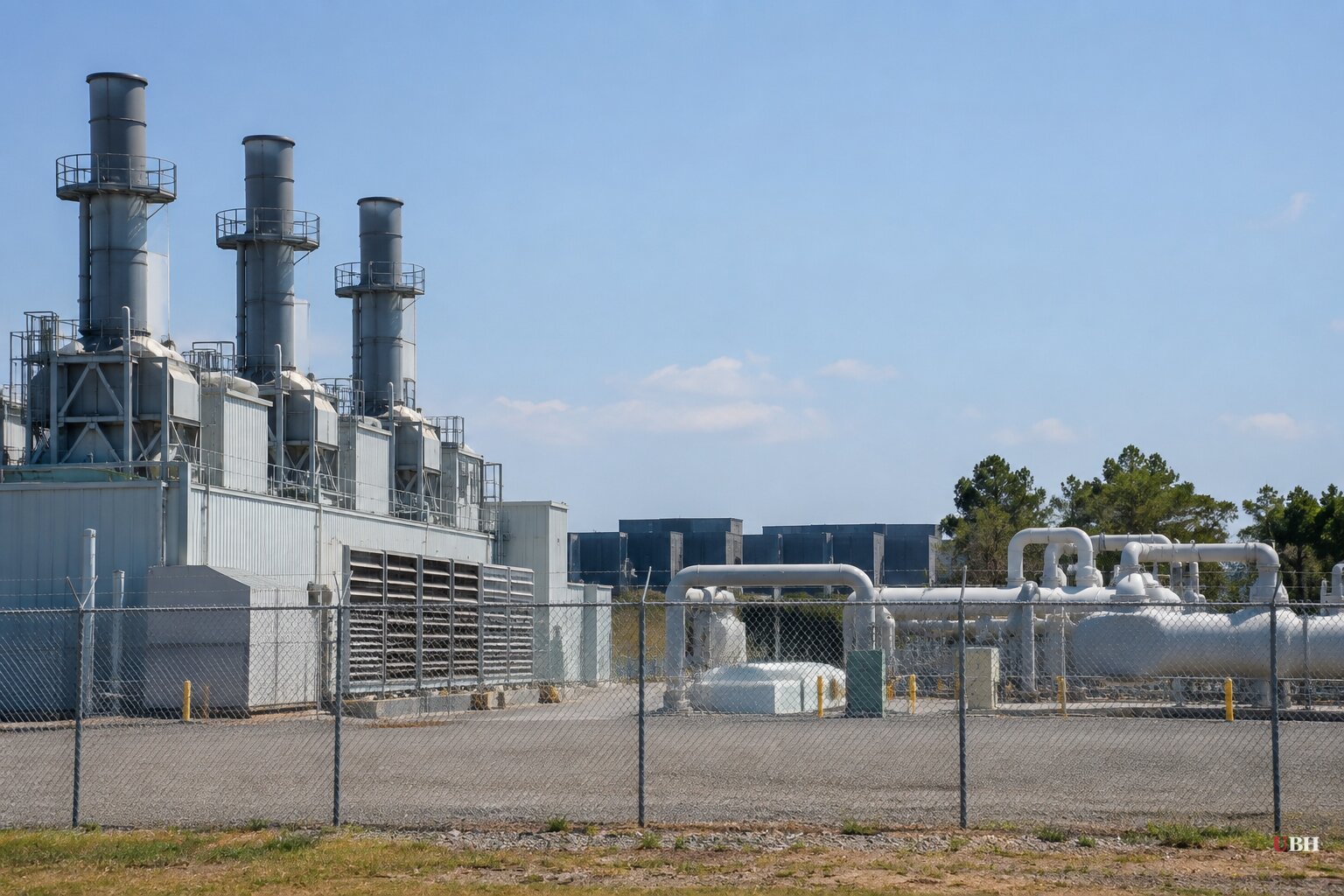
Since Monday's reporting on competing data center rankings and mounting grid delays, the industry's workaround to those delays has come into sharper focus: skip the grid entirely.
A new forecast from Enverus Intelligence Research projects that behind-the-meter, or BTM, generation will serve 25.5 gigawatts of demand from new U.S. industrial facilities through 2030. Nearly all of that, 22.5 GW, comes from data centers racing to open by then. That's roughly 36% of all U.S. data center capacity additions expected over the five-year window, according to Enverus senior analyst Alex Nevokshonoff.
"Delays in energization materially hurt project economics, so developers are turning to BTM power to come online faster," Nevokshonoff said. PJM is expected to account for 7.5 GW of that demand and ERCOT for 5 GW, together making up nearly half the national total.
Meeting that demand will require 31.6 GW of new generation, Enverus estimates, including 29.6 GW of natural gas. But developers aren't waiting for the massive turbines utilities typically install. Reciprocating engines, small- and medium-frame gas turbines and fuel cells are expected to account for 61% of that BTM gas capacity because they can reach commercial operation in 18 to 24 months, versus up to 80 months for a large-frame combined-cycle plant, according to Enverus. Large-turbine manufacturers are sold out into 2030, Nevokshonoff said, pushing buyers toward faster, smaller alternatives.
A health bill nobody's assessing in total
That gas buildout is drawing scrutiny over public health. The Regulatory Review ran an EPA-designed health screening model on 67 proposed behind-the-meter plants totaling 134 gigawatts and estimated 450 to 812 premature deaths and $7.5 billion to $13.2 billion in annual health damages once the fleet is fully operational. A separate model from the Center for Air, Climate, & Energy Solutions put the death estimate lower, around 230, giving a cross-model range of 230 to 810. These are modeled estimates, not measured outcomes, and no agency has conducted a cumulative review of the full fleet because individual plants are permitted below the thresholds that trigger stricter scrutiny, according to the analysis.
Allegheny County, Pennsylvania, home to Pittsburgh, ranks as the most-affected county in the model despite not hosting a single one of the plants, illustrating how pollution can drift away from where it's generated. The Environmental Integrity Project has identified at least 74 proposed behind-the-meter plants nationally, totaling 143 gigawatts, none of which are operating yet as of the report's April 30 cutoff.
Projects keep hitting walls on the ground
Utility Dive's reporting shows the friction isn't just regulatory. A Microsoft-backed project near Grand Rapids, Michigan, touted by Consumers Energy, faces permitting delays. A Microsoft data center in Vineland, New Jersey, was fined $1 million for running dozens of unpermitted gas generators and given 45 days to get permits or shut down. A Google-backed project in Xcel Energy's Minnesota territory faces a court-ordered work stoppage pending environmental review. And Oracle moved to protect itself financially after New Mexico regulators blocked a gas pipeline meant to serve its 2.5-GW Project Jupiter campus in Doña Ana County.
"[Data centers] are running into physical problems that are manifesting as market problems, political problems, regulatory problems and ultimately problems down on the ground," Geronimo Power CEO Blake Nixon told Utility Dive, after officials in Nobles County, Minnesota, rejected his company's proposed 400-megawatt facility this spring despite community outreach. Goldman Sachs estimated in May that only 50% to 60% of planned data center capacity will actually get built.
The politics are catching up
Fox News, in an opinion piece, argued data centers are becoming a sleeper issue in the 2026 midterms, citing a Gallup survey finding 70% of Americans oppose new AI data centers in their own communities. The piece argues legitimate concerns over utility bills and water use are hardening into opposition to the physical infrastructure itself, warning that ceding AI buildout to China would repeat America's loss of manufacturing capacity. That framing doesn't address the health and permitting evidence raised elsewhere, but the underlying voter anxiety it describes matches what Utility Dive found happening county by county.
Finland is responding to similar pressures differently. The country's government drafted an amendment that would end first-come, first-served grid connections, instead placing data centers above 10 megawatts into lower-priority categories unless they add their own generation or flexibility, according to TechRadar. Projects of 3 megawatts or less, including most non-data-center industrial users, would keep priority access.
None of this has slowed the money. Data Center Frontier reported a week of billion-dollar deals including Samsung's $1 billion AI infrastructure commitment, an $11.6 billion compute agreement between Akamai and Anthropic, and Crusoe's Google-linked campus in Armstrong County, Texas, built directly alongside wind generation. This is part of what the outlet calls an "energy-first" model now competing with the grid-first approach.
Meanwhile, the physical footprint keeps expanding. The Washington Post's satellite analysis counted nearly 100 operating hyperscale data centers nationwide, another 120 under construction and 460 more planned, with roughly 60% built on farmland, forest or desert rather than previously developed land. xAI's Colossus 2 campus near Memphis, built on a site that was forest five years ago, is now described as the country's largest operating data center.
Whether Oracle's New Mexico pipeline dispute gets resolved, and whether Minnesota's court-ordered review delays or kills the Xcel-connected Google project, will be among the first tests of how much local and state pushback can actually slow projects that already have hyperscaler money behind them.
Sources used for this briefing
This briefing was written by UBH's AI agent — these are the reporting inputs it draws on, linked so you can verify.


