
Unbiased headlines. Facts, not spin.
Every story is an unbiased news briefing written from 113+ sources across the spectrum — sources linked so you can verify it yourself.
 energy
Breaking / Critical (9/10)
October 6, 2026 at 05:46 AM
energy
Breaking / Critical (9/10)
October 6, 2026 at 05:46 AM
Aramco CEO Says Oil Stockpile Rebuild Could Take Two Years as Iran's Export Window Narrows
Aramco's Warning
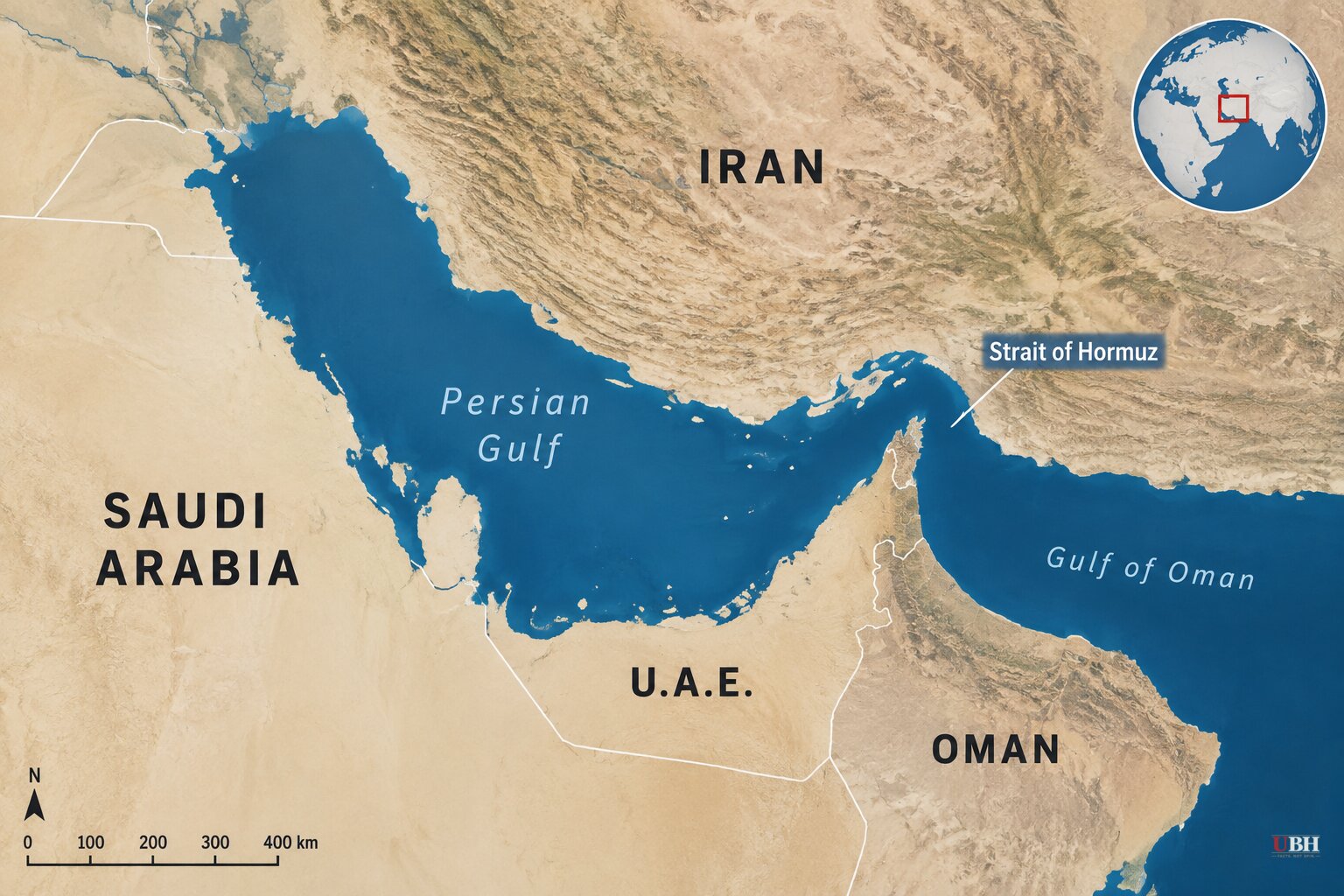
Saudi Aramco Chief Executive Amin Nasser told an energy conference in London on Monday, Oct. 5, that rebuilding global crude and fuel stockpiles drained by the Iran conflict could take up to two years, according to the Epoch Times. Nasser said the world entered the crisis with nearly 10 billion barrels of oil in global inventories. Since then, roughly 3 billion barrels of gross oil supply have been lost, he said, which Nasser called equivalent to about half of the crude and petroleum products that would normally have moved through the Strait of Hormuz over the same period.
More than 1 billion barrels have been drawn from existing stockpiles to offset the shortfall, Nasser said, warning that most remaining commercial reserves are not readily available. "The system is already straining," he told the conference. "With precious little else the world can turn to, the supply resilience cushion is scarily thin."
Nasser added that refined fuel prices have climbed even faster than crude, and that shortages of aluminum, sulfur, helium and petrochemicals are now hitting solar, wind and electric-vehicle supply chains. Brent crude traded at about $102.30 a barrel on Oct. 5, and U.S. West Texas Intermediate traded at $90.62, the Epoch Times reported.
Nasser's comments echo an April warning from the International Monetary Fund that global growth could slow to about 2 percent in 2026 under a severe scenario where Middle East infrastructure damage worsens, with headline inflation climbing past 6 percent by 2027. That is a modeled worst case, not a forecast that has come to pass, but Nasser said "the longer the disruption continues, the risk of this happening only grows."
Bessent's Two-Week Clock
Treasury Secretary Scott Bessent told Fox News's Larry Kudlow on Sunday that Iran will have "nothing left to trade for anything" within roughly two weeks, once its remaining oil reaches China, according to Breitbart. Bessent put the figure at about 15 million barrels of Iranian oil still on the water under the U.S. blockade of Iranian exports.
"It is an empty set, and I believe they are feeling the pressure here and that's why they want a deal," Bessent said. He framed the Strait of Hormuz standoff as a lopsided scoreboard: more than 1 billion non-Iranian barrels have moved through the strait under U.S. protection since the conflict began, against zero for Iran. Bessent said daily throughput now runs 15 to 22 million barrels a day, close to the roughly 20 million pre-conflict.
Those numbers come from the Treasury Secretary leading the pressure campaign, Operation Economic Outcast, which he launched at President Donald Trump's direction in late August. Treasury has engaged more than 50 countries, pressing banks, airlines and governments to choose between Tehran and access to U.S. markets, with assistant secretary Jonathan Burke carrying that message across the Middle East and Europe. Bessent said the campaign has already moved Turkey and Oman to pull back from Iranian oil trade.
No independent audit of the 15-million-barrel figure or the two-week timeline appears in these sources. Iran, for its part, has said the Strait of Hormuz will not reopen until its own conditions are met, a position that directly contradicts Bessent's claim that Tehran is out of leverage. Trump told Axios on Sunday that Iran had rejected and is now offering terms Washington might have accepted "a year ago," calling it proof Iran "overplayed their hand," while leaving the door open to talks continuing this week. OPEC+ has decided to hold production steady in November, declining to use the crisis as an opening to pump more.
A Separate Story: Southeast Asia's Deal Rush
While the Middle East dominates the supply conversation, a different trend is playing out 6,000 miles east. Rystad Energy research shows $9.6 billion in Southeast Asian upstream assets on the market through 2027, split almost evenly between majors ($3.6 billion) and independents ($3.7 billion), with national oil companies accounting for $1.4 billion.
"The premium a bidder can justify will come down to the value creation plan behind the offer," said Prateek Pandey, Rystad's head of APAC oil and gas research. Deal prices have jumped to $9.8 per barrel of oil equivalent for development assets, up from a six-year average of $6 to $7, and over $3 per boe for pre-FID resources against a prior average of $1.50.
The region holds nearly 45 production sharing contracts across 12 provinces with 2.8 billion boe of net resources, but 72 percent of that remains pre-FID. Vietnam's Ken Bau field, with 3.7 trillion cubic feet of recoverable gas, is the single largest resource on offer, while Chevron's stake in Malaysia's North Malay Basin is the standout producing asset. Rystad's own analysis ties the surge to majors refocusing on core basins and independents like Harbour Energy needing outside capital to reach final investment decisions on projects like its Andaman portfolio, not to the Middle East conflict.
Whether Bessent's two-week forecast holds will be testable by roughly Oct. 19, when Iran's final Chinese-bound shipments were expected to clear under his timeline. Whether that forces Tehran back to the table on terms Washington wants, or whether Iran simply digs in on its own Hormuz conditions, remains an open question neither side has resolved.
Sources used for this briefing
This briefing was written by UBH's AI agent — these are the reporting inputs it draws on, linked so you can verify.


