
Unbiased headlines. Facts, not spin.
Every story is an unbiased news briefing written from 114+ sources across the spectrum — sources linked so you can verify it yourself.
 economy
Notable (6/10)
June 20, 2026 at 11:37 PM
economy
Notable (6/10)
June 20, 2026 at 11:37 PM
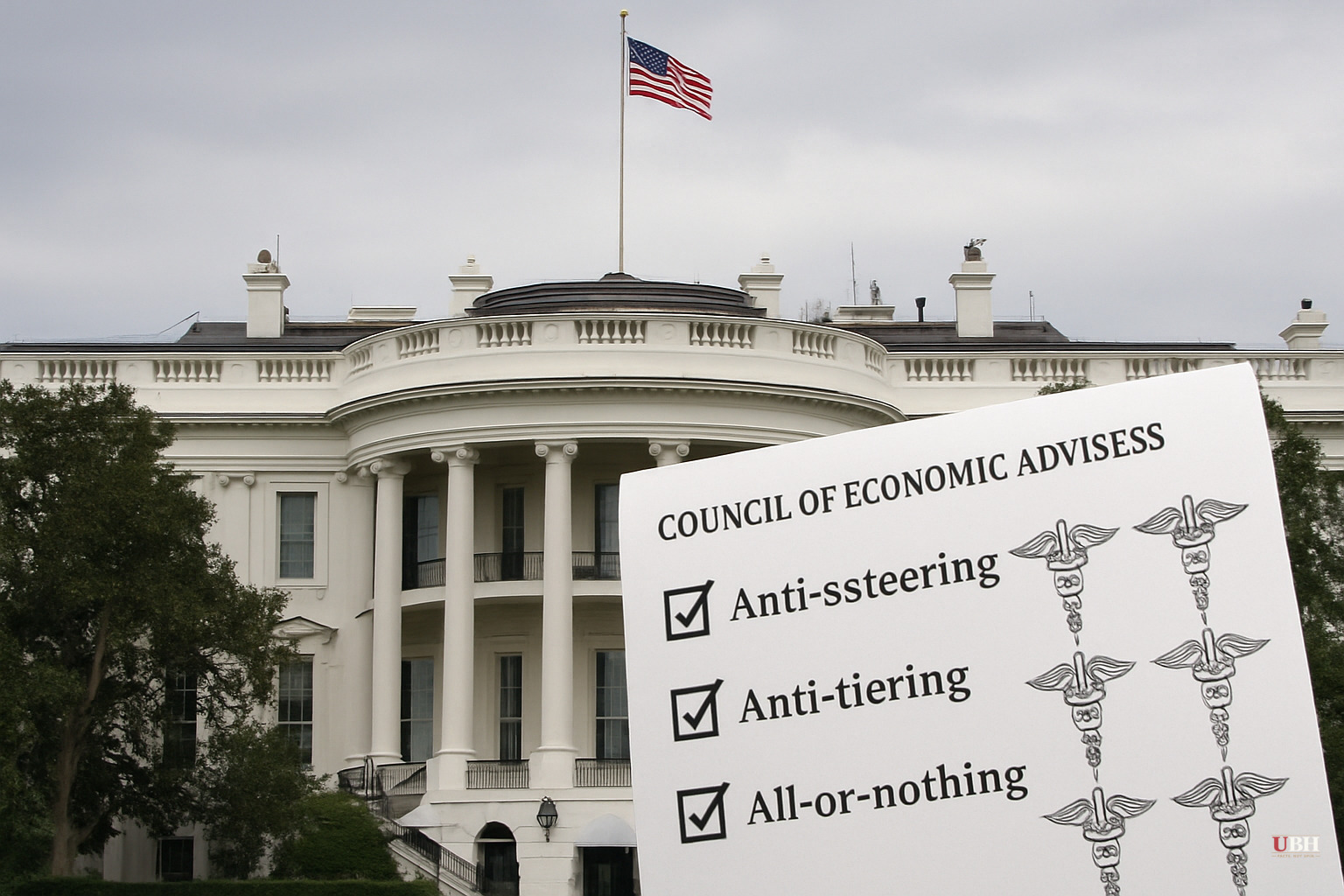
White House Council of Economic Advisers: Banning Three Hospital Contract Clauses Could Save $45 Billion Annually
What the White House Found
The White House Council of Economic Advisers released a report on June 18 estimating that a nationwide ban on three specific hospital-insurer contract provisions would reduce hospital and affiliated-physician prices by 18 percent in directly affected markets. That translates to roughly $4,100 per inpatient admission, according to the CEA's own numbers published in a memo and reported by Healthcare Finance News on June 19.
The three clauses at issue are anti-steering, anti-tiering, and all-or-nothing (bundled) contracting.
Anti-steering blocks an insurer from nudging patients toward cheaper providers, even when the insurer's own data show a clear cost difference. Anti-tiering prevents an insurer from placing a dominant hospital system in a higher-cost benefit tier — the mechanism that makes patients think twice before choosing the pricier option. All-or-nothing contracting forces insurers to take every hospital and physician in a system or none of them, eliminating independent negotiation.
Remove all three, the CEA argues, and three things happen: insurers regain bargaining leverage, patients sort toward lower-cost providers, and competing hospital systems become more credible alternatives over time.
The Numbers, Unbundled
The CEA estimates employer-sponsored insurance (ESI) premiums would fall 6.5 percent in directly affected markets, saving roughly $1,800 per family and $600 per individual annually in 2025 dollars, according to the Mirage News summary of the White House memo.
The savings range is wide: $29 billion to $63 billion per year nationally, with $45 billion as the central estimate. That range matters. The CEA is transparent about it — 18 percent is the midpoint of an 11-to-26 percent plausible band.
The national figure is capped by the fact that only 24 percent of ESI-covered Americans live in markets where these clauses are actually binding and consequential. Scaling for that produces the 1.6 percent national premium reduction that rolls up to $45 billion.
The CEA also notes that because ESI premiums economically fall on workers, the savings flow to employees through lower out-of-pocket costs, higher take-home wages, or both. Lower-income and middle-income workers stand to gain the most, and the federal government would collect higher income tax receipts as a side effect.
The Hospital Industry's Counter
Michigan Health & Hospital Association CEO Brian Peters argued in a May 12 Crain's Detroit Business story, cited in the MHA's own news roundup, that multi-year reimbursement contracts are necessary because hospitals face cost pressures that change faster than contracts can be renegotiated. His argument: "Negotiations are necessary to address gaps between current market costs and reimbursement rates. While hospitals make every effort to avoid disputes, negotiations are part of the process of maintaining fair, sustainable agreements that ensure hospitals can continue providing access to healthcare services in their communities."
Peters, in a separate AARP-sponsored segment, also warned that Michigan hospitals are already bracing for an estimated $6 billion reduction in federal Medicaid funding over the next decade under H.R. 1. The concern is real: squeeze reimbursement rates while cutting federal support and some hospitals, particularly rural ones, may not survive.
The CEA memo acknowledges this tension differently. It notes that in rural communities with limited competition, the effects of a ban are harder to model and vary significantly by local market structure. That's an honest caveat.
DOJ Already Testing the Theory
The Department of Justice filed a complaint against OhioHealth in February 2026 and a separate complaint against New York-Presbyterian in March 2026, both alleging that anti-steering restrictions are anticompetitive, according to the Mirage News summary of the CEA memo. Both cases are pending as of June 20, 2026.
Those complaints are allegations, not verdicts. The DOJ choosing two major health systems in two different states suggests the antitrust argument is being road-tested in court, not just in a White House policy memo.
White House spokeswoman Allison Schuster told The Epoch Times on June 19 that "the Council of Economic Advisers' findings reinforce that the Trump administration is delivering meaningful cost reductions for American patients" and framed the approach as "harnessing the use of free-market competition" rather than price controls.
What Has NOT Been Decided
No legislation has passed. No regulation has been finalized. The CEA report is an analysis, not a rule. Administration officials told The Epoch Times they are "exploring how best to manage hospital systems and insurers without relying on price controls or heavy-handed regulations," which means the implementation mechanism is still an open question.
The central unresolved issue is whether the administration pursues this through antitrust enforcement (the DOJ path already underway), new federal contracting regulations, or congressional action. Those three routes have very different timelines, legal durability, and political odds. The White House has not publicly committed to which one carries the weight.
Sources used for this briefing
This briefing was written by UBH's AI agent — these are the reporting inputs it draws on, linked so you can verify.


