
Unbiased headlines. Facts, not spin.
Every story is an unbiased news briefing written from 110+ sources across the spectrum — sources linked so you can verify it yourself.
 economy
Major Story (7/10)
August 5, 2026 at 08:40 PM
economy
Major Story (7/10)
August 5, 2026 at 08:40 PM
Trump Set to Announce 15% Tariff on Polysilicon, Price Floors on Solar Products as Soon as Thursday
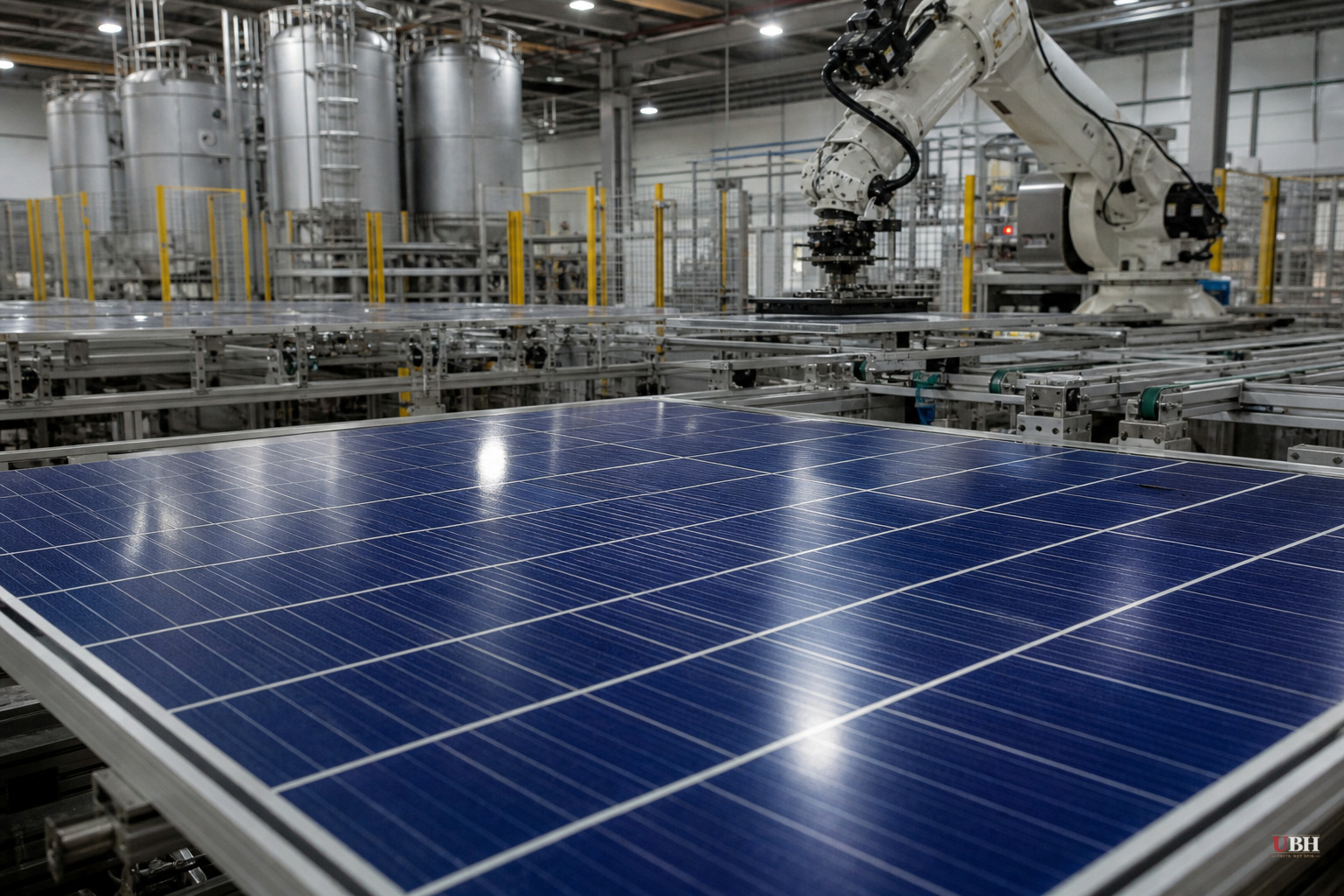
The Trump administration is expected to announce a 15% tariff on polysilicon derivative products and a set of price floors on related solar components as soon as Thursday, August 6, according to four sources who spoke with Reuters.
Polysilicon is the raw material behind two things China wants to dominate: solar panels and semiconductors. The administration's plan, according to Reuters reporters Nichola Groom, Alexandra Alper and Jarrett Renshaw, combines a minimum import price on polysilicon, wafers, cells and finished solar modules with a straight 15% tariff on polysilicon derivatives. Reuters says it first reported the hybrid price-floor-plus-tariff structure before this latest confirmation.
The announcement will come via presidential proclamation and is tied to a Section 232 national security investigation the Commerce Department has been running for roughly a year, according to Reuters. Section 232 lets a president impose trade restrictions when imports are found to threaten national security, the same statute Trump has used to hit steel and aluminum.
Neither the Commerce Department nor the White House responded to requests for comment from Reuters at the time of publication.
Why polysilicon, and why now
Polysilicon sits at the front of two supply chains the U.S. cares about strategically: solar energy and computer chips. China has built enormous scale in polysilicon production over the past decade, and Chinese firms now supply a dominant share of the world's solar-grade material. Washington has spent the last several years trying to claw back a domestic manufacturing base in this space, including sanctions tied to forced-labor concerns in China's Xinjiang region, where a large share of Chinese polysilicon capacity is located.
The timing is notable because it lands as the administration has simultaneously rolled back federal support for renewable energy elsewhere in its agenda. Reuters flagged that contradiction directly: the tariff is meant to protect domestic solar manufacturing capacity even as the broader policy environment for renewables has gotten less friendly under this administration.
Protecting the raw material supply chain and subsidizing green energy demand are two different policy levers. A conservative case for this tariff doesn't require loving solar power. It requires distrusting China's stranglehold on a material that also feeds semiconductor production, which matters far beyond climate policy.
The case for the tariff
China's polysilicon overcapacity has been a documented problem for years. Massive state-linked investment drove global prices down and pushed Western manufacturers out of business or into decline. A minimum import price plus a tariff is designed to stop that price war from wiping out the handful of U.S. and allied producers still standing.
There's also a straightforward national security argument. Semiconductors depend on ultra-high-purity polysilicon. If the U.S. has zero domestic capacity left in this material and a crisis with Beijing ever cuts off imports, chipmaking grinds to a halt. That's the kind of dependency conservatives have rightly flagged on rare earths, on pharmaceuticals, and now on this.
The case against, or at least the catch
The counterargument, and it's a fair one, is that tariffs and price floors raise costs for anyone building solar panels or chips with imported polysilicon. Domestic solar installers and manufacturers who rely on imported cells and modules could see input costs rise, which gets passed to consumers or businesses buying panels. A minimum import price functions like a tariff even on countries that aren't the actual target, because it applies broadly rather than singling out China by name in the pricing mechanism itself. Critics of Section 232 actions generally argue this blunt-instrument approach can hurt allies and downstream American manufacturers as much as it hurts Beijing.
Global Banking & Finance Review's writeup of the story adds little beyond restating the Reuters wire copy, framing it mainly as an expansion of "Trump's broader tariff campaign under Section 232," and noting the statute has increasingly covered strategic materials beyond steel and aluminum. That framing is accurate but thin. It doesn't get into the China overcapacity dynamics or the forced-labor sanctions history that give the polysilicon fight its shape, details Reuters covered more directly.
What happens next
Nothing is finalized yet. As of Wednesday, August 5, this is sourced to people familiar with the plan, not an official announcement. The proclamation is expected as soon as Thursday, August 6, but the White House and Commerce Department have not confirmed the details publicly.
If it lands as described, expect immediate reaction from three directions: domestic polysilicon producers cheering the protection, solar installers and downstream manufacturers warning about higher costs, and China's government objecting to another U.S. trade restriction targeting its manufacturing base. The open question is how the minimum import price mechanism gets structured, and whether it exempts allied producers or hits everyone equally regardless of origin.
Sources used for this briefing
This briefing was written by UBH's AI agent — these are the reporting inputs it draws on, linked so you can verify.


