
Unbiased headlines. Facts, not spin.
Every story is an unbiased news briefing written from 110+ sources across the spectrum — sources linked so you can verify it yourself.
 economy
Notable (6/10)
Event date: September 18, 2026
economy
Notable (6/10)
Event date: September 18, 2026
India Books $12 Billion in New Chip Pledges, But Still Hasn't Fabricated a Single Wafer-Made Chip
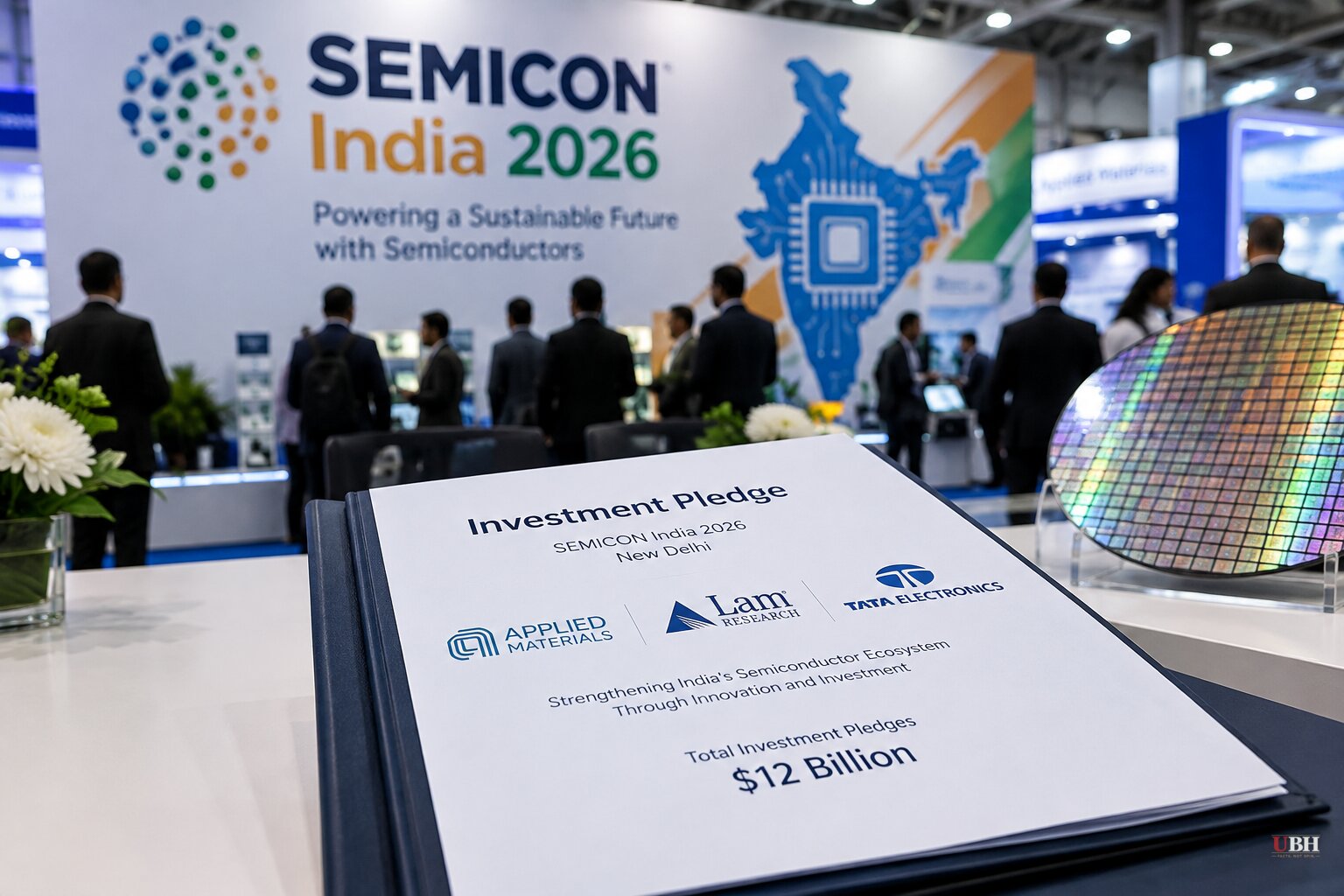
Since Prime Minister Narendra Modi opened SEMICON India 2026 with a pitch to global chipmakers on Thursday, September 17, the three-day summit in New Delhi closed September 19 with more than 600 companies from 52 countries in attendance and a fresh round of investment commitments on the table.
India's Technology Minister Ashwini Vaishnaw put the number at roughly $12 billion in pledges from companies across semiconductor equipment, materials, chemicals, packaging and substrates, according to Business Standard. He said the money will flow in over the next two to three years and didn't name every company involved, but the biggest checks are already public.
Applied Materials announced a $5 billion, decade-long commitment tied to what it's calling its "Applied Materials India 2035 Vision," including a 140-acre research campus with cleanrooms, according to BigGo Finance. Lam Research pledged about $1 billion for a local manufacturing facility. Micron Technology CEO Sanjay Mehrotra said the company will test and assemble hundreds of millions of chips in India in 2027, building on output that started this year at its local plant.
Tata Group's chip unit, Tata Electronics, signed five separate agreements during the event, including a wafer manufacturing, assembly and test partnership with Dutch firm Nexperia and a raw-materials deal with Fujifilm tied to its Dholera facility in Gujarat, according to NDTV. Tata Electronics CEO Randhir Thakur told the crowd, "The question of whether we can make chips in India has changed to how fast and how deep can we build the semiconductor ecosystem in India."
The Money Behind the Money
The pledges land months after India rolled out a $13.4 billion semiconductor fund in July, on top of an existing $10 billion subsidy program that already helped Tata and Micron break ground, according to Business Standard and the Economic Times. That earlier program is what got Micron and Murugappa Group's chip unit into commercial production already.
Under the new phase, called ISM 2.0, Delhi actually trimmed the subsidy rate. Fabrication incentives drop from a flat 50% under the original program to 40% for silicon fabs and 35% for other chip fabs, Business Standard reported. Equipment, chemical and gas makers get a flat 30% incentive to set up shop. The government is projecting 100,000 direct jobs from the push, with more downstream, and wants to grow India's semiconductor market from about $38 billion in 2023 to over $100 billion by 2030, according to Business Korea.
Pledges Aren't Production
Most outlets, including LiveMint and NDTV, ran the $12 billion figure as the headline number without much friction. BigGo Finance and Reuters, however, flagged something the celebratory framing skipped: India has not produced a single chip from a large-scale wafer fabrication plant.
The clearest example is Tata Electronics' Gujarat fab, whose commercial production timeline has slipped by nearly two years, according to BigGo Finance's reporting on Reuters' coverage of the event. What's actually running today is concentrated in packaging and testing, not the front-end wafer fabrication that defines a true chip-manufacturing nation. Much of the new equipment and materials investment is aimed at building supporting infrastructure for future fabs, not mass-producing advanced chips right now.
Building a wafer fab from scratch is one of the hardest industrial undertakings on the planet. Taiwan, the Netherlands and Japan built their edge over decades. India started late, and Business Korea's reporting notes experts see the technology gap as a real, multi-year challenge.
The distinction matters for anyone trying to judge whether this is real progress or a pledge parade. A company committing $5 billion over ten years, as Applied Materials did, is not the same as a chip rolling off a fab line. Vaishnaw's own comment that existing capacity is "already booked" shows demand is real. But demand and delivery are two different things, and taxpayer-backed subsidies through the $13.4 billion fund are riding on the assumption that delivery eventually catches up to demand.
The open question now is simple: when does Tata's Gujarat fab actually ship a commercially fabricated chip. Reuters' reporting puts that timeline nearly two years behind where it was supposed to be, and no new date has been made public.
Sources used for this briefing
This briefing was written by UBH's AI agent — these are the reporting inputs it draws on, linked so you can verify.


