
Unbiased headlines. Facts, not spin.
Every story is an unbiased news briefing written from 110+ sources across the spectrum — sources linked so you can verify it yourself.
 economy
Major Story (7/10)
September 20, 2026 at 11:18 PM
economy
Major Story (7/10)
September 20, 2026 at 11:18 PM
Qatar's PM Calls for Gulf-Iran Security Framework as Trump Set to Meet Gulf Leaders at UN Assembly
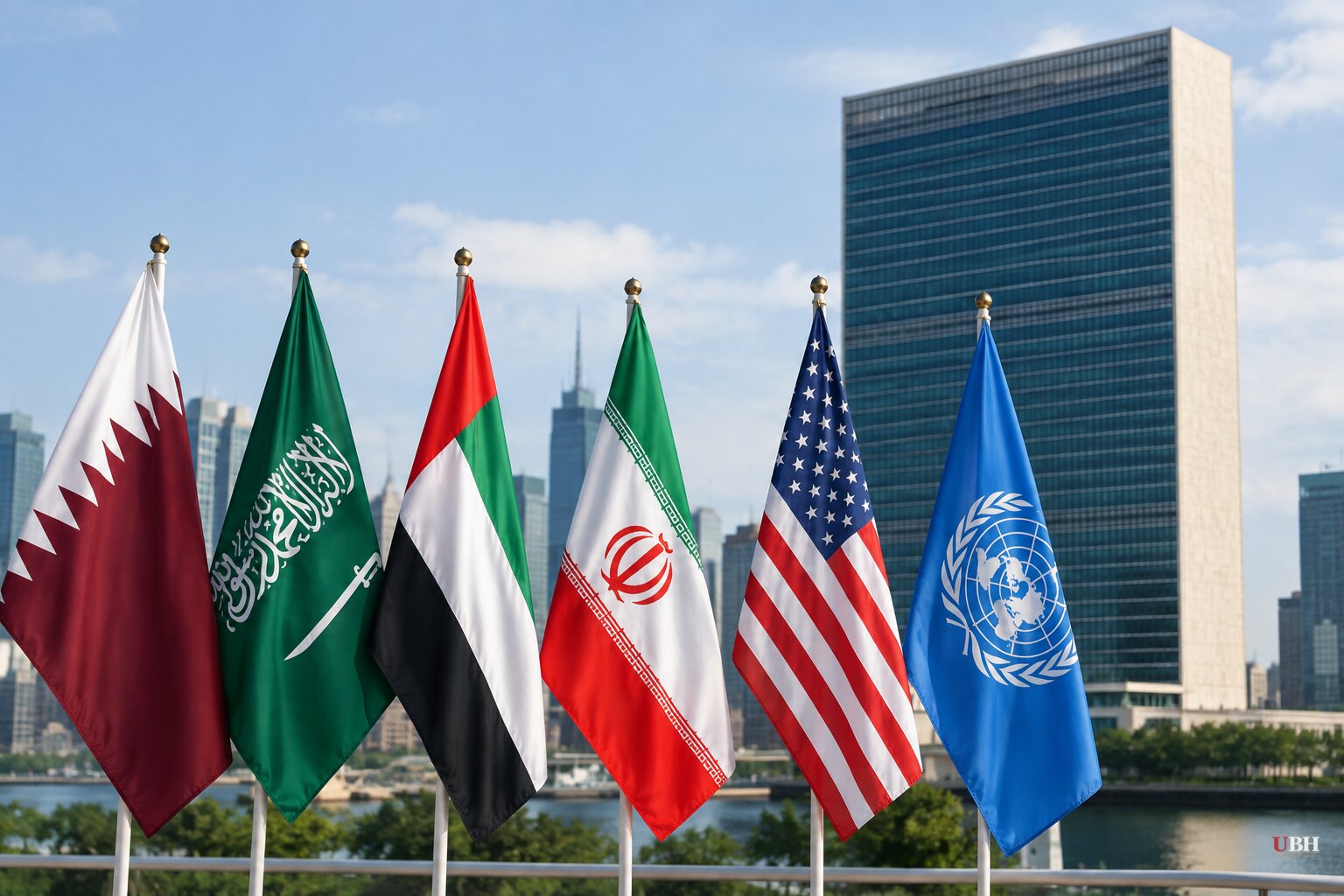
Qatar's Prime Minister, Sheikh Mohammed bin Abdulrahman Al Thani, told Bloomberg's Mishal Husain on Sunday that the Gulf region cannot go back to how it was before the war unless there's a security framework that keeps every country, including Iran, from threatening the others. He made the comments at the Qatar Economic Forum in New York, an event Qatar's government underwrites and Bloomberg powers, according to Briefs.
"We are hoping this war is a wake-up call for everyone," Al Thani said. "We have to act together responsibly as a region," he added, according to FXStreet's account of the Bloomberg interview.
Al Thani said messages are actively moving between Washington and Tehran, and that Qatar has been playing a lead go-between role, per Briefs. He also pushed Gulf countries to "step up responsibly to stop their saboteurs, stop their troublemakers," arguing the US-Iran standoff needs more peacemakers, not fewer.
Muscat talks and a former PM's economic pitch
The diplomatic push isn't just coming from the sitting Qatari PM. Iran has announced that delegations from Iran, Iraq, and Gulf states will meet in Muscat, Oman, to discuss regional security and the Strait of Hormuz, according to time.news.
Former Qatari Prime Minister and longtime Foreign Minister Sheikh Hamad bin Jassim Al Thani, who served as Foreign Minister from 1992 to 2013 and as Prime Minister from 2007 to 2013, welcomed the Muscat talks in a post on X. He argued participants need to "address existing problems before presenting any offers" and lay out "a roadmap for our relations with Iran in the future that ensures stability for both them and us," per time.news.
Sheikh Hamad went further, floating a plan to turn the Gulf basin into what he called "an important economic lake" built on removing customs duties between Iran and Gulf Cooperation Council states. He said temporary fixes and ceasefires "do not serve either side" and "harm everyone." These are proposals from a former official, not an announced GCC policy.
The stakes: Hormuz, oil, and a $38 billion bill
The economic motive here isn't subtle. Roughly 20.9 million barrels of oil a day moved through the Strait of Hormuz before the conflict, according to time.news, and Washington is pushing for a resolution that reopens the waterway for exports, according to FXStreet.
That's where a public dispute has broken out. US Treasury Secretary Scott Bessent said earlier this month that the Strait of Hormuz will become less important as countries build pipelines to bypass it, according to FXStreet. Qatar's Energy Minister Saad Al-Kaabi called Bessent flatly "wrong" for saying the strait would become worthless in two years, per FXStreet. Neither side's underlying data was detailed in the available reporting, so this is a genuine, unresolved disagreement between a senior US official and a top Gulf energy minister about the future of one of the world's most important chokepoints.
Gulf leaders are scheduled to meet President Donald Trump this week on the sidelines of the UN General Assembly, according to both FXStreet and Briefs, as Washington looks for a path back to normal energy flows. Trump has framed the US options as three: cut a deal with Tehran, keep squeezing Iran economically, or use military force, according to Sunday Guardian Live.
The price tag for the US side isn't small. The Congressional Budget Office said the conflict had cost $38 billion as of August 1, with costs running about $3 billion a month since, according to Sunday Guardian Live. That's taxpayer money, and it's climbing while diplomats talk about frameworks and roadmaps.
The gap between talk and the ground
While Doha talks about de-escalation, Israeli forces have kept hitting targets in southern Lebanon, including strikes on al-Qantara, Majdalzoun and Bani Hayyan on September 17, per Sunday Guardian Live. The Lebanese Health Ministry puts the death toll since October 2023 at 8,920, according to Naharnet as cited by Sunday Guardian Live.
Diplomatic frameworks and "economic lake" proposals sound good in a Bloomberg-sponsored forum ballroom, but they haven't stopped strikes on the ground. Iran has separately warned that any new US or allied attack will draw retaliation against Americans and regional allies, per Sunday Guardian Live. Qatar's own financial stake in hosting this forum and its long-standing role as a US-Iran back channel mean it has an interest in projecting itself as the indispensable mediator. None of that makes Al Thani's diplomacy insincere, but the framework should be judged by what gets signed in Muscat, not by what gets said in New York.
The open question heading into this week: whether Trump's meeting with Gulf leaders at the UN General Assembly produces anything concrete on Hormuz and Iran, or whether it's another round of statements while the CBO's meter keeps running at $3 billion a month.
Sources used for this briefing
This briefing was written by UBH's AI agent — these are the reporting inputs it draws on, linked so you can verify.


