
Unbiased headlines. Facts, not spin.
Every story is an unbiased news briefing written from 110+ sources across the spectrum — sources linked so you can verify it yourself.
 economy
Major Story (8/10)
Event date: September 18, 2026
economy
Major Story (8/10)
Event date: September 18, 2026
Ocean Freight Rates Near Pandemic-Era Records as Iran War Pushes Diesel Toward $6.50 a Gallon
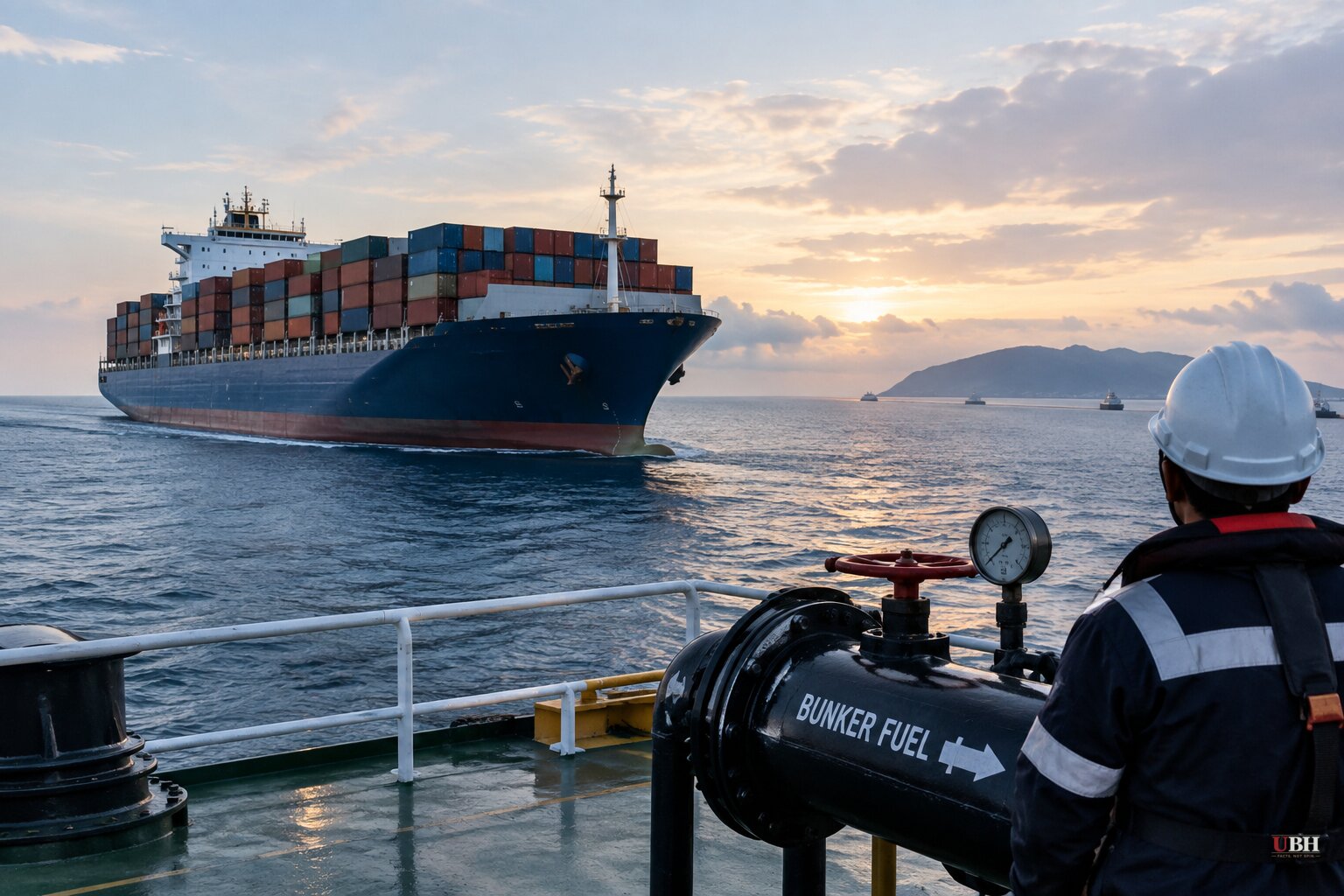
Container shipping rates on the busiest ocean trade routes into the United States are within striking distance of the all-time highs set during the COVID-19 supply chain crisis, and the driver this time is fuel, not factory shutdowns.
The spot rate from China to the U.S. East Coast hit $10,948 per 40-foot container as of Thursday, September 17, according to Xeneta data reported by Reuters. That's more than quadruple where it stood on February 28, when the U.S. and Israeli war against Iran began, per Xeneta Chief Analyst Peter Sand. FreightWaves, citing separate Xeneta figures for the same corridor, put the East Coast rate at $11,259 per FEU as of the same date, about 11% below the January 2022 record of $12,683. The discrepancy between the two Xeneta-sourced figures likely reflects different route or index definitions, but both point in the same direction: rates are close to pandemic peaks and rising fast.
The Far East-to-West Coast trade has climbed to $7,960 per FEU, about 18% below its February 2022 record of $9,699, FreightWaves reported. Both coasts have seen rates jump roughly 324% to 325% since the pre-war level in late February, Sand said.
Drewry's World Container Index shows the Shanghai-to-New York spot rate at $10,394, up nearly 7% week over week, according to Arab News and a Reuters report carried by 933 The Drive. That's still below the pandemic-era peak of $16,000 hit when stimulus-flush consumers were buying furniture and TVs, but the trajectory has shippers and carriers watching closely.
Fuel costs, not factory closures, are driving this one
The mechanism behind this spike is different from 2021. Back then, port congestion and demand shocks drove prices up. This time it's bunker fuel.
The global 20-port average price for very low sulfur fuel oil hit $901.50 per metric ton on September 17, up from $543.50 on February 27, according to Ship & Bunker data cited by Reuters. That's still below the March 20 peak of $1,053, but well above pre-war levels. Carriers pass those costs to shippers through fuel surcharges, and Sand said a breach of the pandemic-era rate record on the East Coast trade "cannot be ruled out."
Bank of America retail analyst Lorraine Hutchinson wrote in a note that ocean freight rates overall have jumped 201%, nearing the 250% spike seen during the 2021 shortage, according to ZeroHedge. She flagged the risk for companies exposed to spot rates and warned it could bleed into the 2027 contracting cycle.
On land, AAA's national average diesel price sits near $6.50 a gallon, squeezing trucking margins and pushing up domestic freight rates, ZeroHedge reported. The Baltic Dry Index, which tracks bulk vessel rates, has climbed to its highest level since December 2023. Thurlestone Shipping analysts called it "something of a perfect storm, with vessel supply tightening and demand firing in both basins at the same time."
Business owners say this is worse than COVID
CNN Business reported that a closely watched Institute for Supply Management survey found several business leaders comparing the current climate unfavorably to the pandemic. Jack Buffington, who directs the supply chain program at the University of Denver, told CNN, "This is a bigger problem than Covid, for sure. This is completely different. This is an energy problem."
Jeff Vojta, CEO of Dilworth Coffee in Raleigh, North Carolina, described a compounding set of shocks to CNN: a bad 2024 Brazilian coffee crop, tariffs the Trump administration imposed in 2025, and now the Iran war layered on top of a Super El Niño. "Between shipping disruptions, the lack of containers, high costs because of what's going on in the Red Sea and higher fertilizer costs, we have this period of disruption that we've never encountered before," Vojta said.
CNN also reported that core inflation, which strips out food and energy, rose last month by the largest amount since April, and that diesel prices have doubled since March.
Disagreement over how fast this resolves
President Trump posted on Truth Social over Labor Day that "oil prices will drop precipitously" once the war is won and that "it will all happen quickly." House Speaker Mike Johnson echoed that at a Wednesday press briefing, saying resolving the Strait of Hormuz situation "will have a direct effect" on gas prices and "help to bring down grocery costs."
There's precedent for that optimism: CNN noted that when the Strait of Hormuz briefly reopened in mid-June under a U.S.-Iran memorandum of understanding, gas prices fell below $4 a gallon and oil dropped below pre-war levels. But CNN also reported that conditions have changed since then, with fuel and shipping cost increases now spreading into core services prices that don't typically fall back down once they rise. Whether a resolution to the war would reverse today's freight and fuel spike as quickly as it reversed June's remains an open question the sources don't settle either way.
Demand isn't slowing down either
Compounding the fuel-driven price shock, import volumes have stayed unexpectedly strong. Supply Chain Dive reported that the Port of Los Angeles processed 955,907 TEUs in August, 6% above its five-year average and capping the busiest three-month stretch in the port's history. Executive Director Gene Seroka credited "resilient consumer demand, early holiday shipments and a broad mix of cargo."
Hackett Associates founder Ben Hackett said peak season, initially expected to fade early this year due to shipper frontloading, has instead persisted despite tariff changes, inflation and fuel costs. The Global Port Tracker forecasts September import volume nationally at 2.31 million TEUs, up 9.6% year over year, before an expected 1.7% year-over-year drop in October.
Xeneta expects one more rate push in early October as shippers rush cargo out of China ahead of the country's Golden Week factory shutdowns, according to FreightWaves. Carriers have already added 6% to 7% more capacity into the East Coast route this month, positioning to capture elevated rates before Sand says the market could begin to turn within the next two to three weeks. Whether that capacity addition cools prices, or whether Golden Week frontloading pushes rates past the 2022 pandemic record first, is the question shippers, truckers and small business owners like Vojta are all watching for over the next several weeks.
Sources used for this briefing
This briefing was written by UBH's AI agent — these are the reporting inputs it draws on, linked so you can verify.


