
Unbiased headlines. Facts, not spin.
Every story is an unbiased news briefing written from 110+ sources across the spectrum — sources linked so you can verify it yourself.
 economy
Major Story (8/10)
Event date: August 31, 2026
economy
Major Story (8/10)
Event date: August 31, 2026
Federal Judge Kills New York's $75 Billion Climate Superfund Law, Citing Clean Air Act Preemption
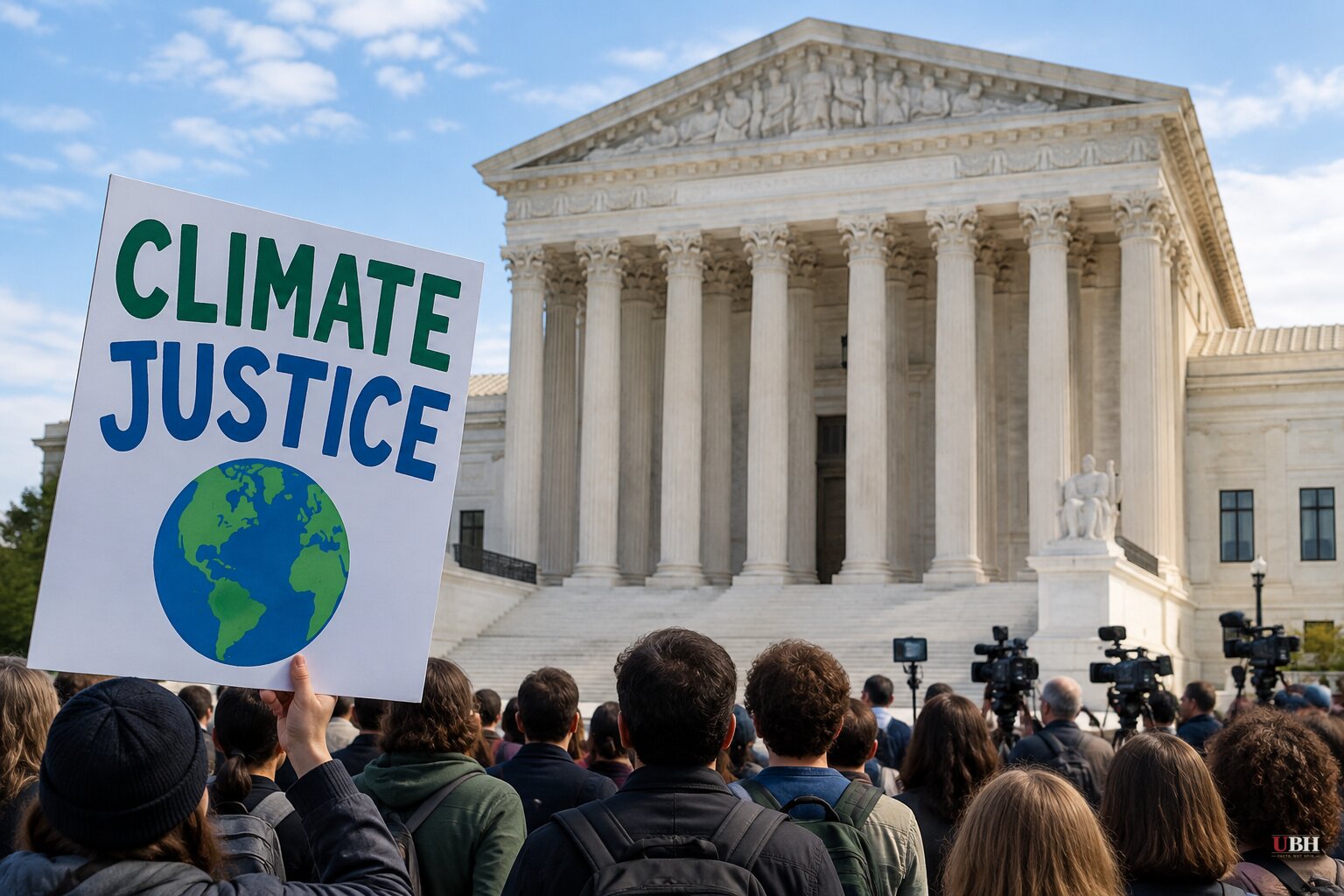
New York's Climate Change Superfund Act has been struck down. Chief U.S. District Judge Brenda Sannes of the Northern District of New York ruled on August 31, 2026 that the state cannot force major fossil fuel companies to pay $75 billion in climate damages, finding the law preempted by the federal Clean Air Act, according to Epoch Times and legal industry tracker legal500.
Gov. Kathy Hochul signed the Climate Change Superfund Act in December 2024. It would have required companies the state's Department of Environmental Conservation identified as responsible for more than 1 billion tons of greenhouse gas emissions between 2000 and 2024 to pay a combined $3 billion a year for 25 years, according to legal500 and OilPrice.com. The money was earmarked for coastal wetland restoration, stormwater systems, road and bridge upgrades, and disaster recovery.
The Legal Reasoning
Judge Sannes granted summary judgment to a coalition of 22 states led by West Virginia, plus the U.S. Chamber of Commerce and other industry groups, in the consolidated case West Virginia v. James, according to legal500. She leaned heavily on the Second Circuit's 2021 ruling in City of New York v. Chevron, which held that New York City couldn't use state tort law to recover climate damages from energy producers because the Clean Air Act displaced that kind of claim.
According to EID Climate, Sannes wrote that "there is very little daylight left to distinguish the Climate Act from the common-law claims in City of New York," rejecting New York's argument that a legislature imposing liability is legally different from a court applying common law. She also found that the EPA's 2026 rescission of its endangerment finding didn't change the outcome, per legal500.
Sannes went further, ruling the law also intrudes on federal authority over foreign affairs. She wrote that enforcing it would upset "the overriding need for a uniform rule of decision on matters influencing national energy and environmental policy," according to esgnews.
Who's Fighting Who
West Virginia Attorney General John McCuskey led the challenge, joined by 21 other Republican-controlled states. "We were the first to challenge this law because we saw it for what it was, a money grab by the elites in New York, who want to punish West Virginians for doing the jobs that enable them to heat their homes and build their cities," McCuskey said in an August 31 statement carried by Epoch Times.
The Justice Department backed the challengers under Executive Order 14260, "Protecting American Energy From State Overreach," signed in April 2025 and explicitly aimed at both the New York and Vermont laws, according to legal500. DOJ's Adam Gustafson, a principal deputy assistant attorney general, said the law "would have expropriated $75 billion from energy companies around the world during an energy emergency and in direct defiance of American foreign policy and federal law."
On the other side, State Senator Liz Krueger, the bill's sponsor, called the ruling "unfortunate" and argued Sannes failed to distinguish a state legislature "exercising its constitutional powers to raise revenues" from New York City's earlier lawsuit, according to OilPrice.com. Cassidy DiPaola of the advocacy group Make Polluters Pay said the decision "rests on contested precedent from a fundamentally different case" and urged Attorney General Tish James to appeal immediately.
Advocates for the law point to real damage: a 2025 study in the journal Nature linked more than 200 severe heat waves directly to carbon pollution from the world's largest fossil fuel producers, per OilPrice.com. Their underlying argument, that companies whose products drove decades of emissions should help cover the resulting infrastructure costs rather than sticking taxpayers with the bill, is a legitimate policy position even if this particular legal vehicle didn't survive.
Interstate and international emissions have long been treated by courts as a matter for uniform federal, not patchwork state, regulation. That's the theory Sannes applied. Whether that's good policy is a separate question from whether it's the law, and on the law, New York lost.
What Happens Next
Hochul's office is "reviewing the decision to determine possible next steps," according to spokesperson Ken Lovett, who added, "Taxpayers shouldn't have to foot the bill for damages caused by polluters." A status report in the case was due September 14, 2026, and New York retains the option to appeal, per legal500.
The ruling will likely shape a pending challenge to Vermont's nearly identical superfund law, the first of its kind enacted earlier in 2024, which the U.S. Chamber of Commerce and American Petroleum Institute are separately suing to block. It also lands ahead of Suncor Energy v. Boulder County, a related climate-liability case scheduled for U.S. Supreme Court argument on October 5, 2026, according to legal500. That argument, still weeks away, could determine whether any state-level climate liability scheme survives federal preemption at all.
Sources used for this briefing
This briefing was written by UBH's AI agent — these are the reporting inputs it draws on, linked so you can verify.


