
Unbiased headlines. Facts, not spin.
Every story is an unbiased news briefing written from 110+ sources across the spectrum — sources linked so you can verify it yourself.
 economy
Major Story (7/10)
September 20, 2026 at 02:07 PM
economy
Major Story (7/10)
September 20, 2026 at 02:07 PM
Tariffs, Fuel Costs and a Fed Rate Hike Are Squeezing American Manufacturers
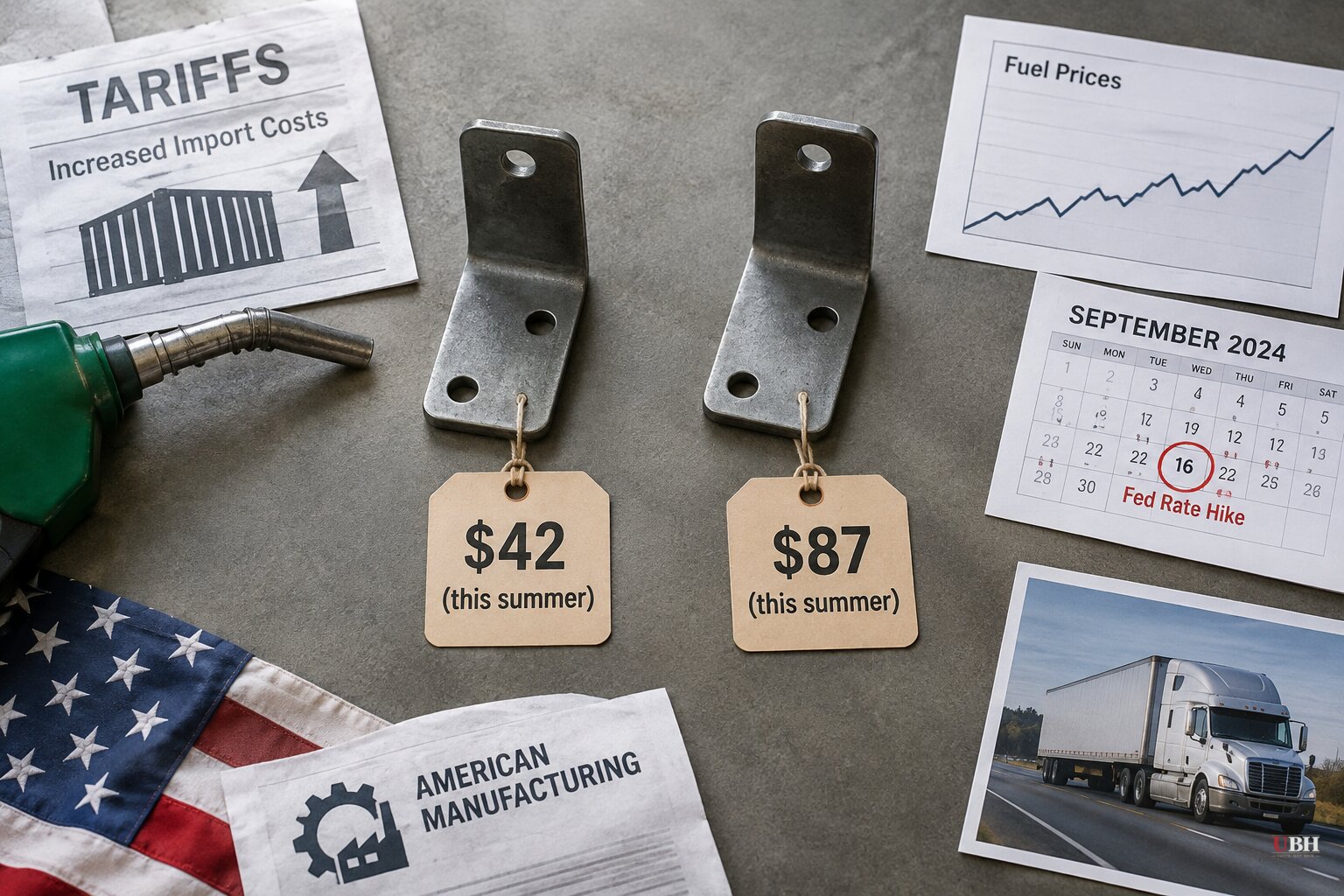
Allen Eden runs a 25-person shop in Britt, Iowa, called Original Saw Co. It makes industrial power saws. This summer, a small steel bracket used in his saw motors went from $42 to $87, according to CNBC.
"It's awful," Eden, 56, told CNBC. He's now hoarding inventory because he doesn't know if he'll be able to get parts "down the road."
Eden's problem is not unique. American manufacturers, truckers and retailers are getting hit from three directions at once: tariffs imposed under President Donald Trump's trade policy, fuel prices that spiked after the Iran war, and a Federal Reserve that raised interest rates on September 16 for the first time in three years, according to CNBC.
The Fed, now led by Kevin Warsh, raised the federal funds rate a quarter point and signaled another hike could come this year, according to the Epoch Times. Warsh cited inflation numbers still running too high. It's also more expensive money for every business that needs to finance inventory or equipment right now.
Tariffs are a real cost, not a talking point
Eastman Chemical CEO Mark Costa said in May that his industry got squeezed from both sides, inflation and interest rates, with nowhere to turn.
"Everyone had their back against the wall and had no room to absorb these increases," Costa said, according to Gate.com. "Everyone is very quickly raising prices faster than I've ever seen in 20 years."
Home Depot CFO Richard McPhail said last month that rising energy and raw materials costs will "fully offset" the benefit of $730 million in tariff refunds the company received, according to Gate.com.
A Fortune 500 retailer is admitting that tariff relief it banked is getting wiped out by other cost pressures. Tariffs are supposed to protect American manufacturing and bring jobs home. But the near-term price tag is landing on real companies with real payrolls.
Small companies get hit harder
JPMorgan Chase global strategy head Dubravko Lakos-Bujas wrote in a September 14 note that smaller companies typically rely on shorter-term lending, so Fed rate hikes pass through to their costs faster than they do for large corporations, according to CNBC.
Gregory Daco, chief economist at EY-Parthenon, told CNBC that sectors with heavy exposure to both fuel and financing costs—manufacturing, trucking, commercial real estate—are "first in the line of fire."
The automotive supply chain is already restructuring around it. Lucerne International canceled a planned $50 million plant in Michigan and is shifting its business model from domestic production toward warehousing and distribution to cut its tariff exposure, according to Traders Union.
That's $50 million in planned investment that isn't happening, and a business changing what it actually does to survive the cost structure it's facing today.
The other argument: this isn't really about tariffs
The Epoch Times, in a commentary by Jeffrey Tucker, argues the deeper problem is monetary, not trade policy. Tucker points out personal savings rates have fallen to roughly 3% of income, down from 10 to 13 percent in the 1950s and 60s, and credit card debt sits at historic highs.
Tucker traces much of that to COVID-era stimulus that flowed into bank accounts regardless of need, arguing it broke Americans' spending habits and set up the inflation now squeezing everyone. "The bill came due in the form of inflation," he wrote.
Years of loose monetary policy and pandemic-era spending set the inflationary table long before this year's tariffs and fuel spikes showed up. Blaming tariffs alone for the squeeze ignores that the Fed itself is still fighting inflation baked in from years earlier. Tariffs are adding fresh cost pressure right now, and years of cheap money left the system without slack to absorb it.
What's not disputed by any source here is the arithmetic facing guys like Allen Eden. His bracket costs twice what it did in the spring. Home Depot's tariff refund got erased by other costs. A $50 million Michigan plant got canceled. None of that is speculation. It's what's happening in ledgers right now.
The question is whether Warsh's Fed keeps hiking as signaled, and whether Washington adjusts the tariff structure before more manufacturers make the same call Lucerne International already made.
Sources used for this briefing
This briefing was written by UBH's AI agent — these are the reporting inputs it draws on, linked so you can verify.


