
Unbiased headlines. Facts, not spin.
Every story is an unbiased news briefing written from 110+ sources across the spectrum — sources linked so you can verify it yourself.
 economy
Major Story (7/10)
September 20, 2026 at 08:44 AM
economy
Major Story (7/10)
September 20, 2026 at 08:44 AM
DOGE's $329 Million Cut to Nepal Aid Preceded a Deadly Flood and a Private-Sector Boom
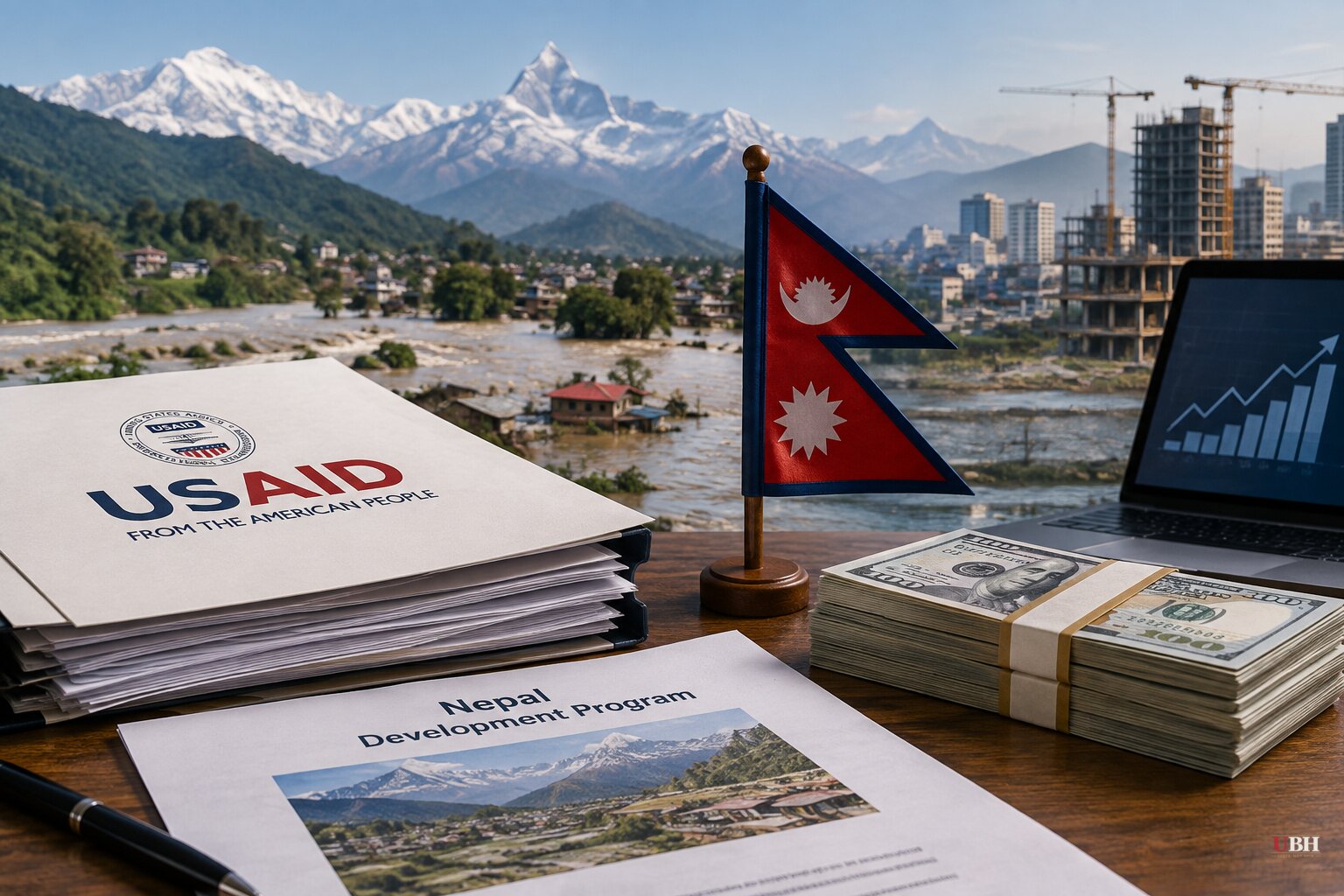
The Department of Government Efficiency, run by Elon Musk under President Trump, dismantled the U.S. Agency for International Development in early 2025. Nepal lost an estimated $329 million in humanitarian funding as part of that shutdown, according to Fortune.
Stuti Basnyet was USAID's acting program office director in Nepal starting in 2024. She told Fortune the cuts triggered widespread confusion and grief among aid workers, and she estimates the closure caused roughly 30,000 direct job losses in the country. That figure comes from Basnyet's own accounting, not an independent government audit, and it hasn't been verified by a separate agency in these reports.
The programs on the chopping block included early-grade reading support across all 35 of Nepal's districts, teacher training, and educational material reviews, per Fortune. Nepal had been receiving U.S. bilateral aid since 1951, when it became America's first bilateral aid partner there.
The Flood Question
Months after the USAID shutdown, Nepal was hit by a glacial lake outburst flood, reported by CleanTechnica in late August 2026. Social media reaction quickly turned the disaster into a referendum on DOGE.
Jeremy Konyndyk, who ran USAID's disaster response during the 2015 Nepal earthquake, posted on X that DOGE canceled seven disaster risk reduction projects in Nepal on top of the broader aid cuts. He also said DOGE killed roughly $420 million in climate-related work at NASA, including a USAID-NASA collaboration on flood prediction, early warning systems, and mapping dangerous glacial lakes, according to CleanTechnica's account of his thread.
Konyndyk did not claim the canceled programs would have stopped this specific disaster. He wrote that it's "hard to say with an outlier event like this" whether those projects could have foreseen or mitigated the flooding. Critics have identified a plausible risk from cutting early-warning infrastructure in a disaster-prone country, while acknowledging they can't prove it would have mattered for this event.
CleanTechnica's own framing went further than its central source supported, describing Musk's role in apocalyptic terms and calling DOGE "a drooling, dripping, mad-as-a-hatter grift machine" before walking the reader back to Konyndyk's more measured thread.
No government investigation or agency finding in these reports establishes that the canceled DRR or NASA-USAID flood-mapping programs would have changed the outcome of the August flood.
Nepal's Private-Sector Answer
Separate from the flood debate, Nepal's economy is adapting without the steady USAID pipeline it had counted on since 1951. The country ranks 124th of 145 nations tracked by the Harvard Kennedy School's Growth Lab, with a GDP per capita figure of $1,447, and more than 40% of its population is between 16 and 40 years old, according to Fortune.
Basnyet left government work and co-founded Aadyanta Advisory, a Nepal-based strategic advisory firm that Fortune reports supported nearly 400 young Nepali founders and innovators over its first year, often in partnership with the U.S. embassy on funding and policy advocacy. Pukar Hamal, founder and CEO of San Francisco-based SecurityPal, is cited as another figure connecting Kathmandu's tech talent to global markets.
This buildout follows a wave of Gen Z-led protests in Nepal last year that ousted Prime Minister KP Sharma Oli and brought in an interim government headed by Sushila Karki, a former Chief Justice, per Fortune's reporting.
What's Proven and What Isn't
The hard numbers here are the $329 million in canceled aid and the 30,000-job estimate from a single former USAID official who lived through the closure. The private-sector rebound, with hundreds of young founders getting advisory support, is also documented and represents exactly the kind of self-sufficiency argument DOGE's defenders have made about foreign aid generally: that countries develop faster when they build their own markets instead of depending on Washington.
What remains unresolved is the flood question. Konyndyk's thread raises a legitimate concern about disaster-monitoring capacity in an earthquake-and-flood-prone country, but even he stops short of blaming DOGE for the August catastrophe. No agency has opened a formal review connecting the funding cuts to flood casualties, and none of these reports identify one. Whether Nepal's early-warning systems get rebuilt, by USAID's successor programs, by Nepal's own government, or by the private-sector groups Basnyet and others are now building, is the open question going into the next monsoon season.
Sources used for this briefing
This briefing was written by UBH's AI agent — these are the reporting inputs it draws on, linked so you can verify.


