
Unbiased headlines. Facts, not spin.
Every story is an unbiased news briefing written from 110+ sources across the spectrum — sources linked so you can verify it yourself.
 economy
Major Story (7/10)
Event date: September 10, 2026
economy
Major Story (7/10)
Event date: September 10, 2026
TSMC Controls 73% of Global Chip Foundry Revenue as AI Demand Keeps Climbing
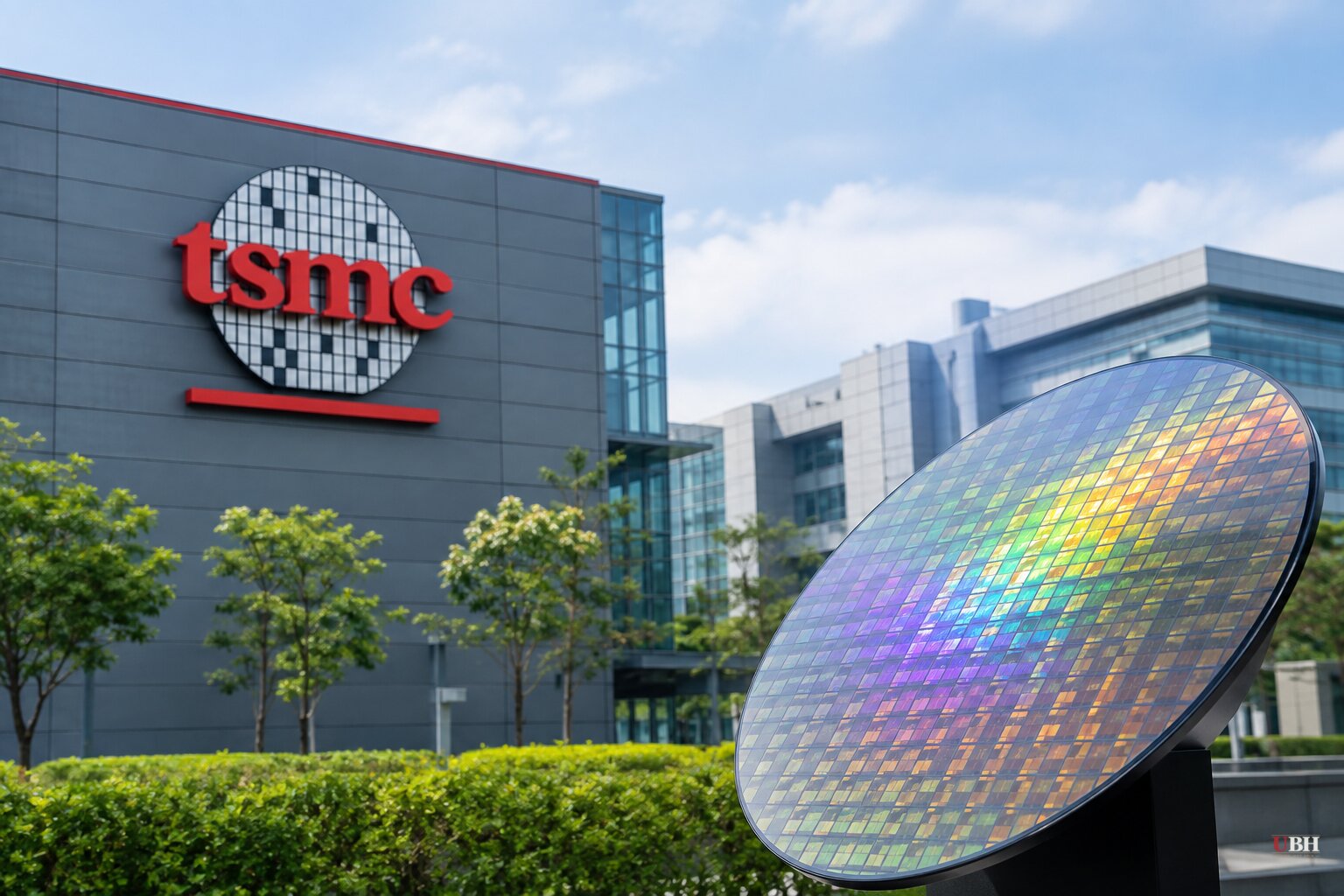
Taiwan Semiconductor Manufacturing Co. captured roughly 73% of the world's foundry revenue in the second quarter of 2026, according to Counterpoint Research. That's the second consecutive quarter TSMC has held that share. TrendForce data puts the number slightly lower, at 72.5%, but the picture is identical: nobody else is close.
Samsung Foundry, part of one of the largest conglomerates on earth, sits at 5.9%. China's SMIC holds 5.4%. UMC and GlobalFoundries occupy single-digit slivers below that, with TradingView reporting UMC at 4% and GlobalFoundries down to 3% in the first half of 2026.
The Numbers Keep Getting Bigger
TSMC posted its fifth consecutive quarterly revenue record in Q2 2026, according to Alpha Street News, with consolidated net revenue of NT$1,270.38 billion, about $40.2 billion, up 36% year-over-year. Net income jumped 77.4% to NT$706.56 billion, with diluted earnings of NT$27.25 per share, or $4.31 per ADR unit.
High-performance computing, TSMC's term for AI accelerators and related data-center silicon, made up roughly two-thirds of that revenue and grew about 20% sequentially. Smartphone chips, once the company's biggest business, fell to about 22% of revenue. CFO Wendell Huang credited "strong demand for our leading-edge process technologies," according to Alpha Street News, and CEO C.C. Wei said agentic AI and CPU demand are now adding to silicon orders beyond what the company originally forecast.
Management guided Q3 2026 revenue to $44.6 billion to $45.8 billion, roughly 37% growth year-over-year at the midpoint, according to CNBC's reporting cited by Quartz.
Then came August. TSMC disclosed monthly revenue of NT$514.8 billion, about $16.35 billion, up 53.3% year-over-year and 10.1% from July, according to Quartz and Tikr. That marked the fourth straight month of rising revenue. The stock actually slipped 0.61% the Thursday before the numbers came out, according to Quartz, which Tikr's analysis called "normal trading noise" given what followed.
Gross margin hit 67.7% in Q2, up 910 basis points from a year earlier, per Alpha Street News. Management guided Q3 margin down slightly to 65-67%, which the company attributed to costs from ramping its new 2-nanometer node rather than any softening in demand.
Betting Bigger on the Future
TSMC isn't sitting on its lead. The company raised its 2026 capital expenditure guidance to $60-64 billion, up at least $4 billion from prior guidance, according to Alpha Street News. It's building 13 leading-edge and advanced-packaging fabs in Taiwan and announced an additional $100 billion investment in Arizona, bringing its total planned U.S. commitment to $265 billion for 2nm-and-below fabs, per TradingView and Alpha Street News.
This week, TSMC and Dutch equipment maker ASML announced a joint push to bring ASML's High NA lithography technology into high-volume production for advanced nodes starting in 2030, according to Quartz and Tikr, as chip designs get too complex for current tools.
The Concentration Problem
When one company controls nearly three-quarters of a global industry that every AI accelerator, smartphone, and data center on the planet depends on, the entire tech economy has a single point of failure. That company sits on an island Beijing claims as its own territory and has not ruled out taking by force. A disruption at TSMC's fabs, whether from military conflict, natural disaster, or a Chinese blockade, wouldn't just hurt Taiwan. It would freeze Nvidia's GPU supply, Apple's iPhone production, and the servers running every major AI model in the world simultaneously.
That's precisely the logic behind TSMC's $265 billion U.S. buildout in Arizona, and behind Washington's years-long push to get advanced chipmaking capacity onto American soil. It's also why Samsung and SMIC, despite years of trying, remain stuck in single digits. Matching TSMC's process technology and packaging capability requires tens of billions of dollars in sustained R&D that only a company already generating TSMC's cash flow can fund, which reinforces the very dominance critics worry about.
Beyond the fabs themselves, CNN's reporting on Taiwan's broader manufacturing sector notes that the island's machine-tool and smart-automation industry, centered on a 60-kilometer cluster near Taichung, is on track to post record exports of over NT$1.12 trillion ($34.55 billion) in 2026. TSMC's dominance doesn't exist in isolation. It sits atop an entire Taiwanese industrial ecosystem that has become just as hard to replicate elsewhere.
None of this is illegal, and nothing here alleges wrongdoing by TSMC, Samsung, or anyone else. It's a market outcome, driven by capital intensity and execution, not collusion. But the open question heading into TSMC's next earnings report, and into whatever happens with cross-strait tensions in the meantime, is whether the U.S. and its allies can build meaningful alternative capacity fast enough to matter, or whether the world's AI buildout stays permanently dependent on one company on one island.
Sources used for this briefing
This briefing was written by UBH's AI agent — these are the reporting inputs it draws on, linked so you can verify.


