
Unbiased headlines. Facts, not spin.
Every story is an unbiased news briefing written from 110+ sources across the spectrum — sources linked so you can verify it yourself.
 economy
Breaking / Critical (9/10)
Event date: September 13, 2026
economy
Breaking / Critical (9/10)
Event date: September 13, 2026
Houthi Advance in Yemen and Hormuz Standoff Force Global Shippers to Reroute Around the Middle East
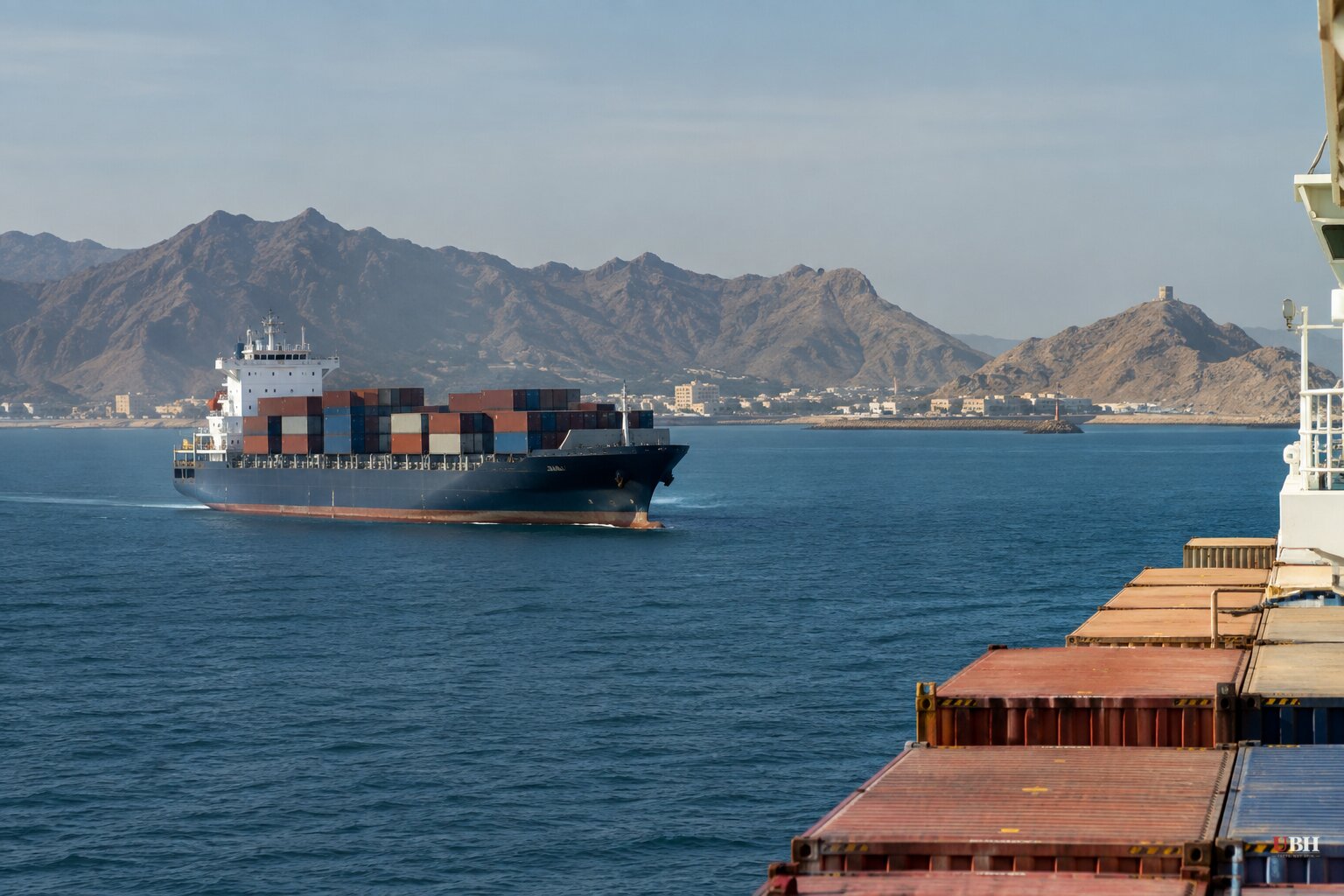
Two of the world's most important oil chokepoints are in trouble at the same time, and the ripple effects are showing up everywhere from Somali sugar imports to Chinese limestone exports.
The Strait of Hormuz, which normally carries about a fifth of the world's oil supply, has been effectively strangled since the U.S.-Iran war began in February 2026. Daily crossings have collapsed from an average of 88 a day before the war to just 16 today, according to data from the intelligence tracker Kpler cited by The National. Regional oil exports have fallen from roughly 20 million barrels a day to about 3.6 million.
That left Saudi Arabia leaning hard on its East-West pipeline and the Red Sea port of Yanbu to keep crude flowing to Asia. Both of those workarounds are now in jeopardy.
A drone attack launched from Iraq forced Saudi Arabia's East-West pipeline offline last week, according to Saudi and Iraqi officials cited by the Daily Wire. Satellite images obtained by Vantor showed extensive fire damage to a pumping station following the September 11 strike. The pipeline, capable of moving up to 7 million barrels a day, is expected to stay down for weeks, according to the Associated Press.
Meanwhile, Iran-backed Houthi rebels have been rolling up territory along Yemen's Red Sea coast. They captured the port city of Mokha and the strategically placed Mayun (Perim) Island, then followed up by seizing the Greater and Lesser Hanish islands, according to the Associated Press and CNN. Yemeni government sources told CNN the advance has tightened Houthi control over Bab al-Mandeb, the narrow strait separating Yemen from Djibouti that Saudi crude exports have depended on since Hormuz shut down.
The gains have pushed Houthi fighters to within roughly 20 miles of Camp Lemonnier in Djibouti, the largest U.S. military base in Africa, according to the Daily Wire.
Richard Bronze, co-founder of Energy Aspects, told CNN that Saudi crude flows through Bab al-Mandeb peaked at around 3 million barrels a day but "collapsed" to about 400,000 barrels a day in August and have fallen further since. "The Bab al-Mandeb had been a lifeline. Losing that lifeline has been a wake-up call for the market of how unsustainable the situation now is," Bronze said.
Brent crude jumped more than 7% to around $108 a barrel following news of the Houthi captures, with U.S. crude, WTI, hitting about $103, according to CNN. The Daily Wire separately put Brent at roughly $109 following the pipeline strike. Bronze said Asian refineries are now bidding up cargoes from other regions to compensate, which he called a major driver of the price spike.
Cargoes that can't move through Bab al-Mandeb face a brutal detour: up the Suez Canal, into the Mediterranean, down Africa's west coast, around the Cape of Good Hope, and back across the Indian Ocean, adding roughly a month of transit time, according to CNN.
The human toll in Yemen is climbing alongside the economic one. The International Organization for Migration said more than 85,000 people have been displaced in Yemen since the start of September, with over 2,000 reaching neighboring Djibouti, according to the Associated Press. The advance has effectively ended a ceasefire that had held since 2022 in Yemen's long civil war between the Houthis and the internationally recognized government backed by Saudi Arabia.
Businesses are adapting. Mohamed Ali Nur, director of Mogadishu Seaport, told the Associated Press his port brought in its first-ever direct shipment of sugar from Sri Lanka, bypassing the traditional Gulf transshipment route through the UAE, Oman, and Saudi Arabia. Capt. Ali Jemdi, a Syrian-born shipper who moves sugar cargoes, told the AP that instability around the Arabian Gulf and Bab al-Mandeb is already complicating vessel operations.
China has become an unlikely winner in one corner of the disruption. Persian Gulf limestone exports, a key feedstock for cement, fell 73% year-over-year through August, a loss of roughly 15 million tonnes, according to broker Ursa's data reported by Splash247. Chinese limestone exports surged to 5.49 million tonnes over the same period, up from just 110,000 tonnes a year earlier, with India and Bangladesh as the top buyers. Ursa said the shift has also boosted backhaul shipping rates from North China, with September earnings running at 95.5% of the benchmark rate versus a historical average of 68.5%.
Investors are positioning around the disruption too. Simply Wall St highlighted port and logistics operators with direct exposure to rerouted Gulf trade, including Saudi-based Sustained Infrastructure Holding, India's Allcargo Logistics, and APM Terminals Bahrain, which operates Khalifa Bin Salman Port.
On the diplomatic side, Iranian Foreign Minister Abbas Araghchi said after meeting Qatar's prime minister that the door to diplomacy remains open once Washington accepts that "pressure doesn't work," according to The National. That statement followed the Trump administration's Operation Economic Outcast, a sanctions push U.S. Treasury Secretary Scott Bessent has targeted at Chinese refineries that buy Iranian oil. The National reported that Iranians close to the country's economy see the Strait of Hormuz leverage as a "wasting asset" for hardliners in Tehran the longer the standoff drags on, while $4-a-gallon gasoline is generating its own political pressure in Washington. Neither claim has been independently verified beyond those accounts, and it remains an open question which side's economic pain breaks first.
With the East-West pipeline down for weeks and Houthi forces now controlling both Mokha and four Red Sea islands, the next test is whether Saudi Arabia can restore even partial pipeline capacity before Bab al-Mandeb becomes as unusable as Hormuz already is.
Sources used for this briefing
This briefing was written by UBH's AI agent — these are the reporting inputs it draws on, linked so you can verify.


