
Unbiased headlines. Facts, not spin.
Every story is an unbiased news briefing written from 110+ sources across the spectrum — sources linked so you can verify it yourself.
 economy
Notable (6/10)
Event date: September 15, 2026
economy
Notable (6/10)
Event date: September 15, 2026
Senate Votes 74-24 to Advance Bill Setting National NIL and Transfer Rules for College Sports
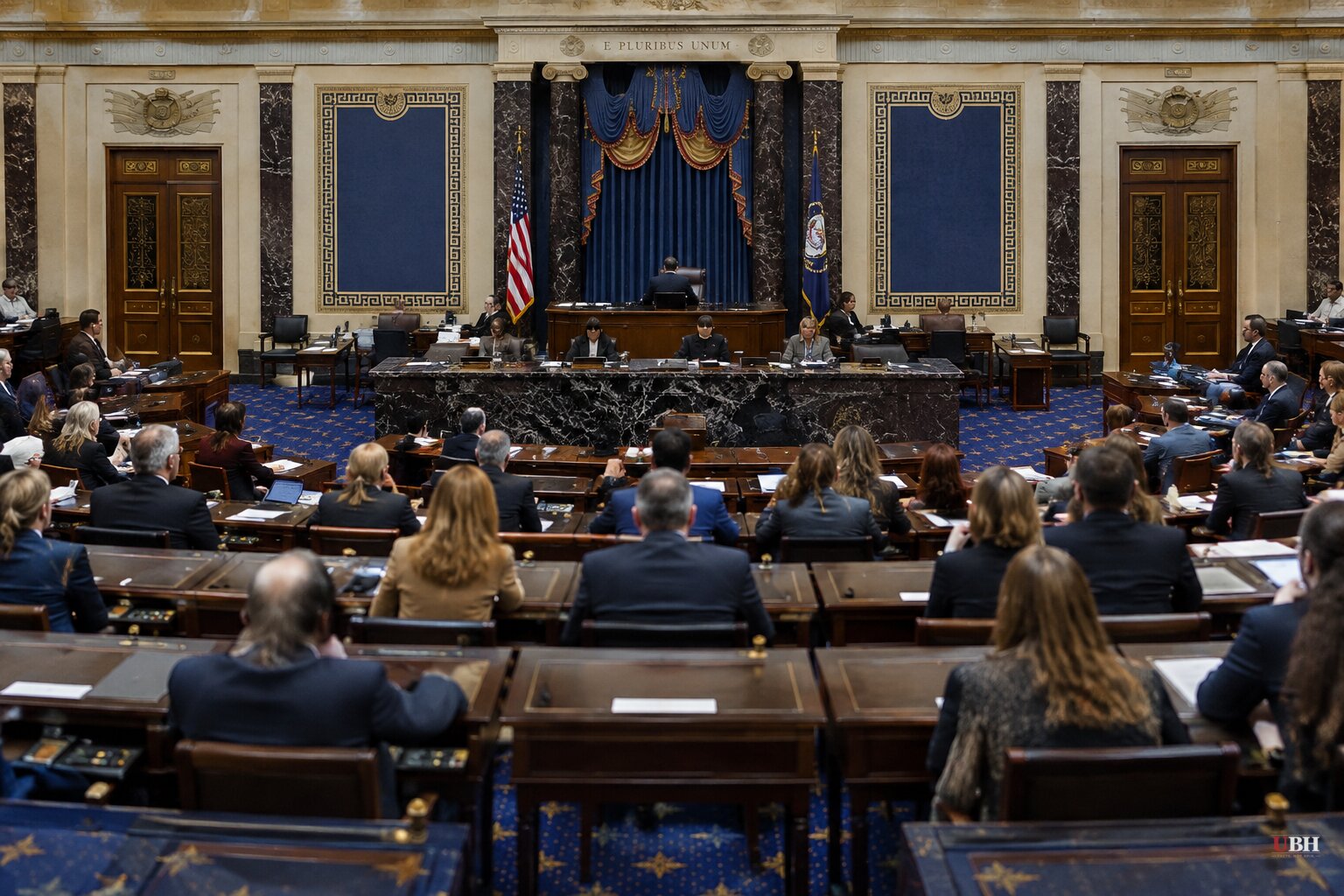
The Senate voted 74-24 to invoke cloture and advance the Protect College Sports Act, clearing the first hurdle for a bill that would impose the first federal rulebook on college athletics since the NCAA's 2021 decision opened the door to name, image and likeness payments, according to the Senate Commerce Committee. The bill now heads toward additional Senate votes before it could go to the House.
The bill is co-authored by Senate Commerce Committee Chairman Ted Cruz, R-Texas, and Ranking Member Maria Cantwell, D-Wash. Cruz has been blunt about why Congress is stepping in.
"Some have asked why should Congress get in the middle of this? The answer is simple: because Congress screwed it up in the first place," Cruz said at a press conference, according to Fox News. He argued that repeated antitrust lawsuits have gutted nearly every rule the NCAA used to enforce, leaving what he called "the Wild West."
Senate Majority Leader John Thune, R-S.D., echoed that ahead of the vote: "I think most people acknowledge that the current landscape of college sports is a mess. It needs to be addressed," Fox News reported.
What the bill actually does
According to the Senate Commerce Committee, the Protect College Sports Act would create the first federal NIL right for athletes, new contract and agent rules, health and safety protections during and after a season, an athlete ombudsman, whistleblower protections, and specific safeguards for women's and Olympic sports. It also sets a five-year uniform eligibility framework, new limits on when schools or agents can contact recruits, restrictions on the transfer portal, a ban on mid-season coaching changes, and a revenue-sharing structure the committee says schools could join voluntarily while keeping existing contracts intact.
Cantwell framed it as bringing order to a system that has gotten out of hand. "This bill brings order to college sports. It helps women and Olympic sports, and it sets up a commission to look at the real future, which I think should include collective bargaining," Cantwell said on the Senate floor, according to the Commerce Committee. "Recognize that athletes do deserve revenue sharing, and this bill will put that into law for the first time."
Her office also released a report the same day arguing that runaway athletic spending is straining college budgets and students. The numbers back that up. Since the House v. NCAA settlement roughly 18 months ago set an initial $20.5 million cap on per-school revenue sharing with athletes, at least five Power Four football programs have blown past $45 million in roster spending, according to a survey of more than 70 sources across the sport by The Athletic, cited by On3. Ohio State's roster is now estimated above $50 million, and industry sources told On3 the top programs could approach $60 million within a year.
Who's against it, and why
Fox News reported that both the Southeastern Conference and the Big Ten have opposed the bill, though the specific objections those conferences raised weren't detailed in that reporting.
The sharpest public criticism came from Sen. Chris Murphy, D-Conn., who argues the bill would strip athletes of leverage they only recently gained and hand colleges new legal cover. Murphy contends the legislation would create exemptions from federal antitrust law for schools, the same laws that forced open the current NIL system in the first place.
Murphy went further on X, framing the bill in racial terms: "The 'chaos' is that (mostly Black) athletes now have bargaining power and White coaches and sports industry execs hate it," he wrote, as reported by Fox News.
If the bill hands schools and conferences new antitrust protection while capping what players can earn, it could shift power back toward administrators just as athletes built real bargaining leverage through litigation. The revenue-sharing cap and the new enforcement mechanisms will determine how the bill actually functions in final text. Seventy-four senators, including many Democrats, voted to keep the process moving.
Cruz and Cantwell have so far declined to significantly alter the bill to satisfy the SEC and Big Ten, according to Fox News. The Senate is expected to take further votes on the measure in the coming days. If it clears the Senate, it would then go to the House, where no timeline has been set.
Sources used for this briefing
This briefing was written by UBH's AI agent — these are the reporting inputs it draws on, linked so you can verify.


