
Unbiased headlines. Facts, not spin.
Unbiased Headlines is an independently owned news organization. We bring you the facts, not opinions, written fresh from 110+ named sources. Sources linked so you can verify it yourself.
 economy
Major Story (7/10)
Event date: November 1, 2026 ·
Trump Says Canada Trade Deal Is Close on Election Day. Carney Says Work Remains and the U.S. Has Dropped Some Demands
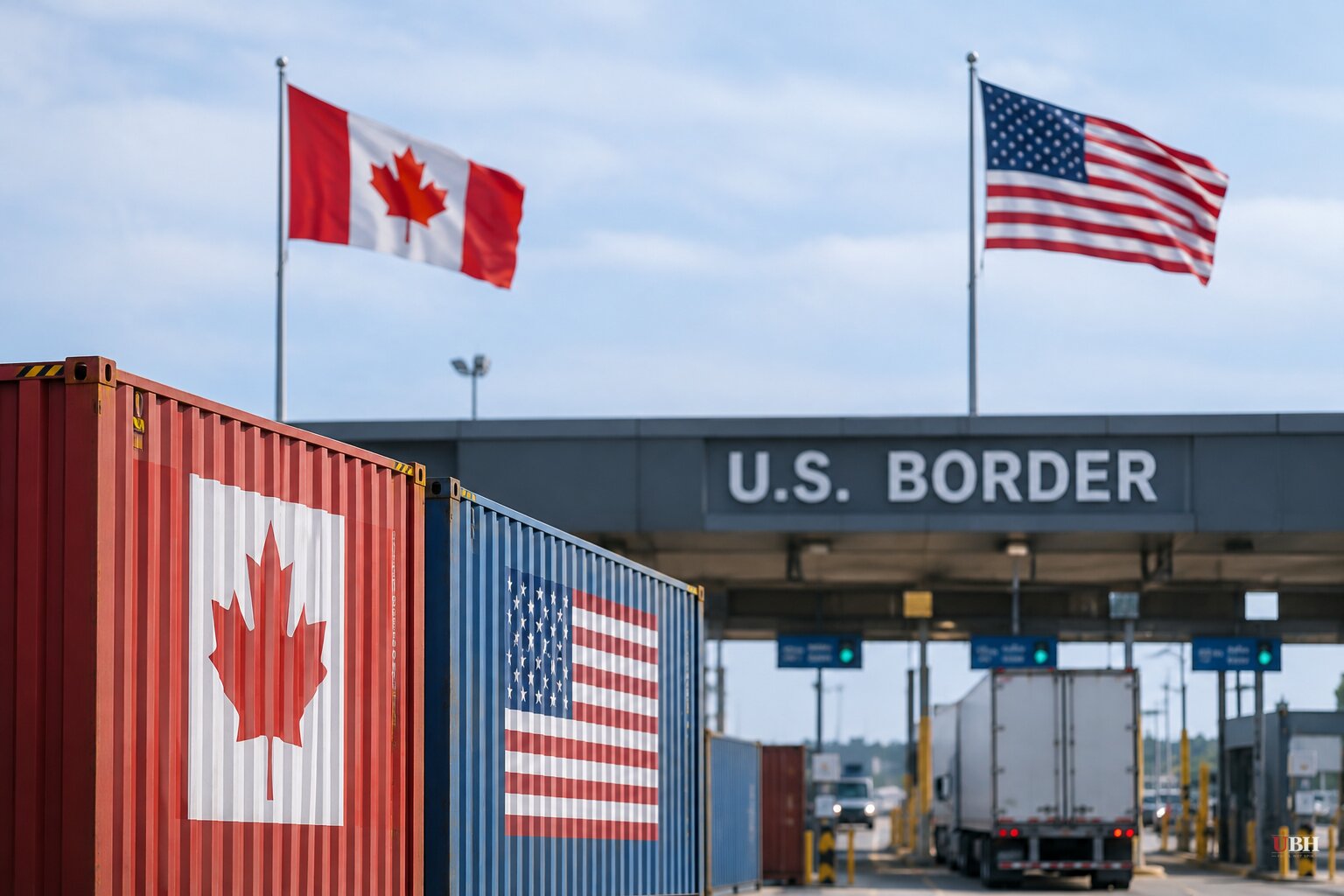
Since Canada walked away from trade talks in August and the U.S. answered with 50% tariffs on roughly $20 billion in Canadian goods, the two governments have traded billions of dollars in tariffs. On this Election Day, Nov. 3, they are publicly talking about a deal.
President Donald Trump said in a Fox News interview today: "Canada is very good, we're going to make a deal with Canada very soon. We're going to make a great deal." Prime Minister Mark Carney answered that work remains. He also said Washington has dropped some of its earlier demands and is "offering more."
No terms have been announced.
What was said over the weekend
The latest round started Sunday, Nov. 1. Carney posted that he had a "good conversation" with Trump. The talk built on recent discussions about the outlines of a deal that would create jobs, lower costs for families and protect Canada's languages, culture and sovereignty. "Our teams will now be working in the coming weeks to deliver that outcome," he wrote.
Hours later, at a rally in Dubuque, Iowa, Trump said the two sides have "the concept of a very good deal." He said he spoke with Carney on Saturday and again a few days earlier.
"We've been losing money for many years with Canada, 70, 75 years," Trump said. "So we are now very close to having a deal."
Trump said the deal would be "great for our farmers." "Part of the agreement is that our farmers will have to pay no tariffs," he said. Ottawa has not commented on that point.
Trump also said the Keystone XL pipeline is part of the talks. That project was cancelled after the Biden administration revoked its permit in 2021.
Where the two sides still differ
Canada's supply management system is the obvious sticking point on farm trade. It applies quotas and tariffs to imported dairy, poultry and eggs, and successive U.S. administrations have objected to it. Carney has said Canada will not remove it.
That sits awkwardly next to Trump's claim that U.S. farmers will face no tariffs. Neither government has said how the two positions fit together.
Carney laid out why talks collapsed in August. He cited three factors: the U.S. refused tariff relief for Canadian-made medium- and heavy-duty trucks, it wanted to limit Canada's ability to strike trade deals with other countries, and it demanded changes that he said would weaken protections for French-language content. His comment today that Washington has dropped some demands suggests movement on that list. He has not said which demands.
The two sides have discussed possible relief from U.S. tariffs on Canadian steel and automobiles. No specifics have been published.
The pipeline and the politics
On Keystone XL, the project Trump mentioned is not currently being built. Calgary-based South Bow, which took over TC Energy's oil pipeline business in 2024, is pursuing a different project called Prairie Connector. It would use existing Keystone XL infrastructure in Canada and connect to a new U.S. pipeline carrying Alberta oil to Wyoming. The Trump administration granted it a permit in April 2026. South Bow says it is targeting a final investment decision by mid-2027.
The timing is political. The trade war is an issue in Tuesday's midterms, particularly in Michigan and Maine, where Senate races are being decided. Michigan Republican Senate candidate Mike Rogers has called for an end to the tariff war.
Daniel Béland, a political science professor at McGill University, said recent U.S. tariff adjustments affecting Canada show the White House recognizes the political risks of the trade war, especially in border states. Robert Bothwell, a University of Toronto historian, said the Carney-Trump conversation was unlikely to affect the elections.
Carney said as recently as Wednesday, Oct. 28, that the countries were not in a position to reach an agreement before the midterms. He said last week that talks had picked up because Washington was moving closer to Canada's position.
What happens next
Carney's stated timeline is "the coming weeks." The test is whether negotiators produce text on steel, autos and heavy trucks, the areas where tariffs have hit hardest, and whether Canada gives any ground on dairy, poultry and eggs. Until then, Trump's "concept" and Carney's "work remains" are the only positions on the record.
Sources used for this briefing
6 links from 6 independent newsrooms (syndicated copies of the same report count once)
These are the sources it draws on, linked so you can verify.


