
Unbiased headlines. Facts, not spin.
Unbiased Headlines is an independently owned news organization. We bring you the facts, not opinions, written fresh from 110+ named sources. Sources linked so you can verify it yourself.
 economy
Notable (6/10)
Australia's High Court rules Uber owes $81 million in NSW payroll tax, 6-1
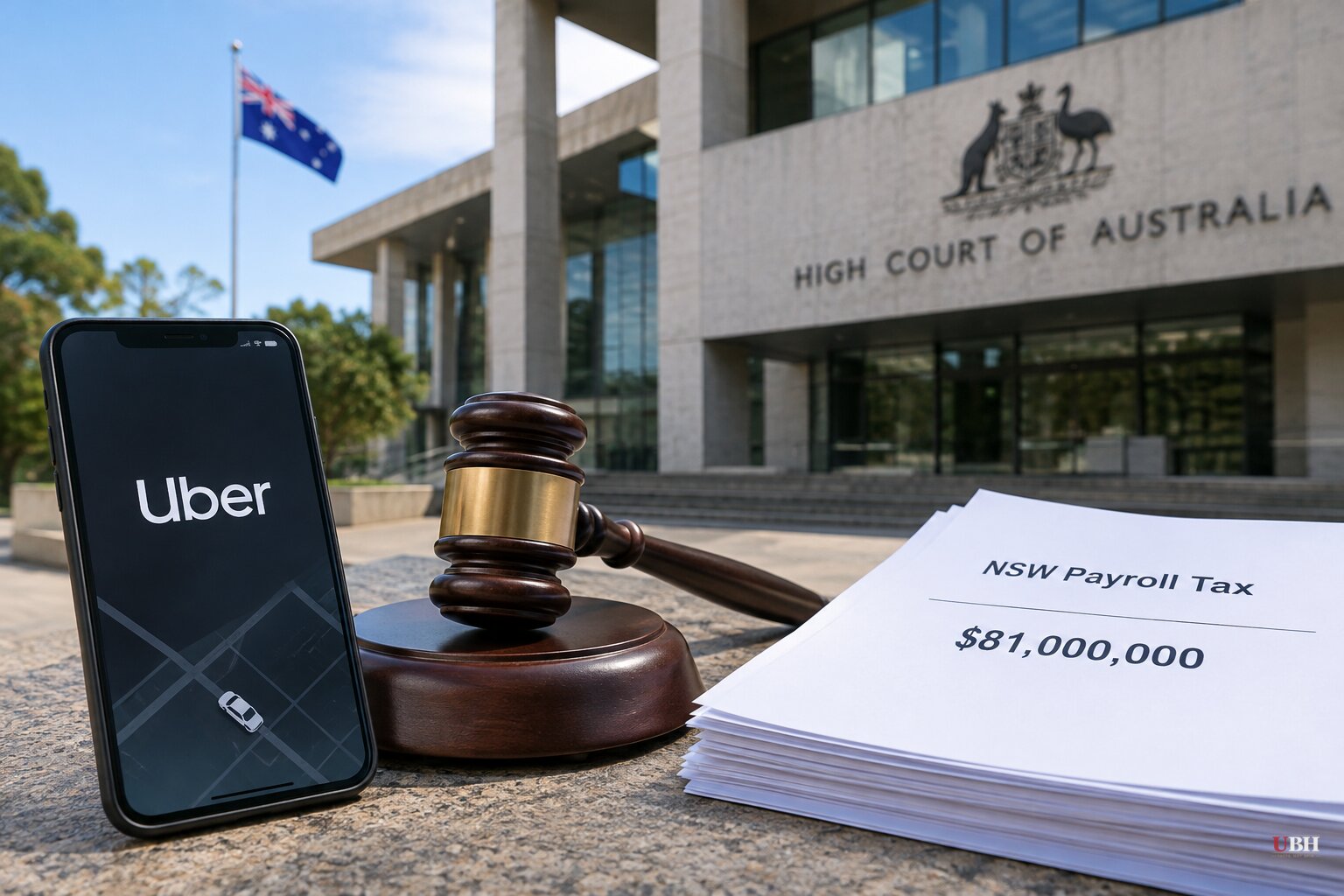
Uber has lost its last appeal in a years-long fight with New South Wales tax authorities. The High Court of Australia ruled today, Nov. 4, that the company owes payroll tax on the fares it passes on to drivers.
The bill is about $81 million for the 2015 to 2020 financial years. Revenue NSW issued six assessments totalling roughly $81.5 million for that period and added interest on top. Uber must also pay the legal costs of the NSW Chief Commissioner of State Revenue.
Six of the seven justices sided with the state. One dissented.
What the court decided
This is a tax ruling, not a fine and not a penalty for wrongdoing. The question was whether money Uber passes to drivers after deducting its service fee counts as "wages" under the Payroll Tax Act 2007 (NSW).
Uber said it was only a "payment collection agent." It collects fares from riders and hands them to drivers, it argued, so the money was never its payroll.
The majority rejected that. The court found drivers work under contracts caught by the Act's contractor provisions, which deem payments for work to be wages even when the worker is not a traditional employee. The ruling turns on how the tax statute defines wages, not on a finding that every driver is a conventional employee.
Chief Justice Stephen Gageler wrote that there is a direct relationship between a driver's performance and the fares Uber pays for that work. He said the contractor provisions, re-enacted in NSW and Victorian tax legislation, continue "always speaking in the present" to the gig economy that emerged this century.
Justices Michelle Gordon, James Edelman, Jacqueline Gleeson, Jayne Jagot and Robert Beech-Jones agreed in a joint judgment. They said Uber's model depends on collecting money from riders per trip and keeping a service fee, and that drivers supply a service "necessary for Uber to derive service fees and to continue its business." They added that parliament intended the provisions to "catch schemes designed to avoid liability for payroll tax."
The majority also pointed to Uber's control over the money. "Uber has structured its rideshare system business so payments from riders are funnelled through it," the judgment said. "That gives Uber substantive control over the fares before they are remitted to drivers, allowing Uber to deduct its service fee, or change or cancel the fare entirely."
A long road through the courts
Uber objected to the assessments in April 2021. The Chief Commissioner disallowed the objection in August 2022.
In September 2024, the NSW Supreme Court sided with Uber and revoked the assessments, finding payroll tax was not payable on almost all of the payments to drivers. On Aug. 1, 2025, a five-judge NSW Court of Appeal panel unanimously reversed that result. The High Court granted Uber special leave to appeal on Dec. 4, 2025.
Today's decision ends Uber's legal avenues on this case.
Uber's objection
Uber said it respects the decision but disagrees with its premise. "We do not believe digital marketplaces like Uber should be captured by payroll tax legislation designed for traditional employment and contracting arrangements," a company spokesperson said.
The spokesperson warned the ruling "could have significant unintended consequences beyond rideshare, affecting intermediary business models across the economy, including mortgage brokers, service-based marketplaces, medical practices and other healthcare services."
Uber also raised competitive neutrality, saying the same trip could attract different payroll tax treatment depending on which operator facilitates it. It called on state governments to modernise payroll tax laws for digital platforms.
That is a legislative argument, and it is a fair one to put to lawmakers. The court's job was to apply the law as written. Six justices concluded the law, as written and re-enacted, already reaches Uber.
The government and union response
NSW Finance Minister Courtney Houssos said payroll tax is a key part of the state's tax base, even though only about one in 20 companies meets the threshold to pay it. "It helps fund essential services that families and households rely on," she said. "Local businesses pay their fair share. Uber should pay their fair share too."
The Transport Workers' Union welcomed the ruling. National Secretary Michael Kaine called it "a critical reality check to companies seeking to skirt our laws: even companies who engage workers who may not be employees will have to pay their fair share."
The bill is likely to grow
The $81 million covers only 2015 to 2020. Subsequent years are expected to push the total well past $100 million, and the same reasoning could apply to other states with similar contractor provisions, including Victoria.
The Sydney Morning Herald reported that the decision is understood to have blindsided Uber, and that the company made no provision for the roughly $81.5 million liability in financial results it lodged with the regulator earlier this year. Uber has not publicly addressed that point in the statements reported today.
The full reach of the judgment will depend on how revenue offices apply it to other rideshare, delivery and platform businesses. Payroll tax applies only above a state-set wage threshold, and the majority's reasoning rests on Uber's particular payment structure. Which other intermediary models fit that description is the open question state revenue offices and Uber's competitors now face.
Sources used for this briefing
7 links from 6 independent newsrooms (syndicated copies of the same report count once)
These are the sources it draws on, linked so you can verify.


