
Unbiased headlines. Facts, not spin.
Unbiased Headlines is an independently owned news organization. We bring you the facts, not opinions, written fresh from 110+ named sources. Sources linked so you can verify it yourself.
 economy
Major Story (7/10)
Event date: November 3, 2026 ·
IMF chief says growth alone cannot fix U.S. debt as G7 bond yields hit near 20-year high
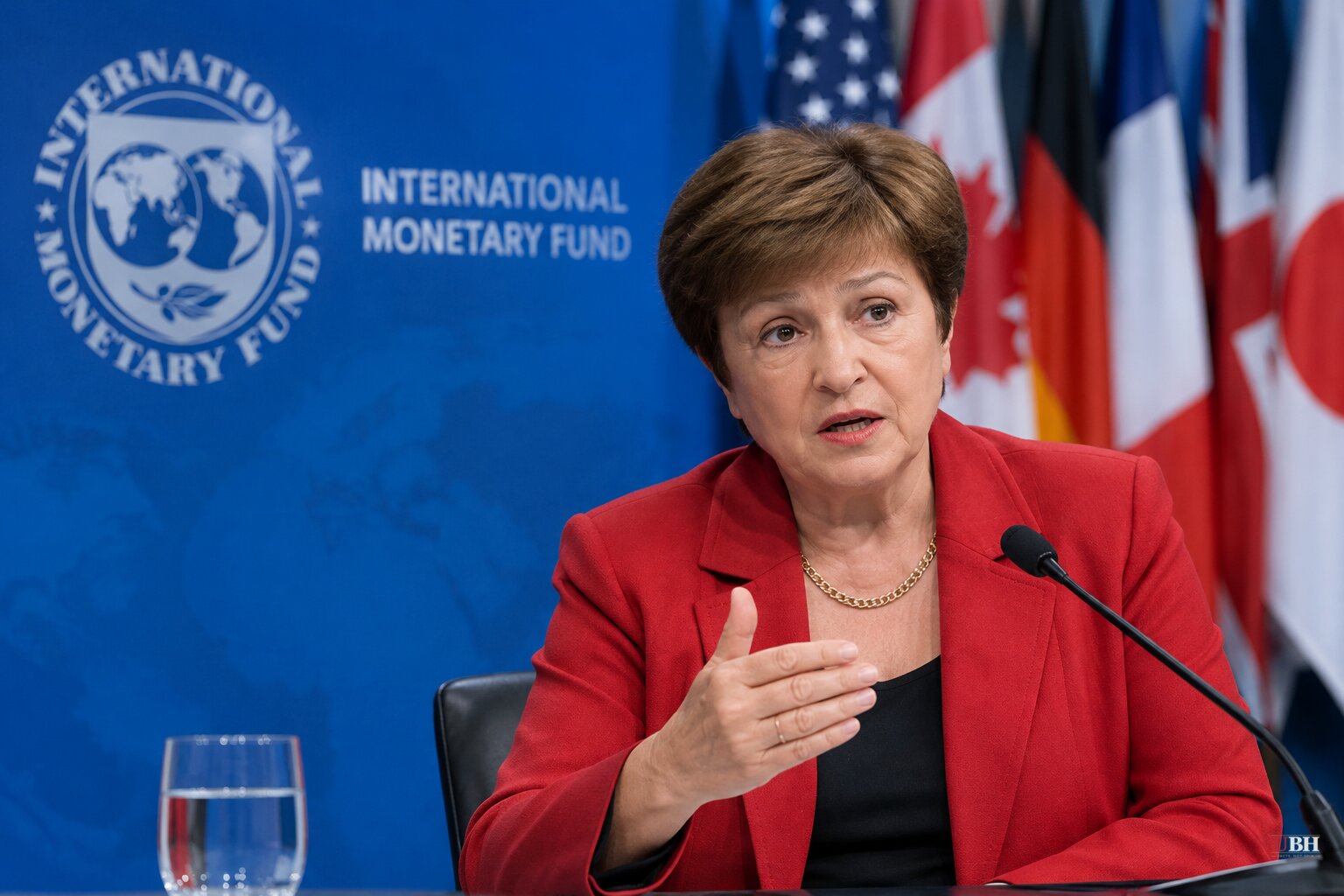
The head of the International Monetary Fund has a message for Washington: you cannot grow your way out of this.
Kristalina Georgieva said at the autumn IMF and World Bank meetings in Bangkok that U.S. Treasury Secretary Scott Bessent and other U.S. leaders recognize the federal deficit and national debt have grown too high. But she said growth alone would not fix a national debt of more than $40 trillion.
"At the fund, we believe that, growth, of course, helps, but it cannot deliver fast enough the necessary adjustments," Georgieva said. "There is no magic. You have to go in a direction of tightening, bringing the deficit down."
Borrowing costs at multi-year highs
The pressure is showing up in bond markets. Since February, the average 10-year government bond yield across the G7 economies has risen more than 1 percentage point, to the highest level in nearly 20 years, according to the IMF.
The IMF projects that by the end of the decade the combined public debt of the G7 will exceed the combined size of those economies. That has not happened since World War II.
The Iran war is part of the story. Higher energy costs have fed inflation and pushed interest rates to multidecade highs, according to Georgieva and other IMF officials.
Rodrigo Valdes, director of the IMF's Fiscal Affairs Department, said "fiscal risks are rising, and a proper reaction is largely absent in many countries." He added: "In major advanced economies, the effect of fiscal indiscipline does not stop at the border. It travels to the rest of the world."
Who pays when rich countries borrow
The IMF's latest Fiscal Monitor says interest payments in the world's poorest countries have reached historic highs relative to revenue. Declining aid has left financing gaps some of those countries cannot cover. Governments are being forced to choose between supporting vulnerable citizens and paying creditors.
British Foreign Secretary Ed Miliband, speaking on the sidelines of the Bangkok meetings, took a different approach from Georgieva's call for tightening. "The Global South is paying the price for rising interest rates in wealthier countries," he said. He called for "a new deal on debt" with longer repayment periods and refinancing at better rates to give developing countries "precious fiscal space."
France as the warning
France shows how fast the bill can arrive. Its public debt is about 119% of GDP, roughly double the European Union's target, and its annual budget deficit is 5.4% of GDP. Bond rates have surged in recent months, boosted by rising energy costs, and rioting over the high cost of living has spread across the country.
Peter Taylor-Gooby, a social policy professor at the University of Kent, said Europeans are "increasingly scared of the bond market and the interest rates that governments need to pay to borrow." He warned that ignoring the problem leads to "a serious crisis."
CNN's analysis argues the U.S. is not about to become the next France. It says contagion risk across Europe is low, France's safety net is a far larger share of government spending than America's, and the unique dynamics of the American economy mean no imminent danger. The same analysis concedes the U.S. looks similar on paper. Debt held by the public is about $32 trillion, roughly equal to annual GDP, and the federal deficit for the fiscal year just closed was about $2 trillion.
The $32 trillion and $40 trillion-plus figures measure different things. The first counts debt held by the public. The second is the total national debt.
Santander puts a price tag on the investment push
Today, Nov. 3, Spain's Santander released a report estimating that the world needs to invest about €50 trillion between 2026 and 2030. Given expected funding sources and growth, the bank puts the resulting financing gap at about €30 trillion ($33.6 trillion).
Most of that is tied to the energy transition, with AI and defence also cited. Santander estimated climate alone accounts for €22 trillion to €26 trillion of the gap. It also said an aging population pushes up healthcare spending and strains pensions and budgets.
The figures are Santander's preliminary estimates. The bank says closing the gap would take public-private collaboration, with banks structuring projects and mobilizing deposits.
Ana Botin, Santander's executive chair, said at the bank's conference in Madrid that "Europe needs a banking system built for growth, not just stability." She said European households hold about €32 trillion in net financial wealth and save roughly €600 billion a year, about half of it invested abroad, mainly in the United States. "We should keep a bit more of that within Europe," she said.
Georgieva spoke at the same event. "The cost of debt service with inflation pushing rates is becoming suffocating for governments and is bad for business and households," she said.
What comes next
The two warnings point in opposite directions. The IMF is telling governments to cut deficits. Santander's estimate depends on trillions in new investment, much of it expected to involve public money alongside private capital.
The next test comes Nov. 9, when the annual UN climate summit opens in Antalya, Turkey. It is expected to take up climate finance for developing countries, at a time when the IMF says those countries are already struggling to pay interest on what they owe.
Sources used for this briefing
6 links from 5 independent newsrooms (syndicated copies of the same report count once)
These are the sources it draws on, linked so you can verify.


