
Unbiased headlines. Facts, not spin.
Unbiased Headlines is an independently owned news organization. We bring you the facts, not opinions, written fresh from 110+ named sources. Sources linked so you can verify it yourself.
 economy
Major Story (7/10)
Bundesbank's Nagel Says December ECB Rate Hike Is 'Very Likely Necessary'
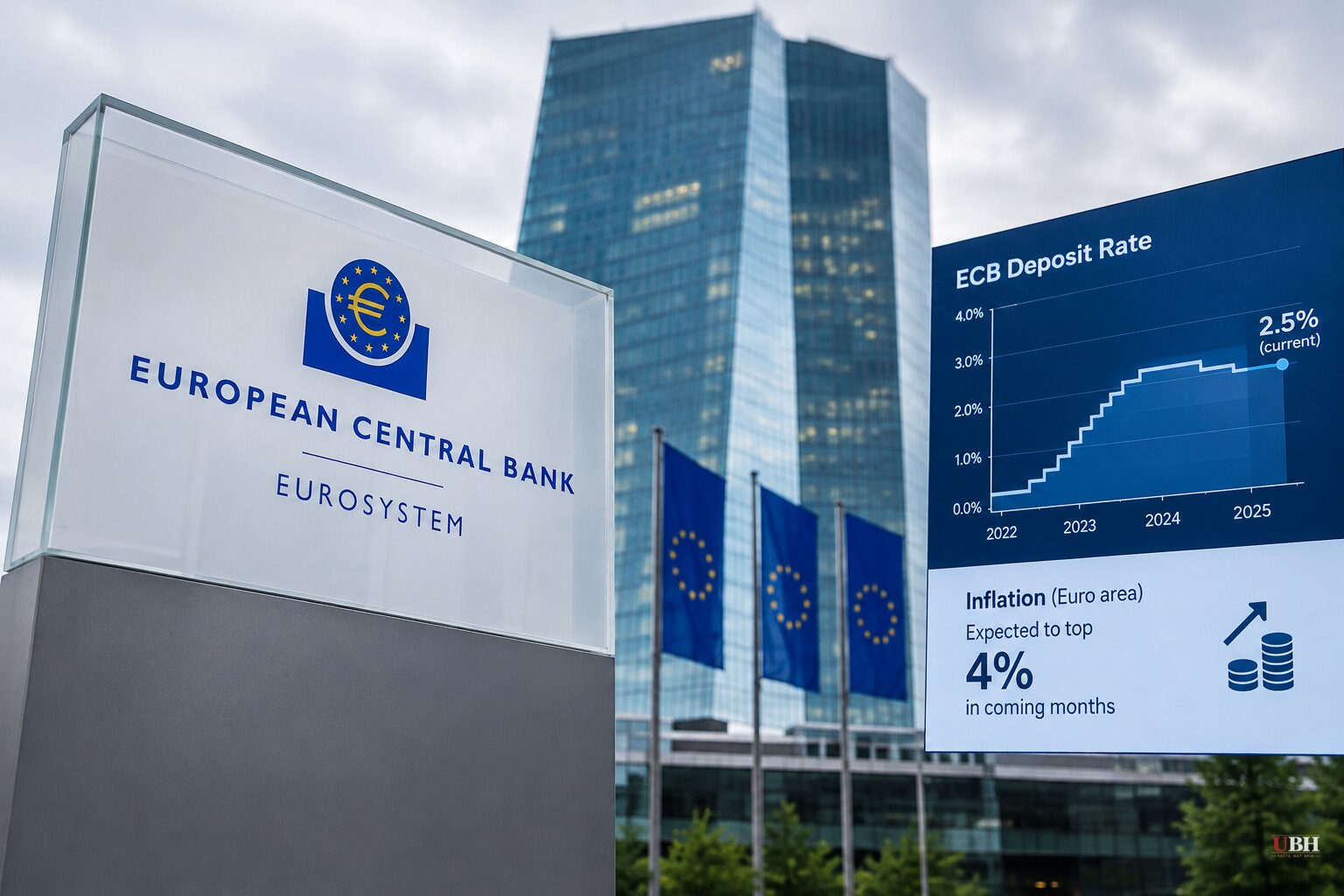
Since the European Central Bank left its deposit rate at 2.5% on Oct. 29, a string of policymakers has argued the pause was temporary. Bundesbank President Joachim Nagel is the latest, and the most weighty.
"From today's perspective, an interest rate hike in December is very likely necessary," Nagel said Tuesday, Nov. 3, in a speech in Berlin. "There seems to be little alternative to an interest rate hike unless the inflation outlook improves significantly."
A December increase would be the ECB's third this year.
Inflation running ahead of the forecast
Nagel said inflation is approaching the ECB's "adverse" scenario. He said price pressures will be higher than the bank's September projections.
Those projections had inflation averaging 3.0% in 2026, 2.5% in 2027 and 2.1% in 2028. Euro-area inflation was 3.8% in September. The ECB now expects it to run above 4% in the coming months, more than double its 2% target, before falling back quickly from early spring. That drop comes largely from high year-earlier figures leaving the data.
Nagel said the ECB is "quite far" from meeting its price stability mandate.
He also acknowledged the main driver. The surge is driven mainly by energy prices, which the ECB cannot control, and he said there is little evidence so far of second-round effects. The energy spike traces to the Middle East conflict and disruption around the Strait of Hormuz, which handles roughly one-fifth of the world's oil traffic.
Not a one-man call
Dimitar Radev, head of Bulgaria's central bank, reached a similar view earlier Tuesday in a speech in Sofia. "The inflation outlook has deteriorated since September, and this must be reflected in our assessment of the appropriate monetary policy stance," he said. "The October pause was a decision to assess the evidence, not a conclusion that monetary policy tightening is over."
Markets are leaning the same way, but not all the way. A December move is not fully priced in. Investors expect two to three hikes over the next year because they see inflation staying above 2% for years.
The case for holding
The ECB's own October reasoning points the other way. The bank left rates unchanged on the premise that rapid inflation is not getting embedded in wages and broader prices. Its official statement said inflation has remained broadly stable so far despite the energy shock.
Borrowing costs are also rising on their own. French yields pushed above 5% earlier in October amid political turmoil. On Oct. 17, ECB President Christine Lagarde said higher bond yields would weigh on demand, which could lessen the need for further rate increases. The ECB is also shrinking its balance sheet by not reinvesting maturing bonds from its asset purchase programs.
Growth is fragile. Euro-area GDP grew 0.4% in the latest reading, beating forecasts despite a contraction in France.
Wages are the pressure point
The wage question is what could settle the argument. An ECB survey of 64 large non-financial companies, conducted Sept. 28 to Oct. 7 and released Oct. 30, found about 40% expect the conflict-driven inflation to bring, or risk bringing, higher wage demands. That is double the 20% in the previous survey.
Most firms, citing subdued economic conditions and the employment outlook, said they expect no notable effect on wage growth. The survey projects wage growth slowing to 3% this year and 2.9% in 2027, from 3.2% last year.
That is the second-round risk Nagel says the ECB "can and must prevent." Right now the data shows it as a risk, not a fact.
Leadership change in the background
The debate comes as the ECB prepares for a new president. Lagarde has said she will step down after a Governing Council policy meeting in February. European Council President Antonio Costa said the process to appoint her successor starts immediately.
The ECB's key rates currently stand at 2.5% for the deposit facility, 2.65% for main refinancing operations and 2.9% for the marginal lending facility.
Nagel's condition is the open question: a significant improvement in the inflation outlook before the December meeting. With the ECB itself projecting inflation above 4% in the months ahead, the incoming data would have to move sharply to change his position.
Sources used for this briefing
6 links from 6 independent newsrooms (syndicated copies of the same report count once)
These are the sources it draws on, linked so you can verify.


