
Unbiased headlines. Facts, not spin.
Unbiased Headlines is an independently owned news organization. We bring you the facts, not opinions, written fresh from 110+ named sources. Sources linked so you can verify it yourself.
 economy
Major Story (8/10)
Event date: October 31, 2026 ·
Bolivia Declares National Emergency Over El Niño as Southwest Floods and NOAA Warns of a Stormy Winter
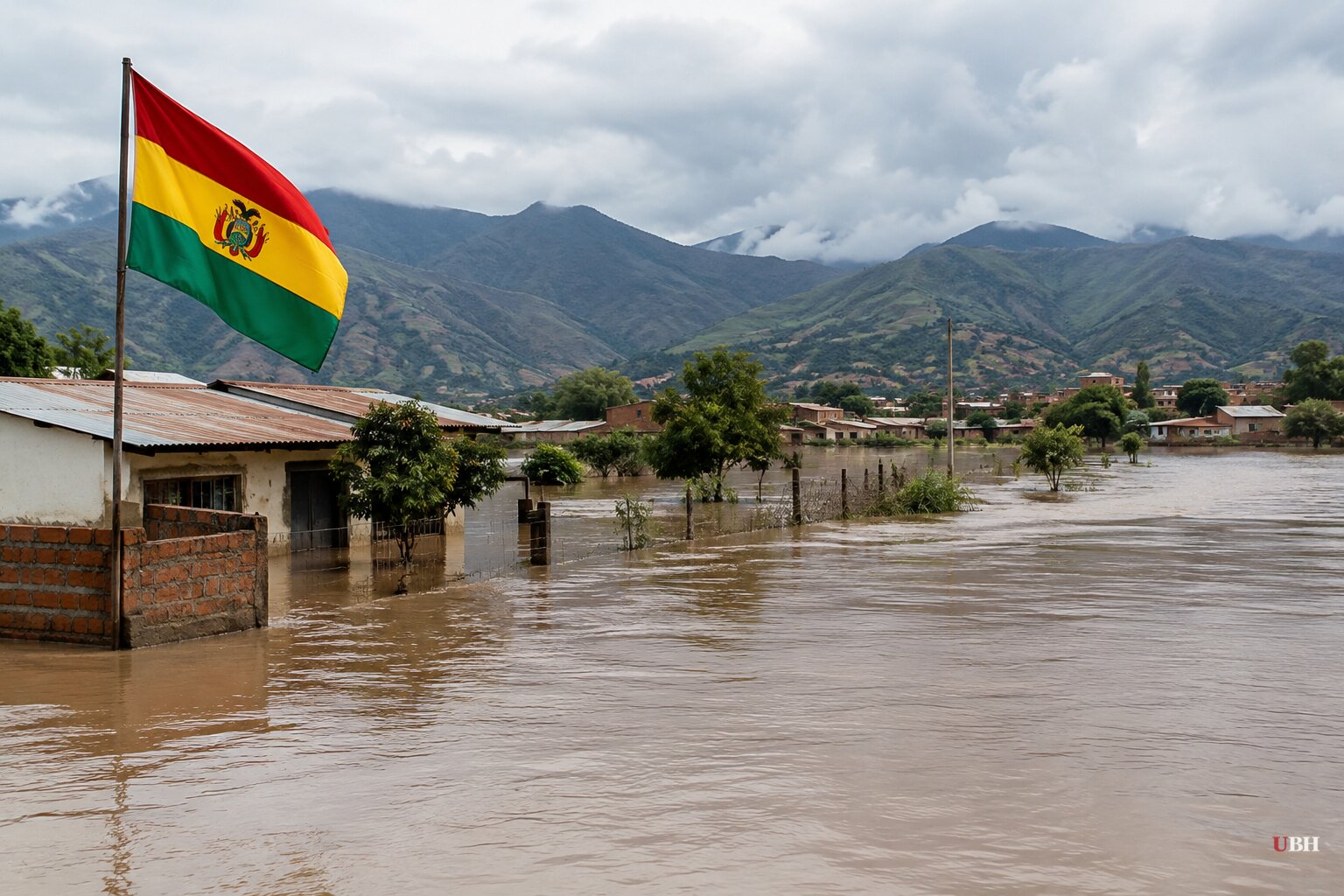
Governments across the Americas are formally bracing for a near-record El Niño, and the declarations keep piling up.
Bolivia declared a national emergency on Oct. 31 through Supreme Decree No. 5759. The government cited drought in the Altiplano, the Valleys and the Chaco, plus the "imminent risk of adverse events associated with the 2026-2027 El Niño phenomenon." Frost, hail, forest fires, flooding and overflowing rivers are all on the list of threats.
The decree does not order evacuations. It lets central, departmental and municipal governments activate their emergency coordination and intervention procedures.
A region on alert
Bolivia is one of the latest. Panama, Colombia, Peru, Ecuador and El Salvador have all taken emergency measures, and states and provinces in the United States, Brazil and Argentina have introduced their own response actions. Some countries issued formal states of emergency, others declared national disaster situations, and others went to red alerts.
Panama declared a national state of emergency on Aug. 26 under Cabinet Resolution No. 102-26. It runs through June 30, 2027. Panamanian officials said at least 15,643 people have been affected by flooding since the start of 2026, with more than 70 percent of them in Bocas del Toro and Colón.
The forecast there flips from flood to drought. Officials point to expected rainfall deficits in October, November and December 2026 and again from January through March 2027. That could lower reservoir levels and hurt agriculture and hydroelectric generation. Authorities also warned that low water could affect ship traffic and operations at the Panama Canal.
Colombia declared a national disaster situation for an initial 12 months under Decree 0802, effective July 23.
Four Corners underwater
The U.S. Southwest has already taken a hit. Rare, heavy rain began hitting New Mexico, Colorado, Utah and Arizona on a Wednesday in late October. Road closures, mandatory evacuations and emergency declarations followed across all four states.
The southern Utah city of Hurricane issued an emergency declaration after flooding damaged more than 100 homes and RVs. Resident Juana Puga said her family had been back in their house for only 22 days after rebuilding from an August flood. "Within five minutes most of my house was underwater," she said.
In San Juan County, N.M., emergency management spokesman Devin Neeley said responders rescued people from their roofs. "We have not seen flooding like this in generations," he said. The county issued an emergency declaration and told residents in vulnerable areas to evacuate.
Flash floods then prompted evacuations across northern New Mexico and central Arizona, and a Colorado ski town prepared for its main river to rise to catastrophic levels. Former NOAA chief scientist Ryan Maue calculated that more than 20 trillion gallons of water have fallen on the Four Corners states and Nevada over the past two weeks. That figure is Maue's own estimate.
What scientists will and won't say
Scientists are careful about blame. Reporting on the Southwest storms notes that El Niño was not the only cause and that no single event can be cleanly pinned on it.
Still, several named experts say it is loading the odds. Jeff Masters of Yale Climate Connections called it "a super duper El Niño." Daniel Swain of the University of California Agriculture and Natural Resources said big Southwest rain is more likely this time of year, "but we’re seeing it to a degree we actually haven’t seen before." Park Williams of UC San Diego said, "The dice are certainly loaded for more heavy storms this winter and spring."
Arizona State University's Randy Cerveny argued that oceans already warmer than a century ago make El Niño events more intense. Swain added that Peru and Ecuador are seeing record flooding while parts of Southeast Asia, including Indonesia, are drier than usual.
NOAA's winter outlook
NOAA's official winter outlook says the event is near-record strong and likely to peak in December. It calls for numerous strong storms on the West Coast and across the southern half of the country, with much of the nation milder and wetter than average.
The usual El Niño pattern points the jet stream at the southern tier. That means wetter, cooler weather in the South and drier, milder conditions in the north. Inland Northeast snow-lovers typically get less of it.
NOAA meteorologist Jon Gottschalck warned of a wrinkle. Some southern-tier storms may turn northeast along the East Coast and hit Mid-Atlantic and Northeast cities with heavy rain and snow, depending on cold air. "These storms could be very strong," he said. Other factors, including the polar vortex, will also shape how much cold air and snow arrive in the northern tier.
California's exposure
About 7 million Californians and billions of dollars of infrastructure face flood risk, according to the Securing California's Flood Future panel. State and local officials have mapped flood zones and shored up thousands of miles of levees.
Nicholas Pinter, a UC Davis geoscientist who co-chairs the panel, said the new worry is federal. He described the Federal Emergency Management Agency and the National Flood Insurance Program as a long-standing safety net with "large bipartisan support" that has been "thrown into turmoil" over the past year and a half. Pinter said the panel formed in February 2025 after he and colleagues asked whether FEMA could be cut the way USAID was.
The administration's position on those FEMA and NFIP changes is not part of Pinter's account. What is clear is who pays when a levee fails or a river jumps its banks: local governments, state budgets and federal taxpayers, in some mix still unsettled.
What comes next
The El Niño is expected to peak in December, and scientists say its effects could run for months afterward. Panama's emergency runs through June 30, 2027, and Colombia's disaster declaration covers 12 months from July 23. California's flood managers are heading into the wet season without clarity on how much federal help will be there.
The open question is whether the Southwest's October flooding was a preview or the main event.
Sources used for this briefing
7 links from 4 independent newsrooms (syndicated copies of the same report count once)
These are the sources it draws on, linked so you can verify.


