
Unbiased headlines. Facts, not spin.
Unbiased Headlines is an independently owned news organization. We bring you the facts, not opinions, written fresh from 110+ named sources. Sources linked so you can verify it yourself.
 economy
Notable (6/10)
Southeast Asia Buys More US Farm Goods, While Ted Osius Argues Tariffs Are Souring ASEAN Ties
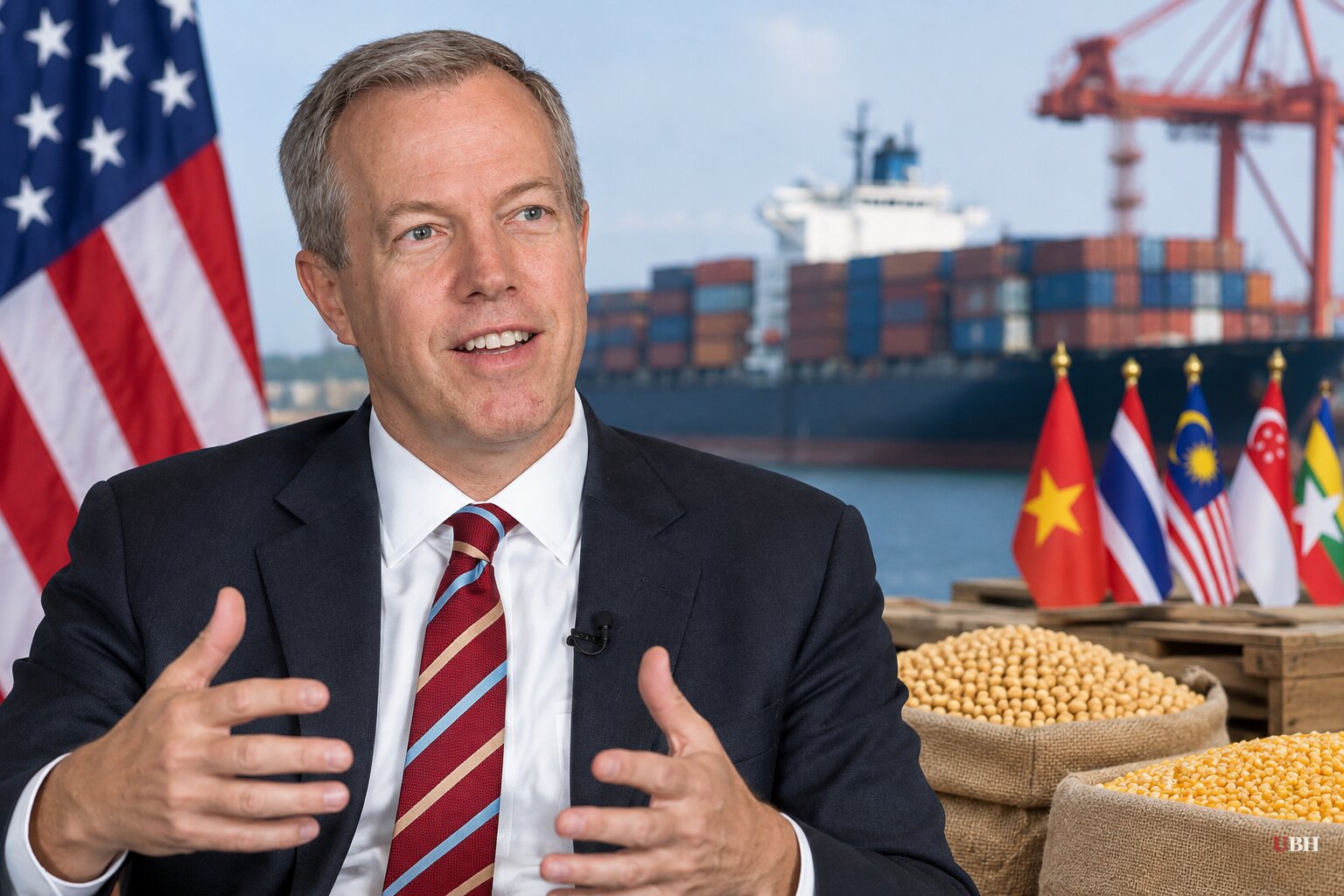
Two pictures of America's trade position in Southeast Asia are circulating, and both rest on real numbers. One is about farm exports. The other is about factories.
The farm numbers
Southeast Asia has become the fourth-largest buyer of American agricultural goods, according to a new USDA report. Vietnam led the 11-country region, importing about $4.7 billion in US farm commodities last year, a 38% jump from 2024.
Cotton sales to the region nearly doubled last year and kept climbing over the first eight months of this year, the report says. Vietnam drove most of that growth, accounting for nearly 80% of the trade and offsetting reduced purchases from China.
Corn exports to the region hit record highs in 2025. Tree nut exports rose more than 40% from a year earlier. The Philippines imported a record $192 million in US ethanol, making Manila the sixth-largest market for it.
Michelle Bekkering, the USDA's acting undersecretary for trade and foreign agricultural affairs, called the gains "really huge market increases for us in this region." She tied the push to diversification. "We're not going to put all of our eggs into one basket," she said.
The backdrop is China. A June USDA report found China dropped to sixth place among US agricultural export destinations in 2025, with shipments down 66% from 2024 to $8.4 billion. Beijing has pledged to buy more from American farmers since Trump and Xi Jinping met in South Korea last October. The USDA's position is that the US shouldn't wait to see whether that pledge holds.
"If we don't get in there soon and start building those relationships, we lose ground on demand," Bekkering said.
The factory-floor argument
Ted Osius, writing in Fortune, makes the opposite case about manufacturing. He argues that for a decade Washington urged companies to move production out of China into Vietnam, Malaysia, India and the Philippines, then hit those same countries with broad import taxes.
Osius says the tariffs have "jolted manufacturers across ASEAN," American ones included. He writes that the policy is "alienating regional partners, harming supply-chain diversification, and eroding America's influence over the bloc's trade decisions."
He cites Evan Feigenbaum, a veteran diplomat and former Republican, who calls the posture a "reverse pivot." Osius also quotes Deborah Elms of the Hinrich Foundation, who has said Washington itself created the incentive structure for alternate supply routes.
Osius concedes the early results looked good for the administration. In the months after the April 2025 "Liberation Day" tariffs, some ASEAN non-tariff barriers fell. Boeing sales were announced, along with at least prospective LNG contracts. "It appeared that coercion worked, at least in the short term," he writes.
What changed in February
The legal ground then shifted. In February, the Supreme Court struck down much of the initial tariff regime, according to Osius. The administration turned to workarounds: 150-day emergency measures under Section 122 of the Trade Act of 1974, plus broad Section 301 investigations into forced labor, intellectual property violations and "excess capacity."
Osius's complaint is that those concerns are really about China, yet Southeast Asian partners absorb the damage. He argues the administration is treating them as collateral so it can show China isn't singled out. He also says Southeast Asian export hubs suffer more than the US when Chinese firms try illegal transshipment, and that the larger reality is legitimate supply-chain integration, not widespread evasion.
That is his argument, not an established finding. The administration's defense, as expressed by the USDA, is that expanding exports in China's neighborhood is the strategy working.
Why both can be true
The two sets of figures measure different things. The USDA numbers cover what Southeast Asia buys from American farms. Osius is writing about what the region sells, and about the investment and supply chains behind it. Rising farm sales to Vietnam do not answer whether Vietnamese or American factories there are being squeezed by new duties.
The USDA data also cover 2025 and the first eight months of this year for cotton. They do not show how the post-February tariff structure has played out in the farm trade or elsewhere.
And the broader US-China relationship remains unsettled. The Guardian reports that the truce reached last year was extended to January, but that neither government has built mutual assurances to prevent a new round of hostilities. Both sides, it argues, are treating supply-chain control as a national security priority.
The politics
Voters go to the polls today, Nov. 3. Sarah Trister, a former lead staff member on the Senate Foreign Relations subcommittee on East Asia and the Pacific, told the South China Morning Post that a Democratic takeover of either chamber could bring tougher scrutiny of Trump's dealings with Beijing, since Republicans largely gave him room to maneuver.
Trister also said she would not expect congressional Democrats to "fully reframe the China relationship." A hawkish line on China has bipartisan support.
It is unclear whether the Section 301 investigations, and the tariffs that may follow, land on China's transshipment networks or on the Southeast Asian governments and factories the USDA's growing customers depend on. The truce clock to January and the next Congress will start answering that.
Sources used for this briefing
7 links from 7 independent newsrooms (syndicated copies of the same report count once)
These are the sources it draws on, linked so you can verify.


