
Unbiased headlines. Facts, not spin.
Unbiased Headlines is an independently owned news organization. We bring you the facts, not opinions, written fresh from 110+ named sources. Sources linked so you can verify it yourself.
 economy
Major Story (8/10)
Black Sea Ship Attacks Leave at Least 30 Sailors Dead or Missing, Authorities Say, as Ukrainian Grain Piles Up Inland
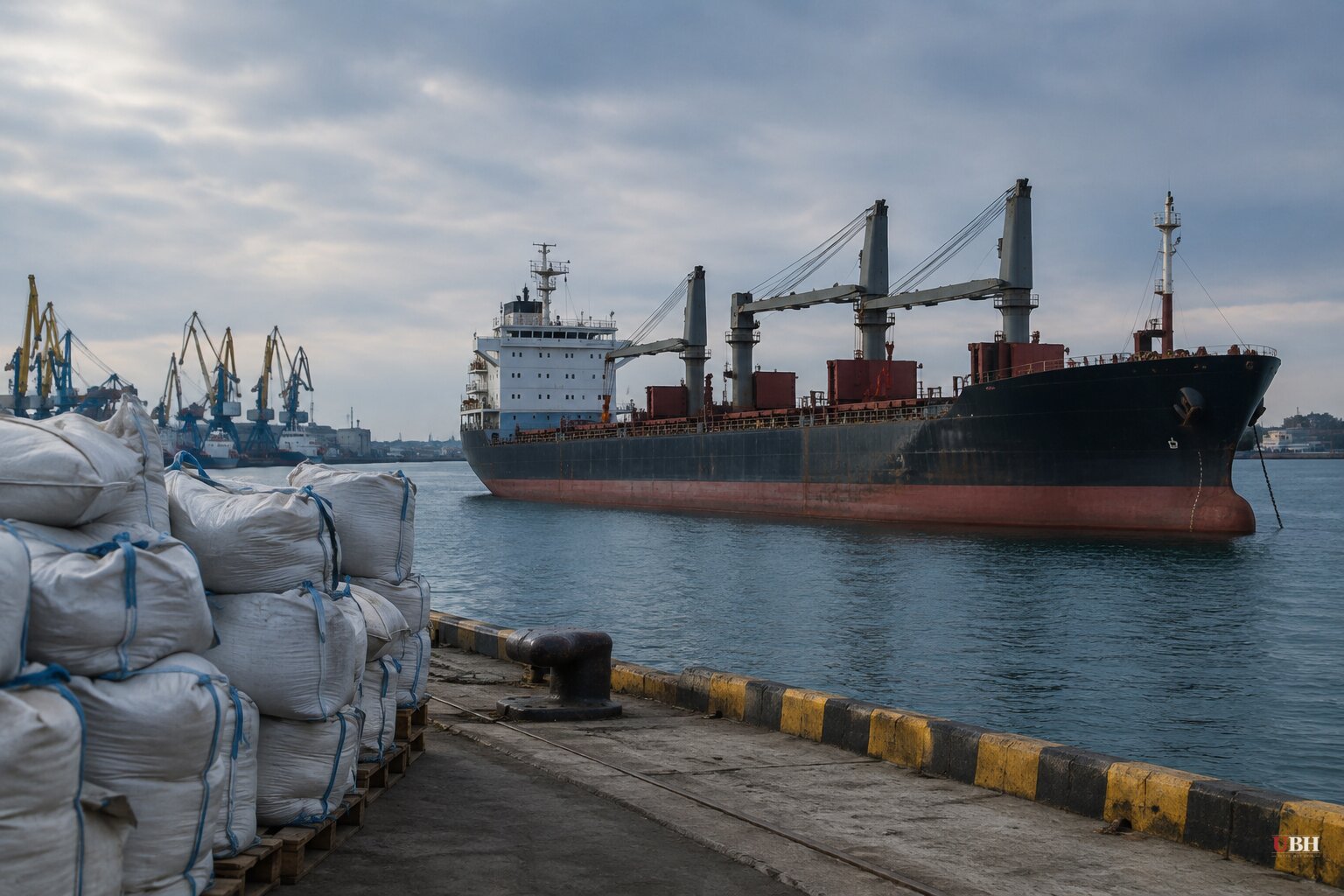
Since a string of drone strikes began hitting commercial ships off Bulgaria and Romania in early October, the Black Sea has gone from a contested war zone to a hazard for NATO-state shipping. The latest chapter is the economic damage landing on Ukraine, and the unanswered question of who is behind the ship attacks.
The October 28 attack
Three maritime drones struck the Liberian-flagged container ship Contship Jet on Wednesday, Oct. 28, a little before 1 p.m. local time. The ship was about 21 nautical miles southeast of Shabla, Bulgaria, Defense Minister Dimitar Stoyanov told reporters.
The vessel was traveling from Haifa, Israel, to Constanta, Romania, with 421 containers aboard. It listed and sank. Bulgarian authorities said all 18 crew members were rescued: 14 Filipinos and four Ukrainians. They were taken to Varna for medical checks.
The attack was filmed by crew members and other ships and photographed by a French surveillance plane. It came while the defense ministers of Bulgaria, Romania and Turkey were meeting in Sofia on Black Sea security.
The three NATO members condemned attacks on commercial vessels and called for an immediate end to them. They agreed to share more intelligence and improve early warning and coordination.
A month of strikes
The Contship Jet was not the first. In early October, two commercial ships were hit in Bulgaria's exclusive economic zone. A week later the Guinea-Bissau-flagged HS Dignity sank after being struck about 17 nautical miles east of Shabla.
On Oct. 15, drones hit two chemical tankers anchored near Romania's Sulina Canal, setting both ablaze. The canal links the Danube to the Black Sea and is a major Ukrainian export route.
AP's count of the toll is two dead and at least 25 missing. Bulgarian and Romanian authorities and maritime tracking services put the number killed or missing at no fewer than 30.
Romanian President Nicusor Dan has called the situation serious. "Commercial ships are being attacked and sunk. Seafarers killed, injured, and missing, very close to the shores of Romania and Bulgaria," he said.
Who is responsible
No one has claimed the attacks, and NATO has not attributed them to any country. Bulgarian Prime Minister Rumen Radev told Parliament earlier this month that the logic points toward Moscow. "The problem is that we cannot prove it," he said.
Kyiv says the Contship Jet drones were Russian and that the aim is to make the Black Sea unsafe for civilian shipping and choke Ukraine's grain exports. President Volodymyr Zelenskyy said Ukrainian forces conducted "no operations in this part of the sea."
Russia has offered a different frame. Vladislav Maslennikov, director of the Russian Foreign Ministry's European Affairs Department, told Izvestia on Oct. 20 that with NATO stepping up reconnaissance in the Black Sea, "the risk of incidents, including unintentional ones, is indeed increasing."
Nikolay Mitrokhin, a Bremen University researcher who studies the war, points to a prior escalation. He said an informal understanding not to strike each other's cargo ships was broken by Ukraine in the summer. Ukrainian strikes on Russian freighters and oil tankers intensified in July. Mitrokhin said Russian President Vladimir Putin issued several warnings before systematic strikes on the Odesa port group began.
NATO said on Oct. 20 it would send radar systems, drones and patrol aircraft to the Black Sea, plus teams to conduct forensic examinations of the explosives used. Spokeswoman Allison Hart said the assets would support surveillance, reconnaissance and forensic work.
Ukraine's economy takes the hit
On land, the squeeze is just as visible. AP reports that near-daily Russian ballistic missile and jet-powered drone strikes are hitting industrial plants, energy sites, railways and export routes.
Grain is piling up in Ukrainian fields and silos as farmers struggle to find safe routes and wait for prices to rise. A commodity-market analysis dated Nov. 3 says barley is trapped inland, lifting freight and insurance costs and Black Sea risk premiums. It adds that spot prices have not spiked dramatically.
Five ballistic missiles hit Kamet Steel in Kamianske on Sept. 5. The complex produced more than a quarter of Ukraine's steel output in 2025. It has been shut since, and missile strikes have halted steel production across Metinvest Group.
CEO Oleksandr Tretyakov called it "the worst situation since the Second World War." He warned that EU trade restrictions could narrow the market for Ukrainian steel and slow any recovery.
Ukraine's central bank last week forecast a 0.4% economic contraction in 2026, reversing an earlier projection of 1.8% growth. It raised its inflation forecast to 12.5% from 10% in July, citing the attacks and a surge in global energy prices.
Torbjörn Becker, director of the Stockholm Institute of Transition Economics, notes that Ukraine spends about 40% of GDP on defense, far more than it can cover alone. Raising taxes would bring in only a fraction of what is needed. Kyiv faces that gap amid uncertainty over future U.S. support.
What the EU is saying
The EU delegation to Kyiv said in August that Russia is "systematically strangling Ukraine's ability to feed the world." Paula Ritter-Moschutz, a European Commission spokeswoman for agriculture and customs, said Europe's own food security is not at stake. She said the EU remains committed to Ukraine's access to international markets and supports initiatives for a moratorium on Black Sea attacks.
Market watchers are now tracking whether Danube and EU land corridors can make up for the lost sea capacity, and whether talks on a new Black Sea corridor or ceasefire materialize. The forensic teams NATO has deployed are the first real test of whether anyone can put a name to the attackers.
Sources used for this briefing
7 links from 6 independent newsrooms (syndicated copies of the same report count once)
These are the sources it draws on, linked so you can verify.


