
Unbiased headlines. Facts, not spin.
Every story is an unbiased news briefing written from 110+ sources across the spectrum — sources linked so you can verify it yourself.
 economy
Major Story (8/10)
Event date: September 18, 2026
economy
Major Story (8/10)
Event date: September 18, 2026
WMO Says This El Niño Could Be the Strongest on Record as It Barrels Toward a November Peak
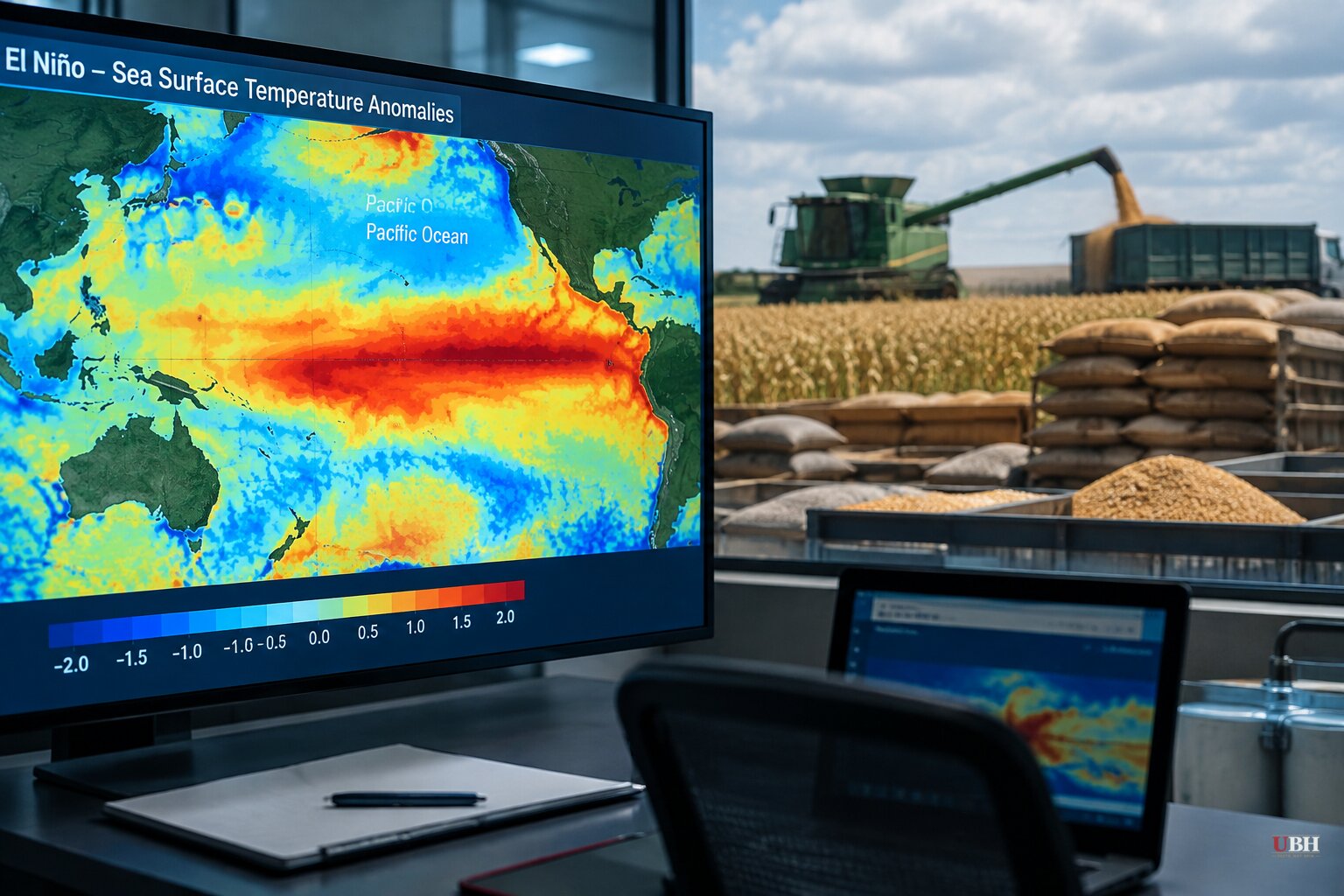
The numbers are off the charts, literally
Celeste Saulo, secretary-general of the World Meteorological Organization, told reporters this El Niño "may be stronger than anything since our monitoring began," according to NPR. That's four decades of data. Saulo says it will peak in November and December and persist through at least February 2027.
The Washington Post, tracking monthly forecast updates, reports sea surface temperatures in the central equatorial Pacific have sat at record levels for more than three months. The latest projections, from early September, show ocean temps hitting an average peak around 4.1 degrees Celsius (7.4°F) above normal in December, about a full degree hotter than the previous record El Niño in 1997-98 and 2015-16. The Post lists six historic comparison events going back to 1877-78. None of them reached this level, based on current forecasts.
Because heating ocean water takes far more energy than heating land, that's a lot of energy moving through the climate system. NPR's report notes El Niño years tend to be the hottest on record, and this one is stacking on top of roughly 2.5°F of warming since preindustrial times that NPR attributes to fossil fuel emissions. Whether 2026 or 2027 ends up the hottest year on record is a real possibility both outlets flag, though it's a projection, not a settled outcome.
What that means for food and fuel
JPMorgan's agricultural analyst Tracey Allen says the market impact hasn't hit full force yet. Her team expects the largest disruption to agricultural production from the first quarter of 2027, according to a note cited by both Stephen Innes's Dark Side of the Boom newsletter and ZeroHedge. The bank flags Southeast Asia, India, Brazil and Argentina as exposed regions, with palm oil, coffee, cocoa, sugar, rice, cotton, oilseeds, soybeans and corn all in the crosshairs.
JPMorgan technical strategist Jason Hunter notes the bank's agricultural commodity index already broke to multiyear highs in August. The timing matters: this El Niño is arriving alongside historically high diesel prices and fertilizer shortages, plus disrupted trade routes, according to the JPMorgan research. That's a stack of cost pressures hitting farmers before the worst of the weather even lands.
The humanitarian math
The UN World Food Programme estimates El Niño alone could push 49 million additional people into acute food insecurity by the end of 2027, bringing the global total to 274 million people across 45 countries, according to a September 18 press release from the International Rescue Committee. NPR's earlier reporting cited a similar WFP figure of roughly 50 million, so the numbers track.
The IRC says its own supply chain is already absorbing costs. Freight on a single shipment of therapeutic milk from India to Nigeria rose 21%. Some medical supplies rose an average of 23%. The group ties this to conflict disrupting shipping through the Strait of Hormuz, Black Sea ports and the Strait of Bab el-Mandeb, the chokepoint between Yemen and Djibouti that Houthi attacks have targeted for the past couple years.
IRC modeling flags Somalia as facing up to 2.6 million people at immediate risk of catastrophic flooding if El Niño combines with a positive Indian Ocean Dipole, a separate ocean pattern the IRC says is currently projected to align with it. In El Salvador, the IRC projects poor rains could push an additional 700,000 people into hunger.
Bob Kitchen, the IRC's Vice President of Emergencies, put it bluntly: "With every minute we wait to invest, more lives are put on the line. Food, fuel and fertilizer are getting harder and more expensive to move, right when the world's poorest countries can least afford it."
The funding gap
Funding for humanitarian food and nutrition assistance has fallen nearly 60% since 2022, according to the IRC. That's a massive drop happening right as the need is spiking. The IRC's press release doesn't break down which donor governments cut what, so it's not possible to assign blame to a specific country or administration from this reporting alone. That's a real gap in the available information, not something to paper over with speculation.
A fair caveat on the climate framing
El Niño is a natural cycle that has repeated every two to seven years for over a century, and NPR's own report lists five previous major events going back to 1877, decades before industrial CO2 emissions reached anything close to current levels. Attributing every specific storm, drought or heat record to a blend of "climate change and El Niño," as NPR's segment does, is a broader causal claim than any single weather event can prove on its own. The Washington Post's list of "linked" events, including Hawaii hurricanes, Peru heat records and Chilean storms, is presented as association, not a peer-reviewed attribution study for each event.
Ocean temperatures are measured at record levels, the WMO's own monitoring puts this event outside its 40-year historical range, and the WFP's hunger projections come from the UN agency's own modeling, not outside estimates.
What happens next
The IRC is pressing donors to fund "anticipatory action" in Guatemala, El Salvador, Somalia and Kenya before El Niño peaks between November and January, arguing it's cheaper to act before flooding and drought hit than after. Whether donor governments respond before that window closes, and whether JPMorgan's Q1 2027 timeline for peak agricultural disruption holds, are the two numbers worth watching over the next several months.
Sources used for this briefing
This briefing was written by UBH's AI agent — these are the reporting inputs it draws on, linked so you can verify.


