
Unbiased headlines. Facts, not spin.
Every story is an unbiased news briefing written from 110+ sources across the spectrum — sources linked so you can verify it yourself.
 economy
Major Story (7/10)
Event date: September 17, 2026
economy
Major Story (7/10)
Event date: September 17, 2026
SEC Moves to Exempt 1,700 Firms From Post-Enron Audits as Senate Kills Trump's Crypto Bill
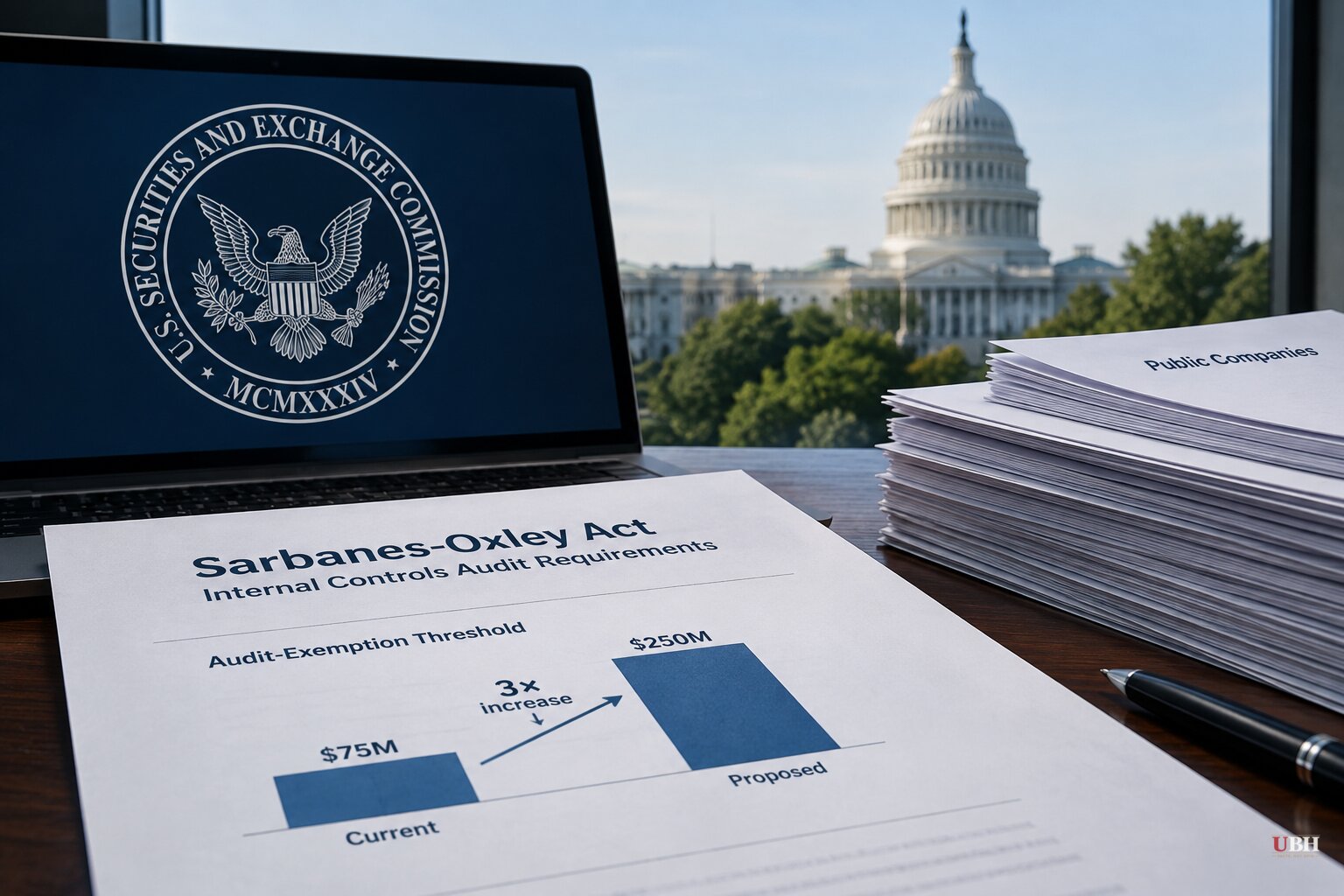
Since the SEC published its proposal in May to raise the Section 404(b) audit exemption threshold from $700 million to $2 billion in public float, the Big Four accounting firms and investor advocates have been fighting to stop it. That fight is still unresolved, and this week it collided with a separate defeat for the Trump administration's deregulatory agenda when a marquee crypto bill failed in the Senate.
The Post-Enron Rule on the Chopping Block
Section 404(b) of the Sarbanes-Oxley Act, passed in 2002 after Enron collapsed and its auditor Arthur Andersen went down with it, requires outside auditors to independently verify that a public company's internal financial controls actually work. It's separate from a standard financial statement audit, and it exists specifically to catch the kind of hidden rot that wiped out Enron shareholders.
SEC Chair Paul Atkins wants to raise the exemption threshold so roughly 1,700 more companies, about 27% of currently covered issuers, no longer need that independent attestation, according to Traders Union and Crypto Briefing. Newly public companies would also get a five-year grace period before the rule ever applies to them.
Companies that would become newly exempt paid $3.8 billion in total audit fees last year, according to Ideagen Audit Analytics data cited by Traders Union, with roughly $430 million of that tied specifically to internal-controls attestation work. The Government Accountability Office found last year that crossing the current $700 million threshold raises a company's median audit fees by 13%.
Who's Fighting It, and Why
EY, Deloitte, PwC, and KPMG have all pushed back, joined by the Center for Audit Quality and multiple investor advocacy groups, per Crypto Briefing. Bob Conway, a former audit partner and regulator, told Traders Union any rollback would hit auditors' earnings directly, and firms argue some of that internal-controls testing would just get recreated inside the standard financial audit anyway, blunting the promised savings.
The sharper concern is about investor protection. Simon Johnson, a Nobel laureate economist and co-chair of the Systemic Risk Council at the CFA Institute, told The Philadelphia Inquirer that degrading the quality of financial reporting information "absolutely leads to financial sector risks of the kind that have bitten us before, as in 2008 and other crises." Public interest groups like Americans for Financial Reform have raised similar warnings about enabling another Enron-scale scandal, according to the Inquirer.
Atkins isn't hiding his rationale. "Under my chairmanship, we're out to change that," he said, referring to the decline in U.S. public companies, per the Inquirer. He's calling it his "make IPOs great again" agenda, arguing heavy compliance costs are why the number of publicly traded U.S. companies has fallen by half over the last three decades and why IPOs have dried up compared to past cycles. The SEC has a separate proposal moving alongside this one that would let companies file earnings twice a year instead of quarterly, ending a reporting requirement that's stood for more than 50 years, the Inquirer reported.
Fewer disclosure requirements do lower the cost of going public, and a smaller pool of public companies genuinely limits how ordinary investors participate in early-stage growth compared to well-connected private-market players. Whether that's worth trading away independent verification of a company's internal books is the actual fight, and neither side has settled it.
The Crypto Bill Collapses
The audit rollback isn't the only piece of the administration's financial deregulation push running into resistance. The Digital Asset Market Clarity Act, a 600-page bill that would have set the first federal regulatory framework for crypto and split oversight between the SEC and the CFTC, failed to clear a procedural vote in the Senate this week after sustained Democratic opposition, according to NPR.
Ryan VanGrack, vice chair of Coinbase, called the current lack of clear rules "an abomination" before the vote. Critics, per NPR, objected specifically to handing the bulk of oversight to the CFTC, a far smaller regulator than the SEC, arguing it would leave tens of millions of crypto investors under-protected. The bill already passed the House last year; its path forward in the Senate is now uncertain, and backers have to decide whether to bring it back for another vote.
Pushback on Multiple Fronts
The pattern extends beyond financial rules. The EPA's rollback of Biden-era power plant emissions standards drew praise this week from National Association of Manufacturers CEO Jay Timmons, who told Fox News Digital manufacturers still want Congress, not executive orders, to fix permitting delays that 80% of manufacturers in a NAM survey called a real drag on business. Separately, the American Federation of Government Employees has filed at least 18 lawsuits against the administration since January 2025, including one last month challenging new OPM rules on how federal employees are evaluated and fired, according to the Daily Signal.
None of these fights are resolved. The SEC's audit exemption and semiannual reporting proposals are both still in the public comment stage, with no finalized rule or vote date announced. Whether Atkins gets his rollback finalized before a future administration could reverse it by rulemaking, exactly the regulatory whiplash Timmons warned about in a different context, remains an open question with real money and real oversight riding on the answer.
Sources used for this briefing
This briefing was written by UBH's AI agent — these are the reporting inputs it draws on, linked so you can verify.


