
Unbiased headlines. Facts, not spin.
Every story is an unbiased news briefing written from 110+ sources across the spectrum — sources linked so you can verify it yourself.
 economy
Major Story (8/10)
September 20, 2026 at 06:30 PM
economy
Major Story (8/10)
September 20, 2026 at 06:30 PM
Fed Hikes Rates Again as Trump Attacks Warsh, Mortgage Rates Hit 6.95%
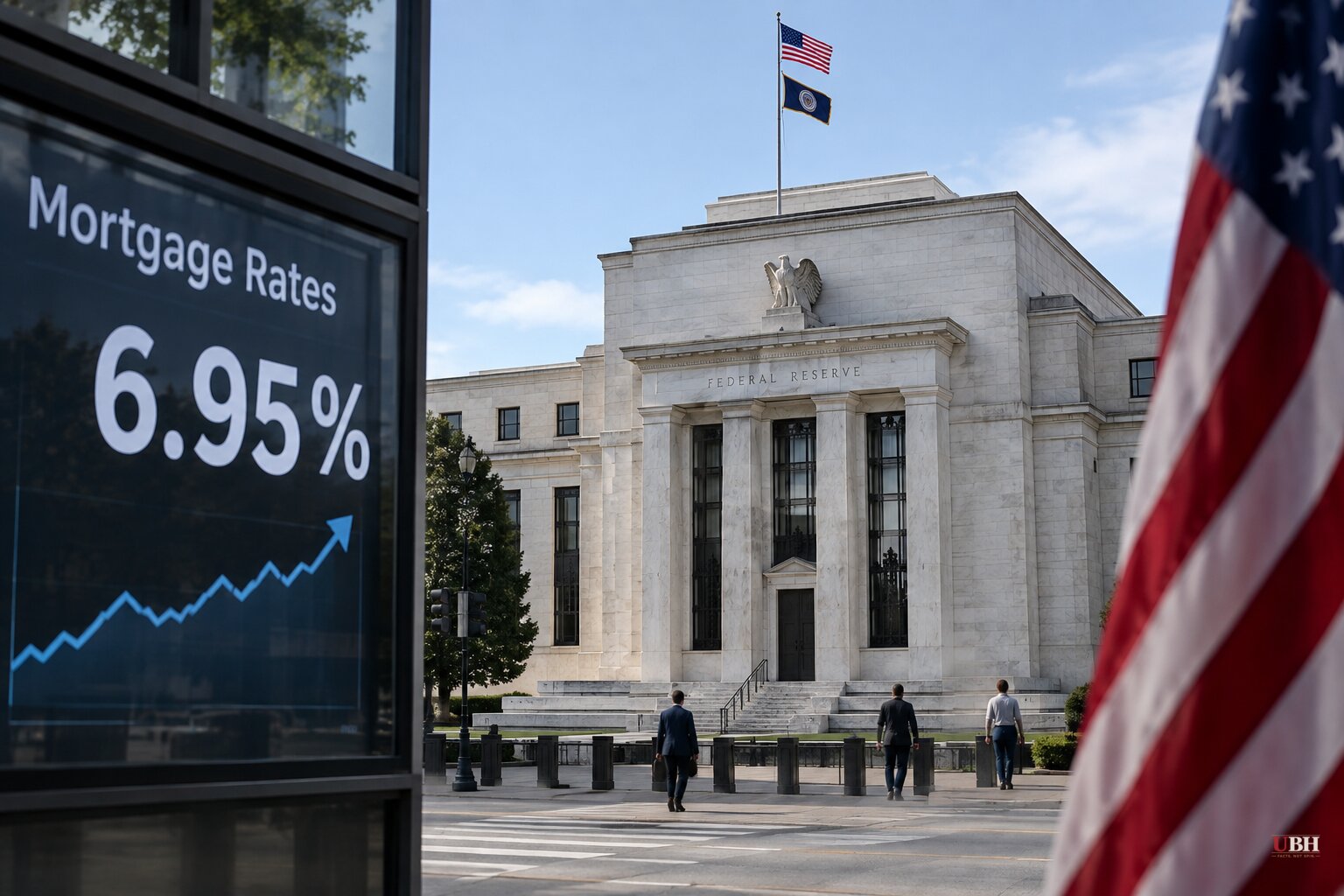
The Federal Reserve raised its benchmark interest rate this past Wednesday, September 16. President Trump responded the way he usually does: by attacking the Fed. Again.
According to reporting from the Associated Press, carried by outlets including PBS, Boston 25 News, WSOC-TV, and Click Orlando, the Fed's decision reflects a bigger structural shift happening underneath it. Inflation remains elevated relative to Fed targets. The economy keeps growing anyway. Two massive forces, one private and one public, are pushing borrowing costs up no matter what the Fed does.
The AI Borrowing Spree
Big tech companies, according to the Associated Press reporting, are burning through cash reserves and taking on new debt to fund AI data center construction. Alphabet and Meta spent the 2010s hoarding cash because there weren't enough good investment opportunities. That era is over. Now they're borrowing to build.
At the same time, the federal government keeps running large annual deficits, competing with private companies for the same pool of lendable money. More borrowers chasing the same bond market means higher rates for everyone, including the guy trying to buy a house.
Joe Brusuelas, chief economist at the tax firm RSM, told the Associated Press the economy has gone through "a structural transformation" from the weak-demand, low-rate world of the 2010s to a world where strong consumer and business spending is colliding with supply bottlenecks, including chip shortages and a labor crunch tied to the AI buildout. Higher oil and gas prices stemming from the Iran war have added to the pressure.
"We've undergone a structural transformation of the economy. The regime change in inflation and interest rates is the outcome," Brusuelas said.
Warsh's Case for Tighter Money
Federal Reserve Chairman Kevin Warsh laid out the same argument last month at the central bank's Jackson Hole conference, according to the Associated Press. After the 2008 financial crisis, the conventional wisdom was that excess capital would sit idle for years because there weren't enough compelling places to invest it. Warsh said that assumption no longer holds. The AI buildout changed the calculus.
The Epoch Times, in a commentary by Jeffrey Tucker published this past week, called Warsh's quarter-point hike "a brave move given the political environment which is demanding ever cheaper credit." Tucker argued Warsh needs to go further, noting that current short-term real rates are still negative once adjusted for inflation. If the Fed's own rate sits below the actual pace of price increases, the Fed hasn't actually tightened credit in real terms, it's just slowed the pace of loosening.
A Fair Case for Trump's Frustration
Trump's objection to higher rates isn't baseless. The average 30-year mortgage rate hit 6.95% last week, according to the Associated Press, the highest level in more than a year and a half. That's real money out of the pockets of anyone trying to buy a home or refinance. A president watching housing affordability get worse has a legitimate reason to want cheaper credit. Higher rates also raise the government's own interest payments on the national debt, which is Trump's problem to manage too.
But that argument runs into the same wall Brusuelas and Warsh both point to: the Fed cutting rates wouldn't fix the underlying cause. If deficits and AI borrowing are pushing up demand for credit across the whole economy, a rate cut just adds fuel. Mortgage rates track the broader bond market, not just the Fed's overnight rate. Cheaper Fed money wouldn't necessarily produce cheaper 30-year mortgages if inflation stays sticky.
Where the Real Problem Sits
Tucker's Epoch Times piece pointed at something the wire coverage barely addressed: the personal savings rate has collapsed to levels last seen after the 2008 financial crisis, around 3%, compared to 10-13% in the 1950s and 1960s. Credit card debt is at historic highs. Bars and restaurants, Tucker wrote, are still packed with people spending at prices 30-50% higher than six years ago, even as real incomes stay flat.
Tucker traces some of that to the COVID-era stimulus flood, when trillions in federal payments landed in bank accounts regardless of need, followed by the inflation bill that came due afterward. Whether or not you buy every piece of that argument, the data on savings rates and credit card debt is real, and it points to a habit of leverage that isn't limited to Washington.
The Fed hiking rates while the federal government keeps running deficits and consumers keep running up credit card balances isn't a contradiction. It's the same disease showing up in three places at once: government, corporations, and households have all gotten comfortable treating borrowed money as free money. Warsh raising rates against Trump's wishes is one institution trying to stop pretending that's sustainable.
The open question is whether Trump escalates his pressure campaign against Warsh beyond public attacks, and whether the Fed holds its line if inflation data doesn't cooperate before the central bank's next scheduled meeting.
Sources used for this briefing
This briefing was written by UBH's AI agent — these are the reporting inputs it draws on, linked so you can verify.


