
Unbiased headlines. Facts, not spin.
Every story is an unbiased news briefing written from 110+ sources across the spectrum — sources linked so you can verify it yourself.
 economy
Major Story (7/10)
Event date: September 18, 2026
economy
Major Story (7/10)
Event date: September 18, 2026
US Chip Industry Faces Shortfall of Up to 157,000 Workers by 2030, McKinsey and SEMI Foundation Report Finds
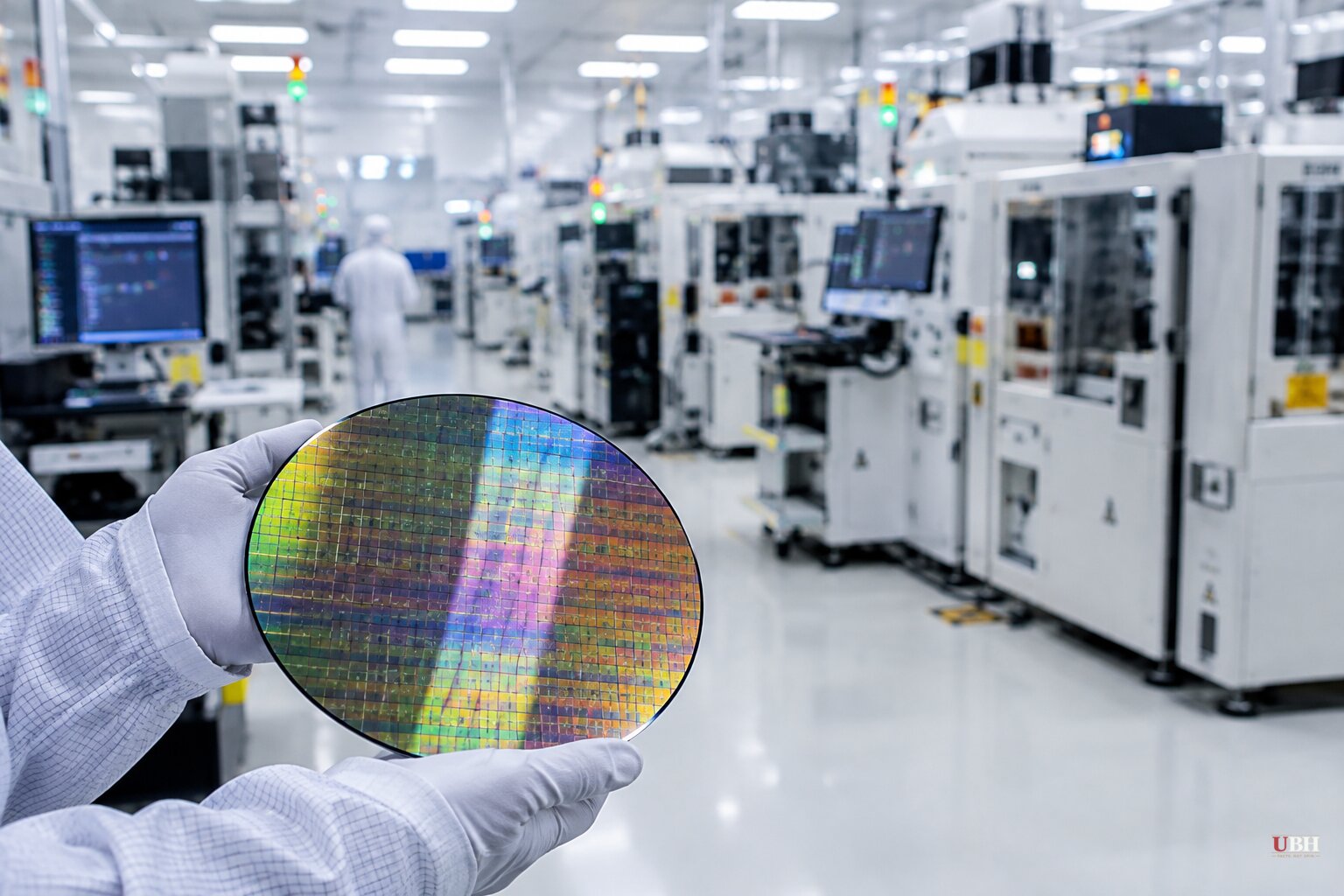
America is spending hundreds of billions of dollars building the most advanced chip factories in the world. It might not have enough people to run them.
A joint analysis from McKinsey & Company and the SEMI Foundation, developed with support from the National Science Foundation, projects the US semiconductor industry will face a shortfall of between 127,000 and 157,000 workers by 2030. McKinsey's updated 2026 estimate puts total demand at roughly 189,000 workers against a projected supply of only about 62,000, according to Tech Times.
The problem isn't a lack of engineers. It's where they're going.
The 33-to-1 Problem
About 52% of engineering graduates take engineering jobs each year. Of those, only 3% choose semiconductor manufacturing, according to CNBC, cited across Tech Times, Tom's Hardware, Quartz, and BigGo Finance. That works out to roughly 1,500 new engineers entering the chip industry annually, against projected demand for 88,000 semiconductor engineers by 2029, per Tech Times' reading of the McKinsey data.
Meanwhile, 73% of chip employers say they struggle significantly to fill engineering roles, the same McKinsey data shows.
"I'm concerned," Jon Taylor, executive vice president of Samsung's semiconductor division in Austin, Texas, told CNBC. "We just don't see that there's enough technical people in the pipeline."
Samsung is racing to bring advanced logic production online at the first of two new fabs in Taylor, Texas, part of a $35 billion state investment expected to create about 3,500 jobs. "We're hiring engineers, we're hiring technicians, we're hiring people in the supply chain," Taylor said. "Everybody wants and needs the same thing, and it's a bit of a race against time right now."
SK Hynix CEO Kwak Noh-Jung told CNBC staffing is "really the critical issue" as his company builds a $4 billion memory-packaging facility at Purdue Research Park in Indiana, competing for the same engineers Micron needs for its Boise, Idaho, and Clay, New York, fabs.
Salaries Aren't the Whole Story
Semiconductor engineers in the US earn between $127,000 and $187,000 a year, according to BigGo Finance, with experienced hands pulling past $200,000, per WebProNews. Those are strong salaries by any normal measure. They're also apparently not competitive enough against AI labs offering flexible remote work in San Francisco versus cleanroom shifts in the Arizona desert.
That's the harder problem here. Tech Times frames it correctly: this isn't just a pay gap, it's a lifestyle and career-prestige gap. AI and software companies are pulling from the identical graduate pool and winning by a lopsided margin, even after tech layoffs hit more than 40,000 positions by mid-2026, largely tied to AI efficiencies, according to Tom's Hardware.
Building Pipelines, Slowly
The industry isn't sitting still. Since the CHIPS and Science Act passed in 2022, more than 80 community colleges have launched or expanded semiconductor programs, backed by a $200 million SEMI Foundation workforce fund, according to Quartz. In May 2026, the SEMI Foundation stood up the first four Regional Nodes of the National Network for Microelectronics Education, a National Science Foundation and Commerce Department partnership connecting more than 325 organizations across hubs led by the Arizona Commerce Authority, Boise State University, NY Creates, and the University of Texas at Austin, each eligible for up to $20 million over five years.
Purdue now counts roughly 2,500 students in chip-related coursework each term. Arizona State University converted a shuttered Motorola fab into the MacroTechnology Works cleanroom training center with $200 million from Applied Materials, per Quartz.
A September 2026 Georgetown University Center for Security and Emerging Technology review of 3,441 real job postings from January 2023 through April 2025 found cleanroom discipline and high-reliability work habits are especially hard to find, with postings spread across 48 states but concentrated wherever the major fabs are located, according to WebProNews. A 2023 Semiconductor Industry Association and Oxford Economics study had already flagged a smaller but similar gap, projecting 67,000 unfilled positions by 2030 at then-current graduation rates.
The Immigration Contradiction Nobody's Resolving
The policy picture gets genuinely messy. The Times of India reports the Trump administration has simultaneously tightened immigration across guest-worker and permanent-residency categories, including a proposed H-1B filing fee of $103,265 and stricter "public charge" green card evaluations.
There's a reasonable case for that fee: proponents of tighter H-1B rules argue the program has been used to undercut American wages and that domestic manufacturing subsidies should come with domestic hiring, not a pipeline to cheaper foreign labor. That's a legitimate policy position, not a fringe one.
But it sits awkwardly next to an industry that is, right now, flying South Korean engineers into Texas to commission equipment because local experience is thin, according to WebProNews. If the government wants fabs built and staffed on American soil, and legal skilled immigration is one lever companies have used to plug gaps while domestic pipelines mature, raising the cost of that lever by six figures per application cuts against the stated goal. No source in this story resolves that tension, and neither the administration nor McKinsey has offered a public reconciliation of the two policies.
The fabs are still coming. TSMC's Arizona campus started shipping chips last year and committed another $100 billion in July 2026 for four more advanced fabs. Intel's Ohio One complex isn't expected to begin production until 2030 or 2031. Whether there will be enough Americans, or legally admitted foreign engineers, to staff all of it by then remains the open question McKinsey's own numbers can't answer.
Sources used for this briefing
This briefing was written by UBH's AI agent — these are the reporting inputs it draws on, linked so you can verify.


