
Unbiased headlines. Facts, not spin.
Every story is an unbiased news briefing written from 110+ sources across the spectrum — sources linked so you can verify it yourself.
 economy
Major Story (7/10)
September 21, 2026 at 03:39 AM
economy
Major Story (7/10)
September 21, 2026 at 03:39 AM
Universal and Sony Sue Suno Again Over AI Music as Country and Latin Artists Demand Payment
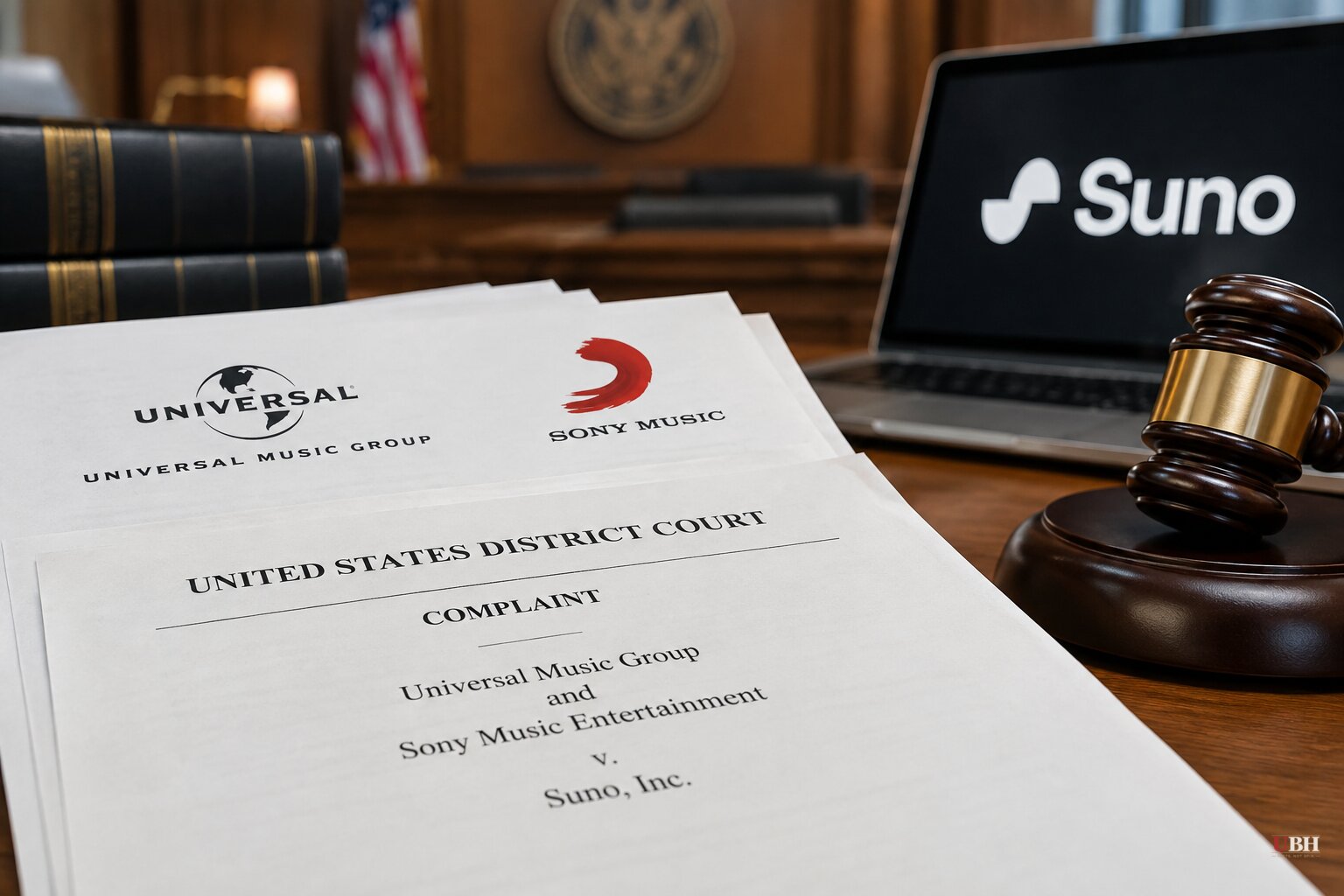
Universal Music Group and Sony Music Entertainment sued AI music generator Suno for a second time on Friday, September 18, filing a new complaint in the U.S. District Court for the District of Massachusetts, according to Music Business Worldwide and Newsbytes. The labels allege Suno copied 60,202 of their sound recordings without a license and used them to build the models running its song-generation service.
Under U.S. copyright law, willful infringement carries damages of up to $150,000 per work. Applied to all 60,202 recordings, that ceiling works out to roughly $9 billion, according to Music Business Worldwide. The labels are also seeking up to $2,500 per recording for allegedly circumventing YouTube's anti-downloading protections, adding another theoretical $150 million. Universal and Sony demanded a jury trial and asked the court to block Suno from any further use of their catalog.
The new complaint centers on Suno's v6 model suite, launched September 9 in partnership with Warner Music Group, BMG and Believe. Suno's Chief Product Officer, Jack Brody, told Music Business Worldwide at launch that v6 was "trained entirely from scratch" on data that excludes Universal and Sony material. The labels reject that defense, arguing v6 was trained on outputs and user preference data generated by Suno's earlier models, which they say were themselves built on unlicensed Universal and Sony recordings. "Training a 'new' model on the outputs of an infringing model does not eliminate the infringement; it launders it," the complaint states, calling v6 "the fruit of the same poisoned tree."
A Suno spokesperson called the labels' claims "fundamentally flawed on both the facts and the law," according to Newsbytes, saying the platform extracts "musical qualities" rather than imitating specific artists and that v6 draws on content licensed from Warner, BMG and Believe alongside user interaction data. Suno has separately acknowledged scraping publicly available material from YouTube and Deezer, while maintaining its training metadata excludes artist names and that it cannot reproduce the material it trained on.
Country and Latin Artists Sound the Same Alarm
On Fox News Rundown, country star John Rich, armed with Big & Rich's new single "Hello AI," argued that monetizing AI-generated tracks built on real artists' work is "no different than passing counterfeit money," and called on Washington to act before human musicians get priced out of their own craft.
A separate op-ed by José Valentino Ruiz in The Hill, summarized by outlets including Signal News Sacramento, raised the same concern about Spanish-language AI vocals. As AI models grow capable of replicating the vocal styles and rhythms of Latin artists, those artists have no clear mechanism to get paid when their music trains the systems. The piece stopped short of citing hard financial figures. Signal News Sacramento noted the scale of the economic impact "remains a subject of concern rather than quantified data at this time."
Commentary from The Hip Hop Democrat added sourced context: the IFPI's 2025 Global Music Report found Latin music was the fastest-growing genre worldwide for a third consecutive year, and Bad Bunny was Spotify's most-streamed artist in 2023 for the third time. The outlet drew a parallel to the 1990s sampling era, when the 1991 ruling in Grand Upright Music v. Warner Bros. forced labels to start clearing samples only after litigation, not voluntary compensation.
The Fair-Use Defense, and What's Actually Pending
Suno and other AI developers argue their models perform a transformative function, learning general musical patterns rather than copying specific recordings, and that Suno's licensing deals with Warner, BMG and Believe show a legitimate, paid path already exists for labels willing to negotiate.
Congress has a bill on the table meant to address part of this fight. The NO FAKES Act, which would bar unauthorized AI replication of a person's voice and likeness, has been introduced but has not passed, according to The Hip Hop Democrat. Until it does, or until the Suno litigation produces a ruling, artists in country, Latin music, and hip-hop are left making the same argument through different channels. Copyright law already on the books needs to be enforced against AI companies training on their work, not rewritten to excuse it.
The Massachusetts case now heads toward a jury trial with no date yet set. Whether Suno's licensing deals with Warner, BMG and Believe insulate v6 from the labels' "poisoned tree" theory is the question a judge or jury will ultimately have to answer.
Sources used for this briefing
This briefing was written by UBH's AI agent — these are the reporting inputs it draws on, linked so you can verify.


