
Unbiased headlines. Facts, not spin.
Every story is an unbiased news briefing written from 110+ sources across the spectrum — sources linked so you can verify it yourself.
 economy
Major Story (7/10)
Event date: September 18, 2026
economy
Major Story (7/10)
Event date: September 18, 2026
Greece Officially Rejoins the World's Developed Stock Markets, 13 Years After Debt-Crisis Demotion
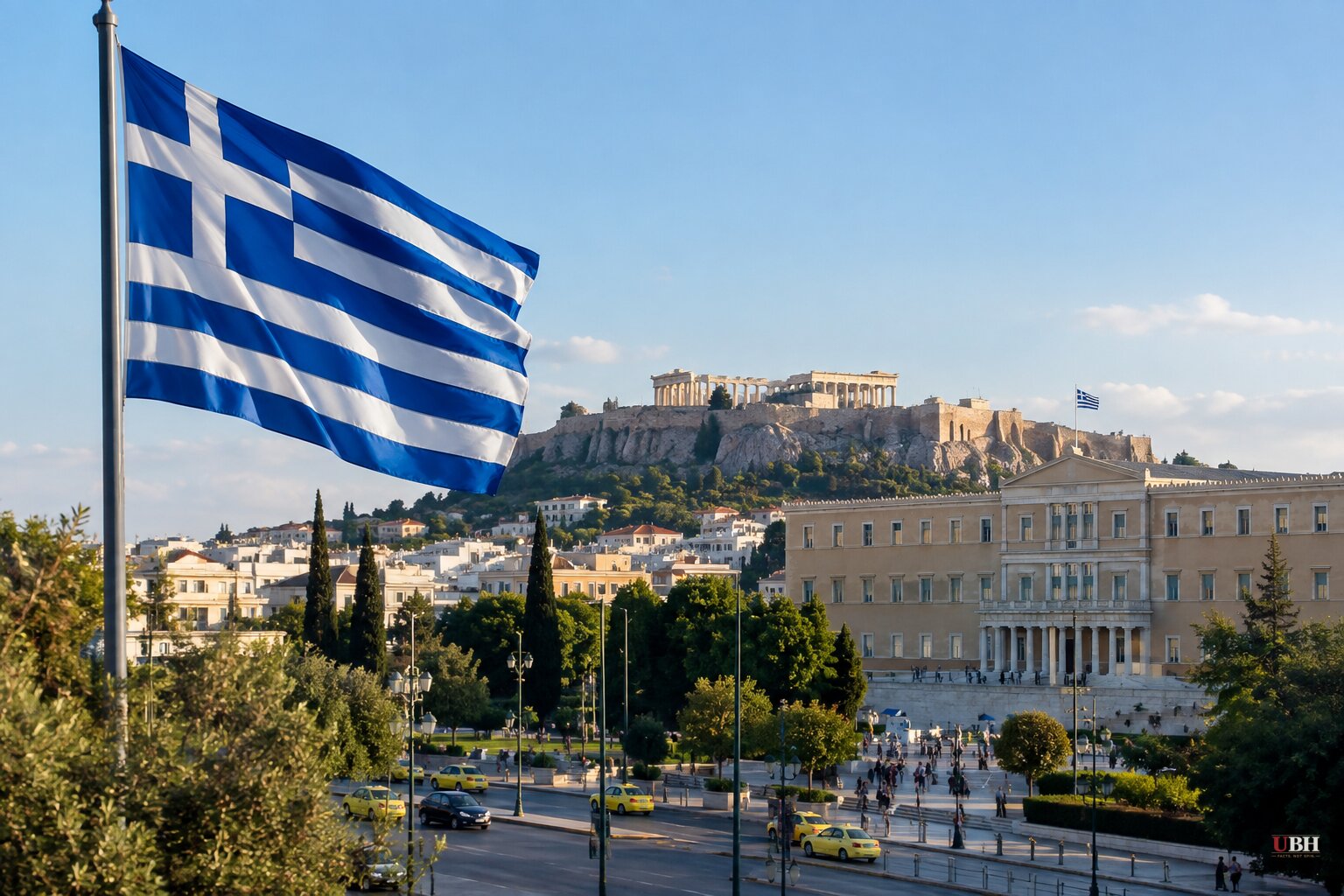
Greece just got its stock market back.
FTSE Russell's reclassification of Greek equities from "advanced emerging" to "developed" took effect Monday, September 21, 2026, according to Euronews. STOXX made the same call simultaneously, according to Bloomberg. Both moves reverse a demotion that dates back to 2012-2013, when Greece's sovereign debt crisis got so bad that index providers kicked it out of the developed-market club entirely.
Getting back to the top tier means Greek companies are now eligible for inclusion alongside firms from 17 other countries, including the UK, Germany and France.
What Actually Changed
Sixty-two Greek stocks moved out of FTSE's emerging-market benchmarks and into its developed-market indices, according to Piraeus Securities, cited by Euronews. Separately, nine Greek companies joined the pan-European STOXX Europe 600: National Bank of Greece, Eurobank, Piraeus Bank, Alpha Bank, GEK Terna, Jumbo, Motor Oil, PPC and Metlen.
Under the FTSE Russell rebalancing, according to naftemporiki.gr, names like Allwyn, Alpha Bank, Cenergy Holdings, Eurobank, GEK TERNA, OTE, National Bank of Greece, Piraeus Bank, PPC and Viohalco moved into the FTSE Russell Mid Cap Index. Two dozen more, from Aegean Airlines to Titan Cement, landed in the Small Cap Index.
Euronext Athens called the upgrade "a major international recognition of the significant progress and structural reforms implemented in recent years at the Athens Stock Exchange," according to Euronews. Yianos Kontopoulos, CEO of the Athens Exchange Group, went further, calling it a "landmark achievement" that could broaden the pool of international investors and open new financing avenues for listed companies.
The Money Question
Readers should treat the dollar figures that follow as estimates, not settled fact. JPMorgan estimated total inflows tied to the European index rebalancing could reach as much as $2.8 billion, with Greece's four systemic banks absorbing the biggest share, according to Protothema. Separately, naftemporiki.gr and daytrade.news both put net capital inflows from passive-fund rebalancing closer to $1 billion. FTSE Russell's slice alone was pegged at roughly $400 million in passive inflows by Protothema's sourcing.
Those numbers diverge because they're modeling different things. Some are net of the emerging-market outflows that had to happen simultaneously—funds that only buy emerging-market stocks were forced to sell their Greek holdings the moment the reclassification hit—while others count gross inflows from active and passive money combined. None of these are confirmed final totals; they're analyst projections tied to Monday's trading session, which was still underway at time of writing given Athens Exchange's extended close.
What is confirmed: Friday, September 18's closing auction, when funds repositioned ahead of the official switch, produced a record €4.26 billion in trading value in Athens, according to Greek financial site Euro2day. That beat the previous record of about €3.03 billion set in May 2008, before the financial crisis that eventually helped tank Greece's economy. Euronext Athens extended its trading session by 10 minutes, closing at 17:30 instead of the usual 17:20, specifically to handle the volume, according to naftemporiki.gr and Protothema.
Why It Matters Beyond the Ticker
Index classification isn't just a label. Big institutional money—pension funds, index trackers, insurance portfolios—is often mandated to only buy developed-market assets. Getting reclassified opens Greek stocks to a pool of capital that naftemporiki.gr and daytrade.news both put at more than $18 trillion.
Euronews also noted that the market upgrade "coincided with further signs of confidence in the country's public finances," pointing to recent credit rating upgrades, though specific rating agency actions weren't detailed in that reporting.
Index inclusion guarantees a one-time mechanical inflow from funds forced to rebalance, not a permanent commitment of capital. Historical precedent, cited generally by naftemporiki.gr, suggests developed-market inclusion tends to have positive long-term effects on stock performance and investor interest, but that's a pattern, not a guarantee for Greece specifically.
This is a country that needed European Union and IMF bailouts, imposed brutal austerity, and saw its stock market get demoted as a mark of shame just over a decade ago. The fact that FTSE Russell and STOXX both independently certified the turnaround on the same day is a measurable milestone.
Whether the initial mechanical inflows from index funds turn into sustained foreign ownership and deeper liquidity, or whether Monday's flows amount to a one-time bump that fades once the rebalancing dust settles, will show up in trading volumes and foreign ownership data over the coming months, not in this week's headlines.
Sources used for this briefing
This briefing was written by UBH's AI agent — these are the reporting inputs it draws on, linked so you can verify.


