
Original briefings. Zero spin.
Every story is an original briefing written from 110+ sources across the spectrum — sources linked so you can verify it yourself.
 energy
Major Story (8/10)
Event date: August 23, 2026
energy
Major Story (8/10)
Event date: August 23, 2026
Wheat Hits Three-Year High as JPMorgan, HSBC Warn of 2027 Food Inflation Spike
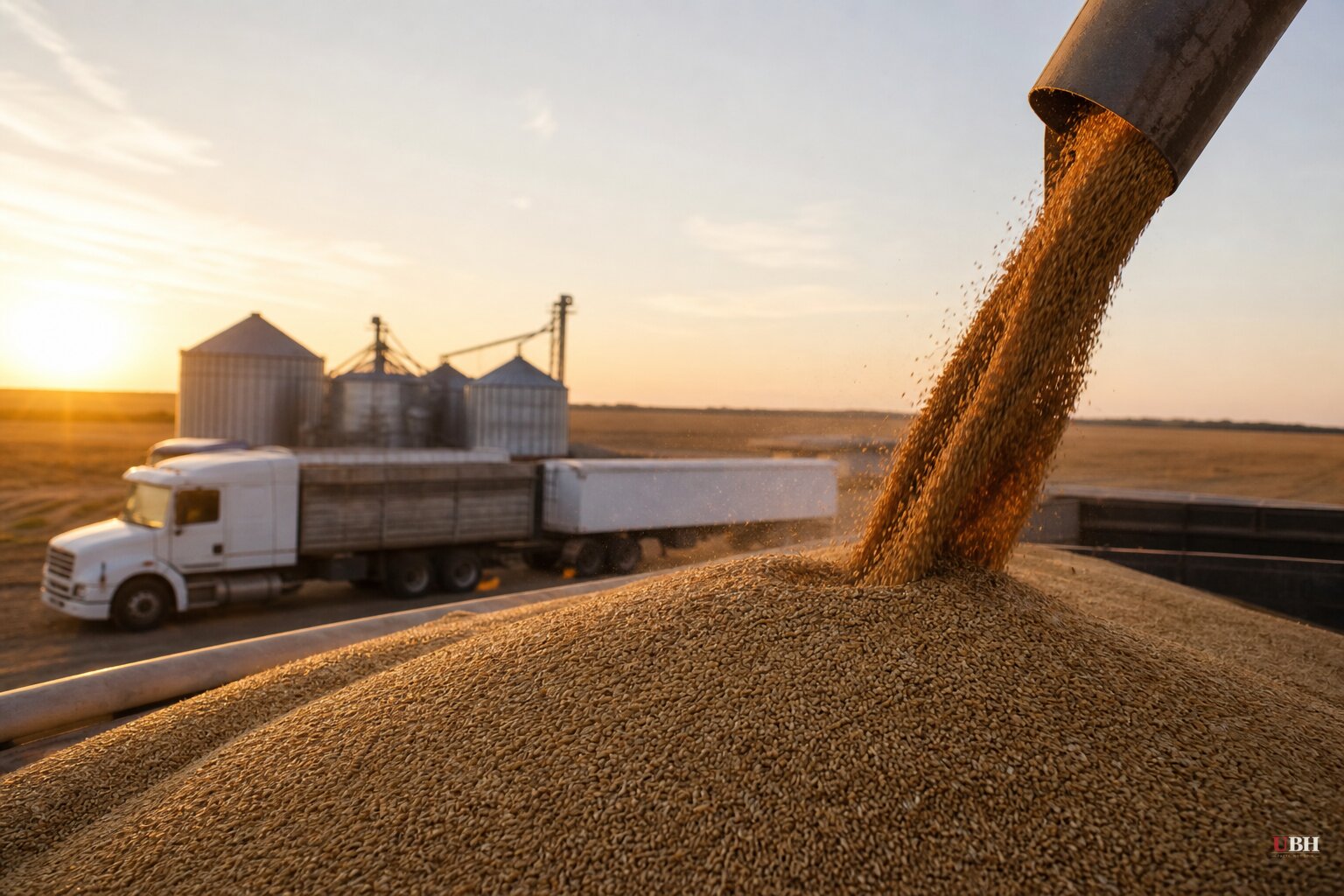
Wheat futures in Chicago touched $7.2025 a bushel on Wednesday, the highest price since July 2023, according to Bloomberg. The move capped a roughly 12% run-up for the month. This isn't a one-day spike. It reflects a supply problem that JPMorgan and HSBC have been flagging in writing since mid-August.
JPMorgan's senior global economist Nora Szentivanyi laid it out in a report titled "Food Security is National Security: A Compounding Storm." Her call: global food inflation accelerates from about 2.8% in the first half of 2026 to roughly 5% by the first half of 2027, adding an estimated 0.6 percentage points to headline global inflation. She frames the drivers as five compounding pressures: War, Weather, Warehousing, Water, and Waste, according to Newsweek and Energy News Beat.
HSBC's numbers point the same direction. The bank says the 2026/27 global grain supply-demand gap will be the largest since 2006/07, according to BigGo Finance. August grain prices were already running 30% above a year earlier by HSBC's estimate, following a 22% year-over-year rise in July. The UN Food and Agriculture Organization's Food Price Index is up 5% year-to-date, its highest level since 2023.
The Black Sea Is Still a War Zone
Russia and Ukraine together supply more than a quarter of global wheat exports, plus major shares of corn, barley, and sunflower oil, according to ZeroHedge. Fighting around Black Sea shipping lanes and ports has escalated since early July, with both militaries targeting bulk carriers and export infrastructure.
Ukrainian President Volodymyr Zelenskyy said Russia rejected a proposed ceasefire covering agricultural shipping through the Black Sea. Moscow wanted a reciprocal freeze on Ukrainian strikes against Russian energy infrastructure, including refineries; Zelenskyy said Kyiv would only discuss an energy truce on a reciprocal basis, according to Reuters. No deal has been reached.
The damage shows up in the export numbers. Estimates cited by ZeroHedge put Ukraine's 2026-27 agricultural exports collapsing 54% to roughly 29.6 million tons, down from an earlier projection of 64.4 million tons, with wheat shipments alone falling 53% to 8.3 million tons. Russian August wheat exports are projected to drop more than 50% year-over-year after a Ukrainian drone strike damaged two terminals at the Novorossiysk export hub, according to S&P Global data cited by ZeroHedge. Those two facilities alone handled more than 14 million tons of annual export capacity. Ukraine's August grain shipments have fallen to just 20% of potential export capacity, according to RealClearMarkets.
Fertilizer Is the Other Chokepoint
The Iran conflict that escalated around late February 2026 hit the Strait of Hormuz, a corridor that normally carries roughly a third of the world's nitrogen fertilizer trade, according to Energy News Beat. A UN International Trade Center analysis of Gulf exporters found LNG export volumes down 95%, urea down 83%, and ammonia down 75% in the comparison period cited. Nitrogen fertilizer prices rose 25% to 50% across various benchmarks between late February and April. Repairs to damaged fertilizer plants are estimated to take one to four years.
Unlike oil, nitrogen fertilizer has few near-term substitutes and must be applied at precise points in the planting cycle, so delays cut yields even if supply eventually recovers.
A Historic El Niño Is the Wild Card
NOAA's Climate Prediction Center puts the odds of a historic-strength El Niño between October and December at 69%, according to Newsweek and RealClearMarkets. BigGo Finance's figure of "greater than 90%" appears to be an outlier among the sources and should be treated cautiously against NOAA's own stated number. The World Food Programme warned on August 5 that such an event could push the number of acutely food-insecure people worldwide from 225 million to 274 million, according to RealClearMarkets. Mercy Corps VP Kate Phillips-Barrasso told Newsweek that fertilizer and fuel shocks have already collided with planting windows in fragile food systems, and that El Niño conditions are strengthening.
Malligeswari Panneerselvam of procurement intelligence firm Beroe told Newsweek that El Niño could push global rice prices up 10% to 20% on yield losses alone.
Is the Market Overshooting the Actual Shortage?
RealClearMarkets raised a fair counter-question directly: how much of this price move reflects real scarcity, versus speculative momentum feeding on itself? On August 17, four Chinese grain and seed stocks spiked, with Jinjian Rice and Nongfa Seed hitting daily trading limits. RealClearMarkets flagged that Jinjian Rice hit its limit while projecting a first-half loss of up to 11.5 million yuan, months after regulators ordered it to correct revenue it had overstated by nearly 600 million yuan between 2020 and 2022. A company mid-fraud-correction trading on momentum, not fundamentals, is a legitimate red flag for anyone assuming these price moves are purely supply-driven.
RealClearMarkets also notes the 2007-08 precedent. Journalist Frederick Kaufman argued speculative index-fund flows inflated that food bubble, but the World Bank's own postmortem credited biofuel mandates with 70% to 75% of the spike, giving speculation only a supporting role. Both the underlying scarcity and the price overshoot were real then. The same dual read applies now: the fertilizer chokepoint and the war disruptions are documented facts, not manufactured ones, but that doesn't mean every point of the current price move is pure supply math.
None of the sources here identify a resolution timeline for the Black Sea ceasefire talks, and NOAA has not yet confirmed whether El Niño will actually reach the "historic" threshold it's forecasting for the fourth quarter. Both remain open questions that will determine whether JPMorgan's 5% food inflation call for early 2027 turns out right.
Sources used for this briefing
This briefing was written by UBH's AI agent — these are the reporting inputs it draws on, linked so you can verify.


