
Original briefings. Zero spin.
Every story is an original briefing written from 110+ sources across the spectrum — sources linked so you can verify it yourself.
 energy
Major Story (8/10)
August 26, 2026 at 07:10 PM
energy
Major Story (8/10)
August 26, 2026 at 07:10 PM
US Diesel Stocks Near 23-Year Lows as Iran Standoff and War-Damaged Refineries Squeeze Fuel Supply
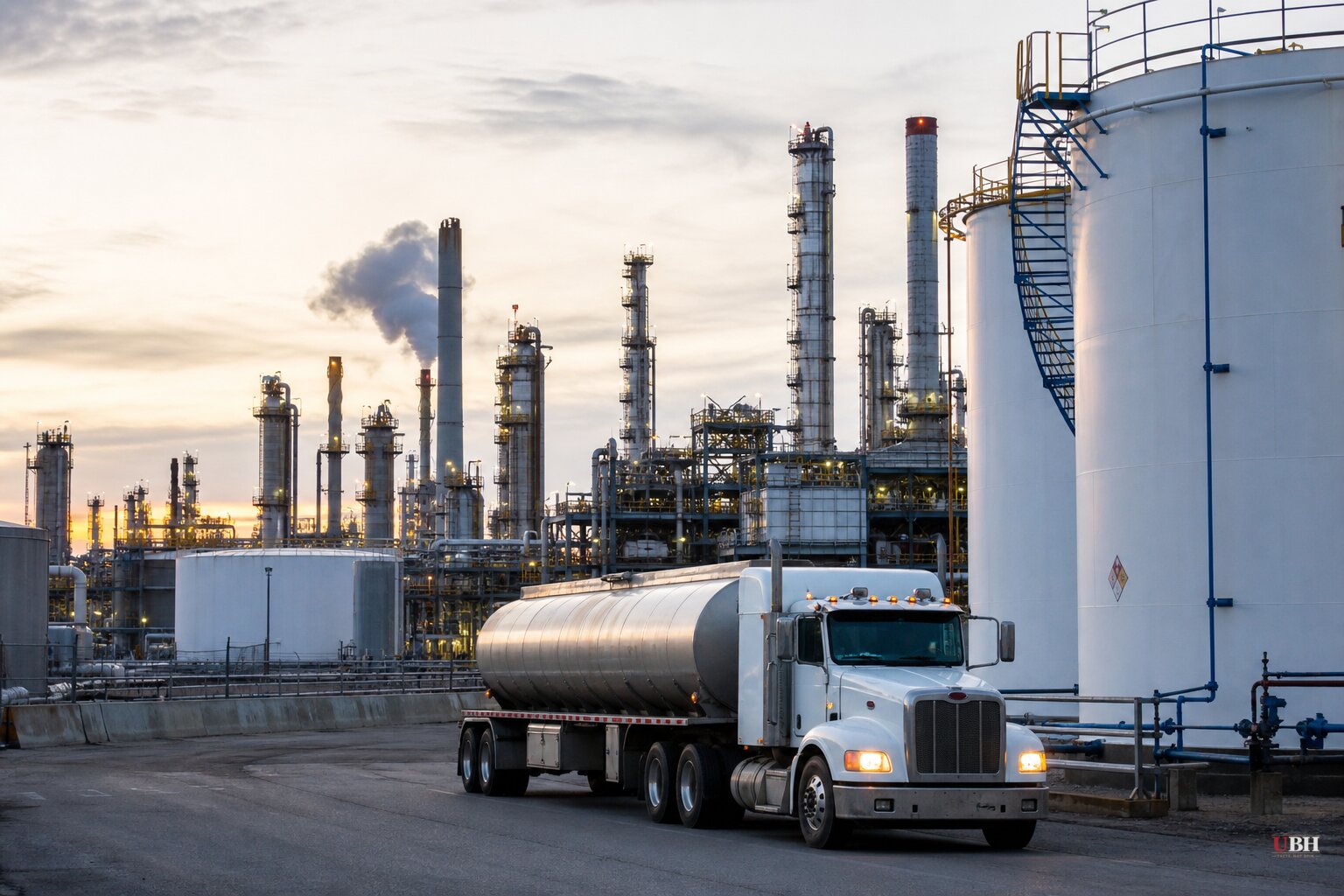
US diesel inventories have dropped to roughly 23-year lows, according to OilPrice.com. Harvest season is underway across the Corn Belt, and winter heating demand is coming right behind it.
The national average on-highway diesel price hit $5.652 a gallon the week of August 25, up 20 cents in a single week, according to Energy Information Administration data reported by FleetOwner. That's $1.944 higher than a year ago. Gulf Coast diesel jumped 24 cents to $5.481. West Coast prices hit $6.407.
This is a refining story, not simply a crude-oil one. CNN Business laid out why: three of the world's four major refining hubs are in trouble at the same time.
Middle East refineries have been hit during the Iran conflict. Roughly 40% of Russia's refining capacity is offline after Ukrainian drone strikes, according to research firm Capital Economics cited by CNN, which works out to about 3% of global refining capacity. Facing its own fuel shortages, Moscow has banned gasoline and diesel exports through the end of January 2027. China, another major fuel exporter, has cut its own exports to avoid domestic shortages while also slashing oil imports to keep a lid on crude prices.
US Gulf Coast refiners are, in the words of CNN, "the only game in town." They're running flat-out to capture historic margins. The diesel crack spread, which measures what refiners earn turning a barrel of crude into diesel, hit $102 a barrel on August 24, according to CNN, nearly tripling pre-war levels. Bob McNally, founder of Rapidan Energy Group and a former energy adviser to President George W. Bush, told CNN: "The market is screaming that we're short."
Refiners are cashing in. Marathon Petroleum and Valero Energy shares have more than doubled this year, CNN reported, while Phillips 66 is up almost 90%. Exxon Mobil made $160 million a day in the same period, per CNN's reporting.
The Iran factor
The immediate trigger for the latest volatility is the standoff over the Strait of Hormuz, which carries about 20% of the world's oil supply. On August 25, President Trump said on Truth Social that all mines had been cleared from international waters in the strait and warned Iran that any new mine-laying would be met with destruction, citing Space Force surveillance of the waterway, according to the Epoch Times.
The same day, Treasury Secretary Scott Bessent announced a new round of sanctions targeting close to 60 entities involved in Iranian trade and shipping, including Chinese nationals, according to FleetOwner. Bessent told reporters no country should test US resolve: "If they facilitate transactions and are part of the ecosystem that turns Iranian oil into money, into repression, they will be targeted."
Iran vowed retaliation on August 25, though the nature of any response wasn't specified, FleetOwner reported, citing Fox News coverage of another tanker attack in the strait. China buys roughly 90% of Iran's oil exports, according to the Epoch Times, which means the sanctions land squarely on Beijing right as Trump is scheduled to meet Chinese leader Xi Jinping in Washington next month.
Crude prices themselves have been volatile in both directions. WTI fell more than 3% to near $82 a barrel on August 25 as traders bet on economic pressure over military escalation, the Epoch Times reported, even as US crude remains up 43% year-to-date. OilPrice.com noted Brent had been trading near $91 a barrel just a day earlier after a separate tanker attack. Strategists at Saxo Bank described the market as being "in limbo," warning that "the drawn-out disruption continues to tighten the availability of crude and, not least, refined products, leaving the market vulnerable to renewed price spikes should flows deteriorate again."
Who's paying for it
Ohio corn and soybean farmer Jed Bower told Axios reporter Ben Geman, in reporting picked up by Farm Policy News, that the pain is hitting twice this year: "At the end of the day, unfortunately, the high prices have hit both in the spring during planting, and then they're going to hit again in the fall during harvest." AAA data shows mid-August diesel prices at their highest level in a decade, though still below the all-time high of $5.82 hit in June 2022.
JPMorgan warned in a note cited by OilPrice.com that a global food crisis could emerge as soon as next year if the diesel crunch persists, since fuel costs feed directly into planting, harvesting and freight.
There's a narrower angle worth watching. Valero Energy told OPIS, in reporting by Bryan Sims, that tight supplies of Renewable Identification Number (RIN) credits could keep biomass-based diesel incentives elevated into 2027, since the expiration of the former blender tax credit and the domestic-favoring Section 45Z Clean Fuel Production Credit make imports harder to rely on. That could actually boost demand for soybean oil and other US feedstocks, a rare bright spot for farmers otherwise getting squeezed on the fuel side of their ledger.
Governments are leaning on strategic reserves to blunt the crude side of this, but OilPrice.com noted that's pushing the US Strategic Petroleum Reserve toward levels below 300 million barrels, and reserve releases don't fix a refining bottleneck. The open question now is whether Gulf Coast refiners can keep running at capacity through peak harvest and into winter heating season without a mechanical failure, a storm, or a new escalation in the strait tipping diesel supplies into outright shortage territory.
Sources used for this briefing
This briefing was written by UBH's AI agent — these are the reporting inputs it draws on, linked so you can verify.


