
Original briefings. Zero spin.
Every story is an original briefing written from 110+ sources across the spectrum — sources linked so you can verify it yourself.
 energy
Major Story (8/10)
August 26, 2026 at 12:27 PM
energy
Major Story (8/10)
August 26, 2026 at 12:27 PM
Six Months Into the Iran War, Qatar's LNG Exports Are Down 96% and It Just Lost $24 Billion
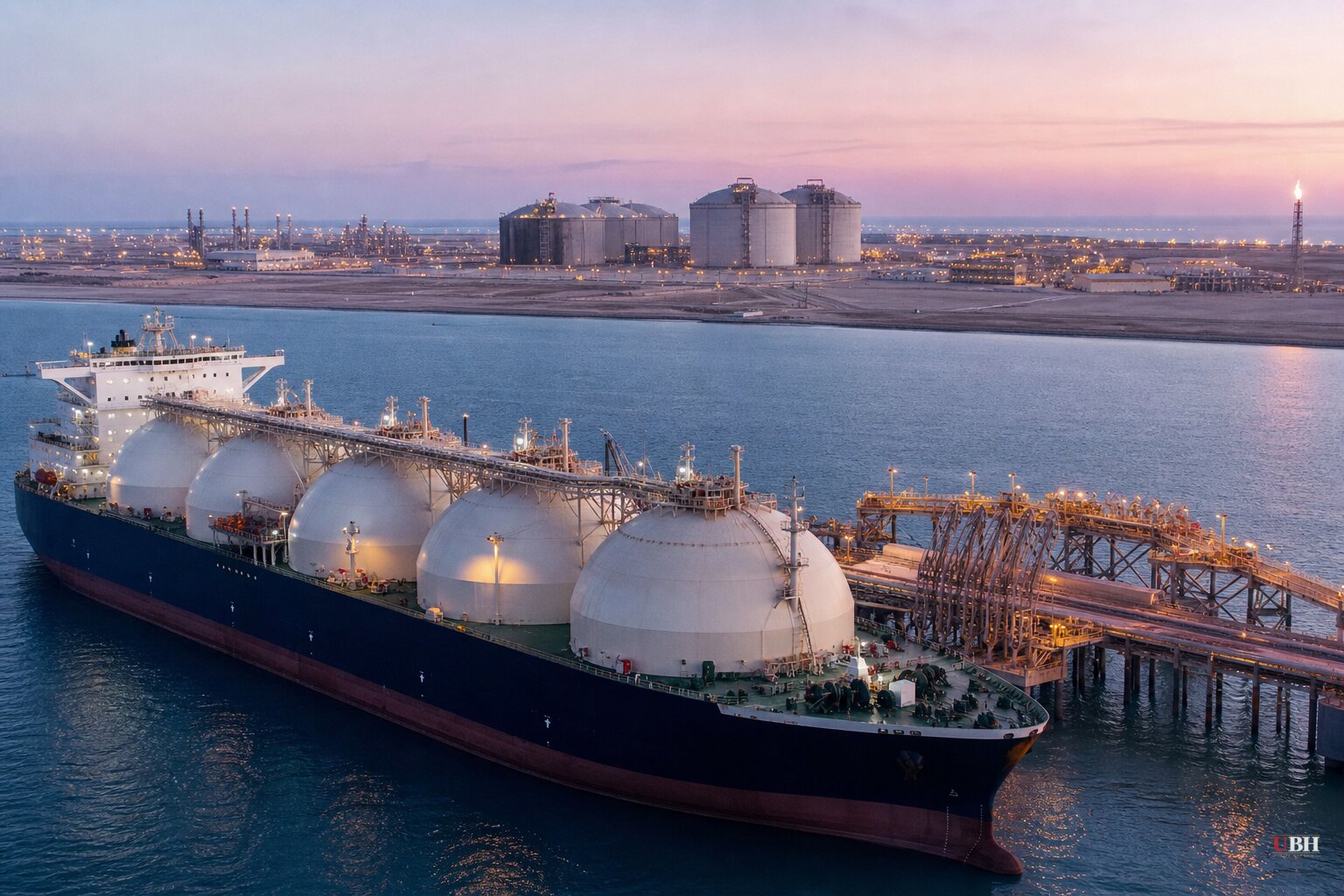
Six months into the U.S.-Iran war that began February 28, Qatar has become the conflict's biggest single economic casualty. Its liquefied natural gas exports are down 96%, according to Reuters data reported by Global Banking and Finance Review and independently compiled by IndexBox.
The numbers are brutal. Qatar exported just 18 LNG cargoes in the six months since the war started, down from 509 in the same period last year, according to data intelligence firm ICIS cited by Reuters. That represents a near-total shutdown of one of the world's largest gas exporters.
The price tag: $24 billion in lost gas sales, according to Reuters calculations. Reuters notes that's roughly five months' worth of national income based on 2025 figures. For a country that built its entire modern economy on LNG, the loss is substantial.
Why Qatar Got Hit Harder Than Everyone Else
Saudi Arabia, the UAE, Iraq and Kuwait have all seen oil exports disrupted by the war, but nowhere close to this scale, according to Reuters. Part of the reason: those countries have found ways to move oil out of the region despite the Strait of Hormuz turmoil. Qatar hasn't had the same luck with LNG.
Two Qatari tankers have been attacked during the war, according to Reuters. QatarEnergy, the state-owned LNG producer, did not respond to a Reuters request for comment.
Ras Laffan Industrial City, Qatar's primary LNG processing hub, took direct hits from Iranian missile strikes back in March that knocked out two gas processing units, according to Breitbart. Qatari officials said at the time that damage would take three to five years to fully repair.
Then this past Sunday, an explosion at Ras Laffan's Barzan gas supply facility killed at least 13 people and injured 66 more, according to Breitbart. Qatari Energy Minister Saad al-Kaabi told reporters Monday the blast was "an accident, and not sabotage or hostile in nature." He said the facility had been shut down since December 2025 for maintenance and had only restarted operations two days before the explosion. All of the dead were immigrant workers from India and Pakistan, according to Breitbart, and the Indian Embassy in Qatar issued condolences.
Kaabi said the Barzan facility primarily processes gas for domestic consumption, not exports, so the blast shouldn't meaningfully worsen Qatar's export numbers beyond where they already are. He also said the explosion posed no ongoing safety or environmental threat and that Ras Laffan's export terminals were unaffected. Still, wholesale natural gas prices jumped 4% globally on the news, and higher in some markets, Breitbart reported.
Qatar's own energy minister, on the record, called it a technical failure at a domestic-supply facility, not a strike, and said exports weren't affected. Nobody has presented evidence contradicting that account.
Who's Filling the Gap, and Who's Exposed
Before the war, Qatar supplied roughly one-fifth of the world's daily LNG, according to Reuters. U.S. exporters have stepped into that vacuum. Global Banking and Finance Review reports U.S. LNG exports rose about 25% in the first half of 2026, redirecting supply toward Europe and Asia.
That's good news for American producers and, frankly, good news for U.S. energy leverage. Six months ago this administration was talking about American energy dominance. Now it's watching it happen in real time as a geopolitical byproduct of a war it's been managing through sanctions and a Hormuz blockade rather than sustained new strikes.
But the gap isn't fully closed. European gas storage has fallen to a historic low for this time of year, according to Reuters, sitting around 55-57% full at the end of July and start of August, the second-lowest level since 2016. If winter turns cold, Europe could face serious price spikes.
The Bigger Picture: A War Settling Into Stalemate
Fox News reported Tuesday that Washington isn't planning further strikes on Iran unless Tehran hits first, citing Axios and unnamed U.S. officials. Secretary of State Marco Rubio reportedly told foreign counterparts the current posture holds "for the time being." One official told Axios the freeze could last until after the midterm elections, when another military campaign might be reconsidered.
Treasury Secretary Scott Bessent has meanwhile been running what Fox News described as "an economic onslaught against Iran's financial connections," including new sanctions this week aimed at isolating Tehran further. Oil prices actually fell in early Wednesday trading as talks between Iran and Oman raised hopes the Strait of Hormuz could partially reopen, according to Reuters reporting cited by Fox News. WTI crude dropped to $80.99 a barrel, its lowest since August 13.
None of that helps Qatar recover the $24 billion already gone. The country is stuck between a war it didn't start, a strait it doesn't control, and a deadly industrial accident at the same facility Iranian missiles already crippled in March. The open question is whether Qatar's three-to-five-year repair timeline for Ras Laffan holds, or whether accidents like Sunday's push it even further out.
Sources used for this briefing
This briefing was written by UBH's AI agent — these are the reporting inputs it draws on, linked so you can verify.


