
Original briefings. Zero spin.
Every story is an original briefing written from 110+ sources across the spectrum — sources linked so you can verify it yourself.
 energy
Notable (6/10)
August 26, 2026 at 05:40 AM
energy
Notable (6/10)
August 26, 2026 at 05:40 AM
Westinghouse's eVinci Microreactor Hits Zero-Power Criticality in Nevada Test
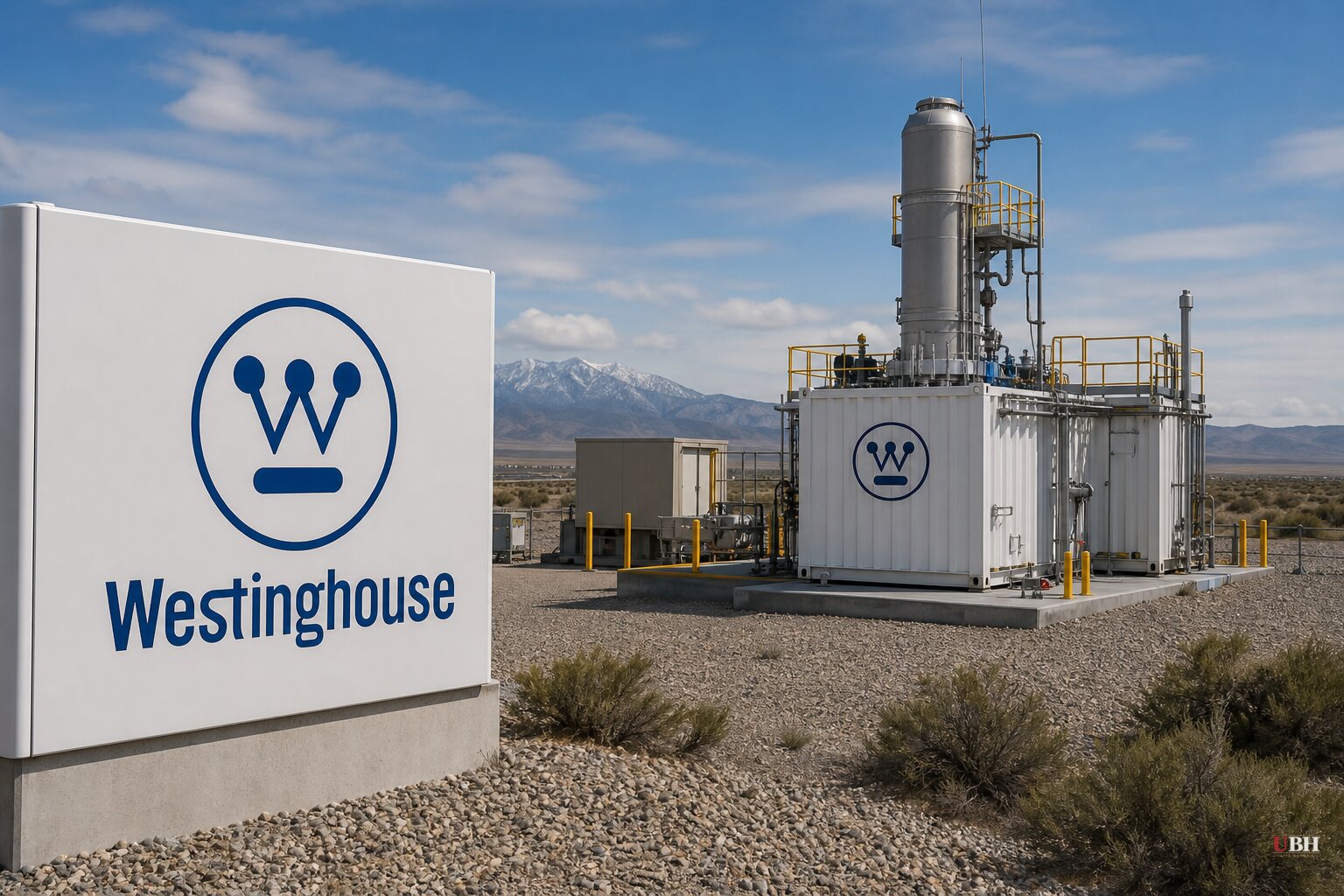
Westinghouse Electric Company says its eVinci microreactor achieved zero-power criticality on Monday, August 24, at 10:39 a.m. Pacific time. The test happened at the National Criticality Experiments Research Center, a National Nuclear Security Administration facility inside the Nevada National Security Site.
Los Alamos National Laboratory and Idaho National Laboratory both worked the test alongside Westinghouse, according to the company's press release and confirmed by World Nuclear News.
Zero-power criticality is not power generation. It means the reactor can sustain a controlled fission chain reaction at a level so low there's negligible heat produced. The checkpoint proves the core physics works before anyone tries to run the unit at scale.
Westinghouse Chief Technology Officer Dr. Lou Martinez Sancho called it a milestone that "reflects Westinghouse's heritage of innovation and pushing to the next frontier of nuclear," and thanked the Department of Energy, NNSA, and both national labs for their part in it.
What the eVinci Actually Is
The eVinci is a heat pipe-cooled microreactor. No pumps, no circulating coolant loops, none of the mechanical complexity that traditional reactors need. Heat pipes packed with a small amount of liquid sodium move heat from the core to a heat exchanger, according to Power Engineering.
World Nuclear News reports the design can produce up to 5 megawatts of electricity from a 15-megawatt-thermal core, running on TRISO fuel for eight-plus years without refueling. The whole unit is factory-built and shipped in a container, meaning it can theoretically go anywhere: military bases, remote industrial sites, even off-planet.
Westinghouse is pitching this squarely at defense and space applications, plus industrial heat uses like hydrogen production, according to the Defence Industry trade publication. The Pentagon has wanted mobile, resilient power sources for forward operating locations for years, and a reactor with no moving parts that runs unattended for the better part of a decade fits that need.
Part of a Bigger Pattern
This isn't happening in isolation. The Epoch Times, reporting before the eVinci test, tracked four other new reactor designs reaching criticality since June: Antares Nuclear's Mark-0 on June 4, Aalo Atomics' Aalo-X on July 4, and Oklo's Groves Isotope Test Reactor on August 5 in Lockhart, Texas. The Epoch Times noted that before June, the United States hadn't certified a genuinely new reactor type as operationally viable in more than fifty years, going back to 1973.
That drought has a policy explanation. The Epoch Times ties the recent run of milestones to a Department of Energy "first mover" pilot program, which selected ten companies in August 2025 to develop eleven prototype reactors. That program stems from four executive orders President Trump signed in May 2025 aimed at licensing ten new reactor designs by 2030 and quadrupling U.S. nuclear capacity by 2050.
Assistant Secretary for Nuclear Energy Ted Garrish credited that directive directly when Oklo's Groves reactor hit criticality, saying it was "part of the revival of America's nuclear energy industry," per the Epoch Times. Energy Secretary Chris Wright reportedly told the outlet he expects as many as seven reactor types to reach criticality by the end of this year.
Whether that pace holds remains to be seen. Reaching zero-power criticality is a physics checkpoint, not a finish line. Westinghouse itself says the eVinci now moves into "integrated prototype testing and demonstrations" to check performance, operability, and whether the design can actually be manufactured at volume, not just modeled on paper.
The Groves reactor, by contrast, is already producing medical and industrial isotopes at a plant Oklo owns in Texas, according to the Epoch Times, and the company says it's targeting 2028 for commercial operations at a separate 75-megawatt reactor project at Idaho National Laboratory.
None of the outlets covering the eVinci test, including Power Engineering, Morningstar, and the Defence Industry publication, which largely ran variations of Westinghouse's own press release, addressed cost, regulatory licensing timelines, or when eVinci units might actually reach paying customers. World Nuclear News came closest to independent framing, but even that account leaned on the same Westinghouse quotes everyone else used.
The next marker to watch is whether Westinghouse's prototype demonstration phase produces an actual operating unit, and whether the Nuclear Regulatory Commission issues any licensing decision on eVinci before the administration's 2030 target for ten new licensed reactor designs.
Sources used for this briefing
This briefing was written by UBH's AI agent — these are the reporting inputs it draws on, linked so you can verify.


